
Best Bird Feeders for Backyard: 11 Top Picks for Every Space, Budget, and Squirrel Problem
From squirrel-proof tube feeders to smart camera models and window feeders, this guide helps you choose the feeder that actually fits your yard, your birds, and your patience.
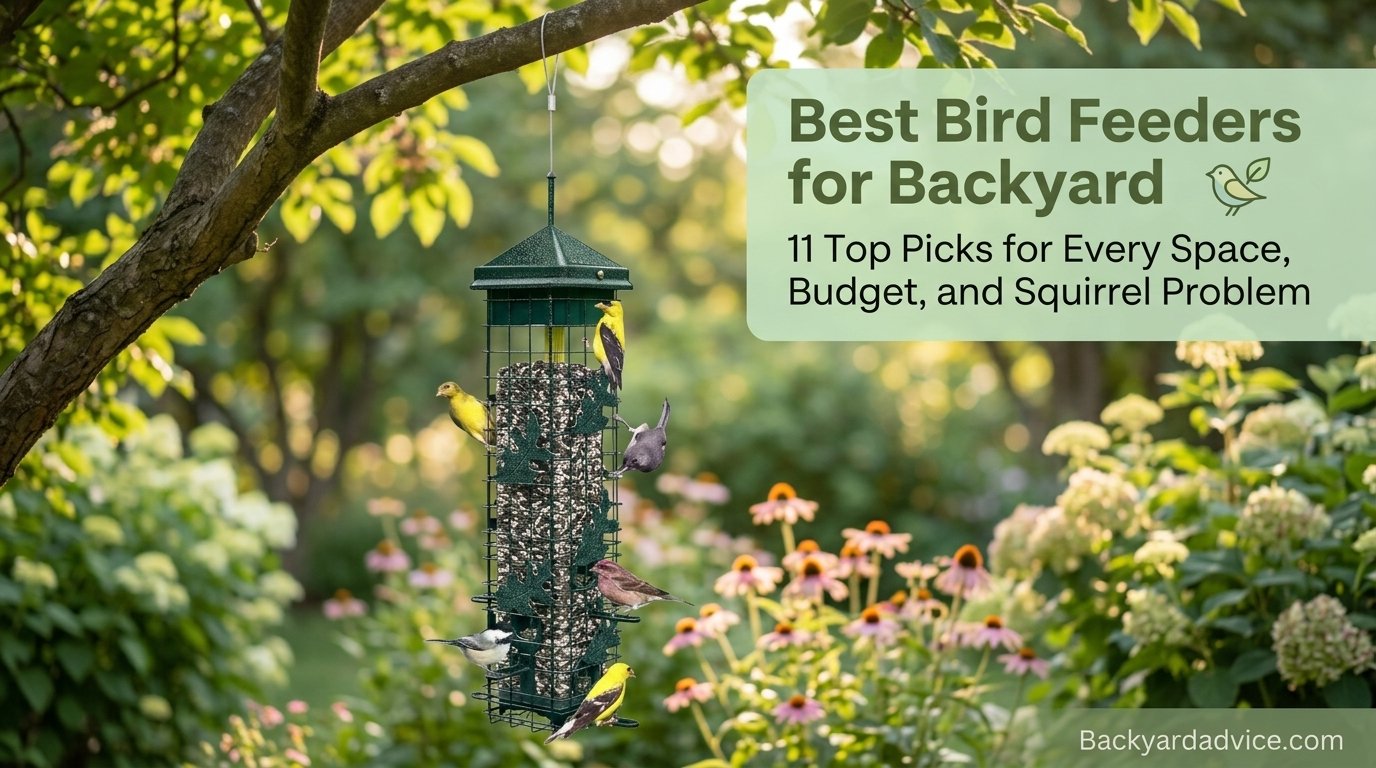
There is a particular kind of quiet joy in watching a chickadee snatch a sunflower seed from a feeder you hung only that morning. It happens at the kitchen window, over coffee, with no effort at all. But anyone who has bought a cheap feeder, filled it, and then watched a squirrel hang upside down and empty it by lunchtime knows that the gap between a good feeder and a bad one is enormous.
This guide exists to close that gap. We looked at eleven popular feeders across several categories: weight-sensitive squirrel-proof models, sturdy metal tube feeders, a smart camera feeder, a window feeder, and a complete multi-hook feeding station. For each one, we explain who it suits, where it shines, and where it falls short. We also cover the less glamorous but equally important topics of seed choice, placement, and cleaning, because the feeder is only half of the equation.
Whether you are setting up your very first station or replacing a feeder that has seen better seasons, you will find something here that fits. If you are still building the bird-friendly side of your yard, our guide on how to attract birds to your backyard pairs nicely with the picks below.
Quick Answer: Which Feeder Should You Buy?
If squirrels are your main enemy, the Brome Squirrel Buster Plus is the safest long-term bet because of its adjustable, weight-activated closing mechanism. If you want a budget-friendly metal tube feeder for lots of small songbirds, the Gray Bunny 6-Port is a practical choice. If you love gadgets, the NETVUE Birdfy adds a camera and bird identification. If you live in an apartment or want close-up views, the Nature’s Hangout window feeder is the easiest way to start.
Quick Comparison of the Feeders in This Guide
| Feeder | Type | Best For | Squirrel Strategy |
|---|---|---|---|
| Brome Squirrel Solution200 | Hanging tube | Serious squirrel problems | Weight-activated shutoff |
| Brome Squirrel Buster Plus | Hanging tube | Long-term, all-round use | Adjustable weight-activated shutoff |
| Brome Squirrel Buster Standard | Hanging tube | Smaller yards, simple setups | Weight-activated shutoff |
| Perky-Pet Squirrel-Be-Gone | Hanging | Value-minded squirrel defense | Mechanical perch or port closure |
| Gray Bunny 6-Port | Metal tube | Many small birds at once | Durable metal, not a full squirrel-proof design |
| Droll Yankees Squirrel Proof | Hanging | Heavy-duty reliability | Built-in squirrel resistance |
| Woodlink Absolute | Hanging | Mid-priced squirrel resistance | Weight-sensitive ports |
| NETVUE Birdfy Smart | Smart camera feeder | Tech lovers and bird logging | Varies by model; camera lets you monitor |
| Nature’s Hangout Long Ranch | Window feeder | Apartments, close-up viewing | Placement on glass limits access |
| Best Choice 4-Hook Station | Pole feeding station | Multi-feeder variety | Pole setup; add a baffle for best results |
Specifications such as seed capacity, colors, and included accessories can vary between versions and retailers, so always confirm the details on the current product listing before ordering.
What Makes a Great Backyard Feeder?
Before we get to individual products, it helps to know what separates a feeder that lasts for years from one that cracks, clogs, or gets raided within a week. Most buying mistakes come from judging a feeder by its looks rather than by how it behaves outdoors, in rain, heat, frost, and under the weight of a determined squirrel.
Durability and Materials
The outdoors is hard on feeders. Sunlight makes cheap plastic brittle, moisture rusts thin metal, and squirrels chew almost anything that is not metal or very thick polycarbonate. Look for UV-stabilized tubes, metal ports, and metal-reinforced perches. A feeder that costs a little more but survives many seasons is almost always cheaper than replacing a budget model every year.
Squirrel Resistance
Squirrels are clever, acrobatic, and persistent. The most reliable feeders use a weight-activated mechanism: when something heavier than a songbird lands on the perch, the seed ports close. That approach beats chewing, because there is nothing for a squirrel to work around. Other designs rely on cages, baffles, or spinning perches. Each can work, but a well-built weight-sensitive feeder tends to need the least ongoing effort from you.
Seed Capacity
A larger reservoir means fewer trips outside, which matters in winter. It also matters if you travel. However, a very large feeder can hold seed longer than is healthy in humid weather, since damp seed grows mold. If your yard sees only a handful of birds, a smaller feeder that you refill more often keeps the seed fresher.
Ease of Cleaning
This is the most underrated feature of all. A feeder that is hard to take apart will go uncleaned, and a dirty feeder can spread disease among birds. Choose models that come apart in a few simple steps, with smooth surfaces that you can scrub. Dishwasher-safe parts are a bonus where the manufacturer allows it, though many people prefer a bottle brush and a mild vinegar or diluted bleach rinse followed by thorough drying.
Port and Perch Design
Ports determine which birds can eat. Small ports with short perches suit finches and chickadees. Larger ports and sturdier perches suit cardinals and grosbeaks. Some feeders include adjustable perches, which lets you tune the setup to the birds you want to see most. If cardinals are your favorite, look for a longer perch or a cardinal-friendly ring, since they prefer sitting while they eat.
Weather Protection
Seed that gets wet turns into clumps within a day or two. Feeders with tight lids, sloped roofs, and ventilated bases help keep seed dry. If you live in a rainy region, favor tube designs with snug lids over open platform trays.
- Material: metal ports, thick UV-stabilized plastic, or powder-coated steel
- Mechanism: weight-activated closure if squirrels are a problem
- Capacity: matched to how many birds you actually have
- Cleaning: tool-free disassembly and smooth surfaces
- Warranty: a long guarantee signals real confidence from the maker
A final tip: buy for the birds you have, not the birds you hope for. Watch your yard for a few days. If you are not sure what is visiting, our walkthrough on how to identify birds in your backyard will help you match a feeder to the actual local crowd.
Browse the top-rated options on Amazon and read recent customer feedback.
Feeder Types and Seed Matching: Getting the Pairing Right
A feeder and a seed are a pair. Put the wrong seed in the right feeder and you will attract the wrong birds, or none at all. Understanding the basic categories makes every later decision easier.
Tube Feeders
Tube feeders are the workhorses of backyard feeding. A cylinder holds seed, and ports at different heights let birds feed from perches. They suit black oil sunflower seed, mixed seed, and in some cases nyjer with the right ports. Most of the squirrel-resistant models in this guide are tube-style, because the cylindrical design lends itself to weight-activated shutoff systems.
Hopper and Platform Feeders
Hopper feeders look like little houses, with a roof and a seed tray. They hold plenty of seed and accommodate larger birds, but they are also easier for squirrels and starlings to dominate. Platform feeders are open trays that attract the widest variety of birds, including ground feeders, though seed gets wet and dirty quickly.
Window Feeders
Window feeders attach to glass with suction cups. They are ideal for renters, apartment dwellers, and anyone who wants to watch birds up close. Because they sit right at the glass, they also place the birds in a position where you can learn their markings and behavior. Position them carefully to reduce collision risk, a point we cover later.
Smart Feeders
A newer category adds a camera, often with software that recognizes species and sends a notification. They are fun for families, and for people who are away during the day and want to see what visited while they were out.
Feeding Stations
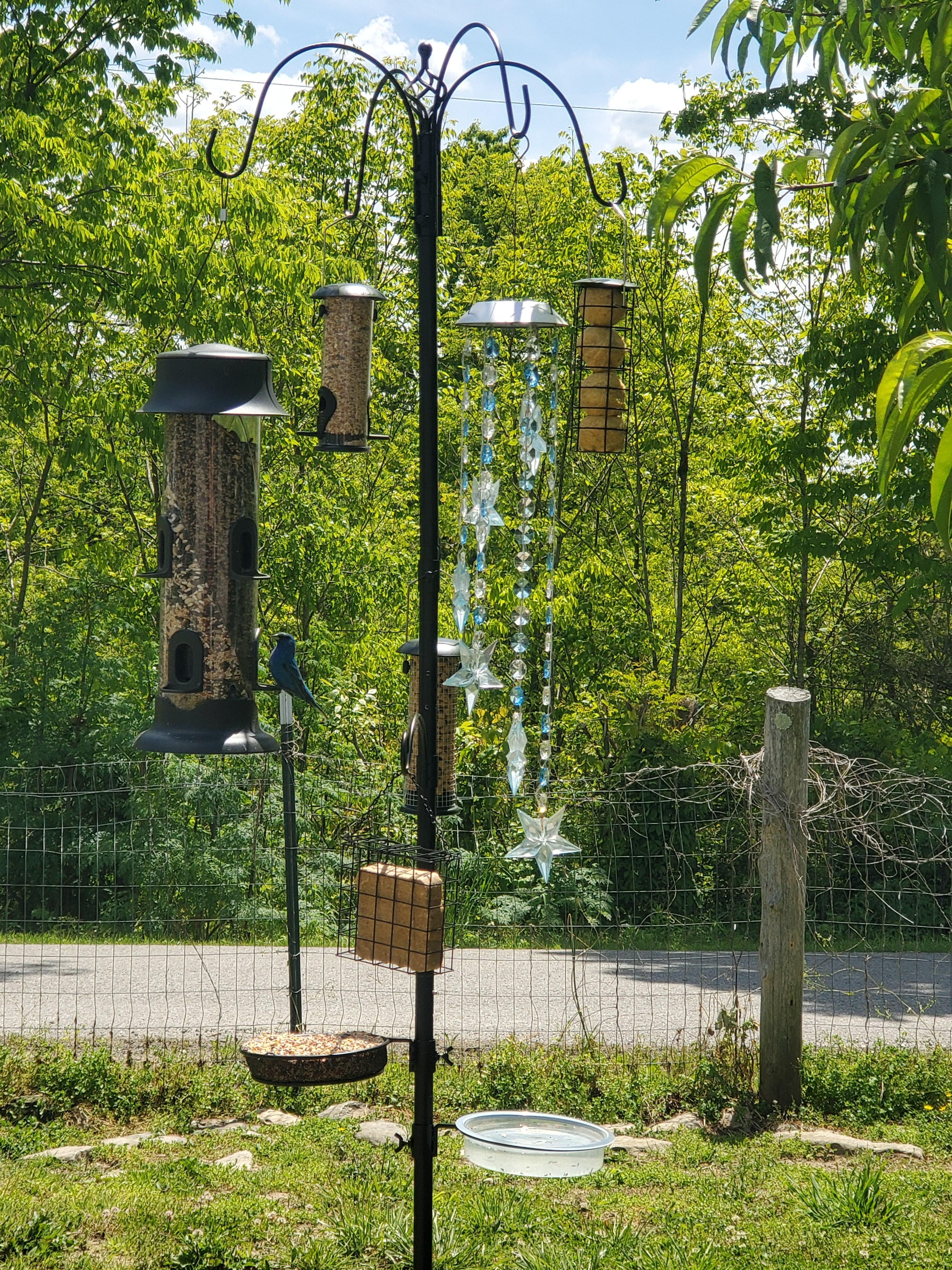
A feeding station is a pole with several hooks, so you can hang multiple feeders at once. This lets you offer different seeds in different feeders, which in turn invites different species. It is the quickest route to a lively yard.
Which Seed Attracts Which Birds?
| Seed | Birds It Attracts | Best Feeder Style |
|---|---|---|
| Black oil sunflower | Cardinals, chickadees, titmice, finches, nuthatches | Tube, hopper, platform |
| Sunflower hearts or chips | Many songbirds, with no shell mess | Tube, tray |
| Safflower | Cardinals, grosbeaks, doves; many squirrels dislike it | Tube, hopper |
| Nyjer (thistle) | Goldfinches, siskins, redpolls | Fine-port tube or sock |
| White proso millet | Sparrows, juncos, doves | Platform, ground tray |
| Peanuts (shelled) | Woodpeckers, jays, titmice | Mesh or specialty feeder |
| Suet | Woodpeckers, nuthatches, wrens | Suet cage |
If you are only going to buy one kind of seed, black oil sunflower is the safest starting point. Its thin shells are easy for small birds to crack, it has high fat content for energy, and it attracts the greatest variety of species. Cheap mixes loaded with milo and red millet often get kicked onto the ground, which wastes money and attracts pests.
Seasonal Seed Strategy
In winter, high-fat foods such as sunflower and suet help birds survive cold nights. In spring and summer, natural insects become more abundant, so feeder traffic often dips, but nesting birds and fledglings may still come. In fall, migrating birds appreciate a reliable refueling stop. Keeping a steady supply through the seasons builds loyalty, and birds will repeat the route that served them well.
Black oil sunflower is a dependable starting point for nearly any feeder.
Brome Squirrel Solution200: Built for Yards With Determined Squirrels
Brome has earned a loyal following among backyard birders for one simple reason: its feeders are designed around squirrel behavior rather than hoping squirrels will give up. The Squirrel Solution200 sits in that tradition, and it is a strong pick for anyone who has already lost a feeder or two to chewing, hanging, and general acrobatics.

Brome Squirrel Solution200
A premium hanging feeder that uses a weight-sensitive system to close seed access when a squirrel climbs on, while remaining open for songbirds.
Check Price on AmazonHow the Squirrel Defense Works
The core idea behind the Brome approach is elegant. Songbirds weigh very little, so they can perch and feed freely. A squirrel is many times heavier, and the moment it lands, the added weight pulls a shield or collar down over the feeding ports. The seed disappears from reach, and the squirrel is left holding onto a feeder that is, for all practical purposes, closed for business.
This matters because squirrels do not give up easily. They test, they jump, they hang by their back feet, and they chew. A mechanical shutoff makes none of that effective. After a few failed attempts, most squirrels simply move on to easier targets, which is exactly what you want.
Construction and Materials
Brome feeders are known for sturdy builds, with metal components where chewing is most likely to occur and heavy-duty tubes to hold the seed. That emphasis on solid materials is a big reason these feeders tend to last for years rather than a single season. When you are comparing options, this durability often explains much of the price gap between Brome and the budget alternatives.
What Birds Will Visit
With black oil sunflower or sunflower chips in the tube, expect a steady stream of chickadees, titmice, nuthatches, house finches, and goldfinches. Cardinals will visit, too, as long as the perch is comfortable. If cardinals matter to you, it is worth reading the product listing carefully to see what perch options are included.
- Weight-activated mechanism that shuts seed ports under a squirrel’s weight
- Durable tube and metal-reinforced contact points
- Designed to be filled from the top and cleaned by taking apart the main components
- Suited to common seeds such as sunflower and mixed blends
- Backed by a manufacturer known for strong guarantees; check the listing for current terms
Pros
- Reliable against most squirrels
- Quality materials built for long use
- Songbirds feed comfortably
- Reduces wasted seed
Cons
- Higher price than basic feeders
- Mechanism needs occasional cleaning
- Large birds like blue jays may trigger the closure
Setup and Placement Tips
Even the best squirrel-resistant feeder works better when it is placed smartly. Hang it from a branch or hook at least five feet off the ground, with roughly ten feet of open space around it, if your yard allows. Squirrels are impressive jumpers, and a feeder next to a fence, roofline, or tree limb gives them a launch pad. Adding a pole baffle or hanging the feeder from a slick wire can make the setup even more secure.
When you first fill it, watch for a few minutes to see how birds behave. A small adjustment to hanging height or position can make the difference between a quiet feeder and a busy one. Patience helps too. It can take days or even a couple of weeks for birds to trust a new feeder, especially if they were used to an old one in the same spot.
Maintenance
Take the feeder apart every two weeks or so, more often in humid weather. Wash the pieces in warm soapy water, rinse well, and let everything dry fully before refilling. Pay special attention to the area around the ports and the moving parts, where seed dust collects. A feeder that glides smoothly stays reliable; one clogged with debris may fail to close or open properly.
Who Should Buy It?
Choose the Solution200 if squirrels have beaten your previous feeders, if you want a long-lasting piece of gear rather than a throwaway, or if you simply value the peace of mind that comes with a proven design. If you have almost no squirrel pressure and just want an easy, inexpensive feeder, the simpler options later in this guide may suit you better.
See current details and customer reviews for the Brome Squirrel Solution200.
Brome Squirrel Buster Plus: The Classic All-Rounder
If you ask a dozen experienced backyard birders to name the best squirrel-proof feeder, a surprising number will say Squirrel Buster Plus without hesitating. It has become something of a benchmark, and for good reason. It combines a large seed reservoir, an adjustable mechanism, and a straightforward design that works year after year.

Brome Squirrel Buster Plus
A large-capacity tube feeder with an adjustable, weight-activated shutoff, so you can fine-tune it for the birds you want and the squirrels you want to stop.
Check Price on AmazonWhy Adjustability Matters
One of the best features of the Buster Plus is that you can tune how much weight it takes to close the ports. This is more important than it sounds. If you want to feed cardinals, grosbeaks, or other heavier songbirds, you can set the tension so that they can still eat, while squirrels still trigger the shutoff. If you only care about small birds, you can set it more sensitively. That flexibility lets the feeder grow with your yard instead of locking you into one behavior.
Capacity and Convenience
The Plus is among the larger feeders in Brome’s lineup, which means fewer trips outdoors in cold or wet weather. Larger capacity is especially useful in winter, when birds feed heavily and the weather makes frequent refilling unpleasant. Just remember the earlier caution about fresh seed: if birds are sparse, do not overfill, since damp or stale seed can spoil.
Real-World Performance
Owners often describe the experience in the same way. In the first days, squirrels try everything. They hang, they shake, they gnaw at the base. When the ports close and no seed comes out, the visits get shorter and then stop. Meanwhile, chickadees, finches, and nuthatches carry on as if nothing has happened. That quiet contrast is the best argument for the design.
Cardinal-Friendly Options
Cardinals do not love clinging to small perches. They prefer to sit while they eat, and some feeders in this category offer perch extensions or ring accessories that give them a comfortable spot. If cardinals are a priority, check what comes with the listing and whether an extension is available to purchase separately.
- Adjustable weight setting for the closing mechanism
- Large seed reservoir suited to heavy winter use
- Metal ports and construction designed to resist chewing
- Compatible with sunflower, safflower, and quality seed blends
- Parts can be separated for cleaning
Pros
- Adjustable, so it adapts to your yard
- Large capacity for fewer refills
- Proven reputation among experienced birders
- Strong build quality
Cons
- One of the pricier feeders in this guide
- Larger size may be more than a tiny yard needs
- Takes a few minutes to disassemble for deep cleaning
Comparing the Plus With the Standard
Brome’s Buster Standard, covered next, uses a similar concept in a smaller package. The Plus gives you extra capacity and extra tuning. If you have a large yard, lots of birds, or intense squirrel activity, the Plus is typically worth the upgrade. If your needs are modest, the Standard saves money and space.
Tips to Get the Most From It
Fill it with sunflower hearts or black oil sunflower for the broadest appeal. Place it where you can see it from a window, because the whole point is enjoyment. Clean it regularly and store a bottle brush nearby so the job stays easy. If a squirrel somehow gets a foothold, check that the feeder hangs freely and that nearby branches are not offering a bridge. Almost every reported failure comes down to placement, not the mechanism itself.
Check the latest availability and reviews for the Brome Squirrel Buster Plus.
Brome Squirrel Buster Standard: Simple, Compact, and Reliable
Not every yard needs a giant feeder. Sometimes you have a small patio, a single tree, or just a modest flock of regulars. In those situations, the Squirrel Buster Standard delivers the same core squirrel-defeating idea in a smaller, more affordable form.

Brome Squirrel Buster Standard
A compact version of Brome’s weight-activated design, ideal for balconies, small gardens, and first-time squirrel-proof buyers.
Check Price on AmazonA Smaller Footprint With Familiar Technology
The Standard follows the same philosophy as its bigger siblings: let songbirds feed, and close the ports when something heavy arrives. Because the reservoir is smaller, the feeder is lighter and easier to hang from thinner branches or a modest hook. That makes it much friendlier for renters, balcony gardeners, and anyone who prefers compact gear.
When Smaller Is Actually Better
Large feeders have a hidden drawback. In a yard with only a few birds, seed can sit for a long time, absorbing moisture and growing stale. A smaller capacity encourages a healthier refill rhythm, with fresh seed more often. If you are just starting out and do not yet know how popular your station will be, the Standard is a lower-risk way to find out.
Who Visits a Compact Feeder?
Expect the usual small-bird crowd: chickadees, house finches, goldfinches, nuthatches, and titmice. Because it is a tube feeder, it is not ideal for large or ground-feeding birds, so if you want doves or juncos, plan a separate platform or tray as a companion.
- Weight-sensitive closing mechanism to deter squirrels
- Lighter, more compact design than the Plus
- Works with common songbird seeds
- Metal components built for long-term outdoor use
- Straightforward to refill and clean
Pros
- More affordable than the larger Brome models
- Easy to hang and move
- Keeps seed fresher in small yards
- Same squirrel-defeating principle as the premium line
Cons
- Smaller capacity means more frequent refills
- Fewer adjustments than the Plus
- May run out quickly during peak winter feeding
Making the Most of a Small Feeder
Pair the Standard with a second feeder offering a different seed, such as a nyjer sock for goldfinches or a suet cage for woodpeckers. Together, they create variety without overwhelming a small space. Hang them at different heights and a few feet apart, so birds with different personalities each find a comfortable spot.
Also think about sight lines. A feeder that is visible from a kitchen or living room window gets used and enjoyed. A feeder tucked away where you rarely look is harder to keep clean and refilled. Place it somewhere that makes the routine pleasant.
Our Verdict
The Standard is the best entry point into premium squirrel-proof feeding. It is not the largest or the most adjustable, but it is thoughtfully made, and it solves the problem that frustrates most beginners. If you have a modest yard and a big squirrel problem, this is the one to try first.
See the latest details on the Brome Squirrel Buster Standard.
Perky-Pet Squirrel-Be-Gone: Squirrel Defense Without the Premium Price Tag
Premium squirrel-proof feeders can feel expensive, especially if you are not yet sure how serious your squirrel problem is. Perky-Pet has long occupied the friendly middle ground, offering feeders that are widely available, easy to understand, and priced for ordinary households. The Squirrel-Be-Gone line leans into that identity.

Perky-Pet Squirrel-Be-Gone Bird Feeder
A budget-friendly hanging feeder designed to resist squirrels while still giving songbirds easy access to seed.
Check Price on AmazonHow It Fits Into the Market
Think of this feeder as the practical choice. It is not built to the same heavy-duty standard as the Brome models, and it does not carry the same long-term reputation among dedicated hobbyists. But it also costs noticeably less, and for many households that is the right trade. If you want to test whether weight-sensitive feeding works in your yard before investing more, a model like this is a sensible experiment.
Squirrel Resistance in Practice
The principle is similar to other feeders in this guide: when a heavier animal lands, the feeding access narrows or closes. Results depend on how well the feeder is hung and how determined your local squirrels are. Against casual raiders, it can be very effective. Against a particularly athletic squirrel with a taste for sunflower, you may need extra measures, such as a baffle above the feeder or a location far from launch points.
Ease of Use
Perky-Pet feeders tend to emphasize simplicity. Filling is straightforward, hanging takes seconds, and cleaning is manageable. That matters more than people realize. A feeder you enjoy handling is one you will keep clean and full, and that consistency helps birds learn to rely on your yard.
Choosing the Right Seed
Sunflower seeds and quality mixes both work well. Avoid filler-heavy blends, which waste money and push seed onto the ground, where it attracts rodents. If you are feeding finches and chickadees, black oil sunflower is a dependable choice. If squirrels are especially fond of your seed, try safflower, which many squirrels find unappealing, while cardinals and chickadees enjoy it.
- Squirrel-deterring design suited to common backyard use
- Easy to fill, hang, and maintain
- Accessible price point for beginners
- Works with common seed types such as sunflower and mixes
- Widely available and simple to replace or expand with extra units
Pros
- Lower cost than premium squirrel-proof feeders
- Simple, familiar design
- Good starter option for new birders
- Easy to find and replace
Cons
- Not as heavy-duty as top-tier models
- May struggle against very determined squirrels
- Plastic components can wear over time in harsh weather
Boosting Its Performance
If you want to give this feeder a better chance, think about the entire hanging system. A smooth metal pole, a dome baffle, or a hanging wire that squirrels cannot grip will multiply the effectiveness. Keep the feeder at least several feet from fences, rails, and branches. Squirrels will leap surprising distances, so the more open space around the feeder, the safer it is.
Another useful trick is to give squirrels something else. A small corn cob holder or a separate squirrel feeder placed far away from the bird area can satisfy their appetite and distract them from the main station. It sounds counterintuitive, but many people find it brings peace to the whole yard.
Who Should Choose It?
The Squirrel-Be-Gone is a good choice for beginners, budget-conscious households, and anyone who needs a second feeder in a different corner of the yard. If you expect to keep it for many years or live with heavy squirrel pressure, consider stepping up to a more robust model. If you simply want to get started with fewer headaches, this one makes sense.
Compare pricing and reviews for the Perky-Pet Squirrel-Be-Gone.
Gray Bunny 6-Port Metal Tube Feeder: Big Capacity for a Busy Flock
Some yards are simply busy. If you have a growing crowd of finches, sparrows, and chickadees, a feeder with only four small ports can feel like a cafe with a single table. That is where a multi-port tube feeder earns its place, and the Gray Bunny 6-Port is built for exactly that scenario.

Gray Bunny 6-Port Metal Tube Feeder
A sturdy metal tube feeder with six feeding ports, letting more birds eat at the same time and reducing crowding.
Check Price on AmazonWhy Six Ports Make a Difference
Birds are territorial around food. When only a few perches are available, dominant birds chase smaller ones away, and the feeder feels tense rather than peaceful. Six ports reduce that friction. More birds can feed simultaneously, the activity looks livelier, and shy species have a better chance of getting a turn. For anyone who loves watching a feeder full of birds, that is a real upgrade.
The Metal Advantage
Metal construction changes how a feeder ages. It resists chewing, stands up to sun without becoming brittle, and gives the unit a weighty, durable feel. Metal can get hot in strong sun or cold in deep winter, so hang it where it is partly shaded if you live in a very hot climate. For most yards, though, the sturdiness is a clear advantage over thin plastic.
A Note on Squirrels
It is worth being honest here: a metal tube feeder is chew-resistant, but it is not necessarily squirrel-proof in the same way as a weight-activated model. A squirrel can still hang on and eat from the ports. If squirrels are a minor issue in your yard, adding a baffle and hanging the feeder in a safe, open spot may be enough. If squirrels are a major problem, consider one of the Brome or Droll Yankees options and use the Gray Bunny as a supplementary feeder in a less-visited corner.
Which Seeds Work Best?
Black oil sunflower, sunflower hearts, and mixed seed all flow well through this style of feeder. Avoid very large or oily seeds that can clog the ports, and skip sticky foods. If you want to try nyjer, check whether the ports are small enough to prevent spillage, or use a dedicated nyjer feeder.
- Six feeding ports for high-traffic feeding
- Metal body that resists chewing and weathering
- Tube design that protects seed from rain better than open trays
- Easy hanging with a top loop or hook
- Good for songbirds such as finches, chickadees, and sparrows
Pros
- Plenty of perches for busy yards
- Metal build lasts longer than thin plastic
- Often a strong value for its size
- Simple design that is easy to refill
Cons
- Not a full squirrel-proof design
- Metal can get hot or cold in extreme weather
- Large capacity can lead to stale seed if traffic is low
Where to Hang It
Aim for a spot with a clear flight path and nearby cover. Birds like to approach a feeder from a shrub or tree, grab a seed, and retreat to safety to eat. A feeder in the middle of an open lawn feels exposed, while one tucked against a dense hedge may attract cats. A good compromise is about ten to twelve feet from natural cover. You can brighten the evening setting around your seating area with soft lights, and our roundup of the best string lights for backyard spaces has ideas that suit a bird-friendly patio.
Our Take
The Gray Bunny 6-Port is a hardworking, no-nonsense feeder for yards with lots of small birds. It does not pretend to be squirrel-proof, but it offers capacity and durability at a friendly price. Pair it with good placement, and it can become the backbone of a lively feeding area.
See the Gray Bunny 6-Port Metal Tube Feeder and read recent buyer feedback.
Droll Yankees Squirrel Proof Feeder: Heirloom-Quality Engineering
Droll Yankees is one of the oldest and most respected names in backyard bird feeding. The company built its reputation on products that are meant to last, and it is not unusual to meet birders who still use a Droll Yankees feeder they bought decades ago. The Squirrel Proof Feeder continues that tradition.

Droll Yankees Squirrel Proof Feeder
A premium, heavy-duty feeder from a legacy brand, built with quality materials and designed to keep squirrels from dominating the seed.
Check Price on AmazonA Brand With a Long Track Record
Heritage matters in a product category where the outdoors punishes weak design. Droll Yankees feeders are typically made with robust materials and refined mechanics, and the brand is known for backing its products with strong warranty support. When a feeder is expected to hang in the rain, freeze in winter, and endure squirrel assaults for years, a long record of reliability counts for a great deal.
The Squirrel-Proof Approach
The feeder is engineered to let birds eat while keeping squirrels from getting the reward. Mechanisms like this are usually weight-sensitive or structured to make access impractical for heavier animals. Regardless of the specific design, the goal is the same: make sure the seed stays in the feeder and the birds, not the squirrels, get the benefit.
Build Quality You Can Feel
Premium feeders often feel different the moment you pick them up. The components fit together tightly, the moving parts operate smoothly, and the materials resist sun and weather. That level of finish translates into fewer cracks, fewer jams, and fewer replacements. If you intend to hang a feeder in the same spot for many seasons, you will appreciate that attention to detail.
Attracting a Variety of Birds
With sunflower or a good mix, expect chickadees, titmice, finches, nuthatches, and the occasional downy woodpecker. In fall and winter, juncos may pick up what falls below. Placing a small tray or ground-feeding area beneath the feeder is a natural complement, though keeping the area tidy is important to discourage pests.
- Heavy-duty materials from a long-established maker
- Squirrel-resistant design focused on keeping seed secure
- Built for repeated seasons of use
- Typically supported by a strong manufacturer warranty; check the listing for details
- Compatible with common seeds
Pros
- Excellent build quality and reputation
- Designed to last for many seasons
- Reliable squirrel resistance
- Often backed by strong customer support
Cons
- Higher price than basic feeders
- Some models can feel heavy to hang from thin branches
- Fewer modern extras than smart feeders
Why Placement Still Matters
A premium feeder gives you a head start, but you still need to think like a squirrel. Anything within a long leap becomes a ramp. Aim for open space on all sides, and use a pole or wire that is difficult to climb. If your tree branches are low and close, trim them or hang the feeder from a bracket that extends into open air. A little geometry saves a lot of frustration.
Who It Suits
Droll Yankees is ideal for buyers who view a feeder as a long-term purchase. If you would rather spend a bit more once than replace cheaper units every year or two, this is the type of product to consider. It also makes a thoughtful gift for a friend or family member who loves watching birds.
Check pricing and availability for the Droll Yankees Squirrel Proof Feeder.
Woodlink Absolute Squirrel-Resistant Feeder: Mid-Range Muscle
There is a sweet spot in the feeder market between the cheapest models and the heirloom-grade options, and it is a very crowded place. Woodlink sits right in that zone with feeders that aim to deliver real squirrel resistance at a price that feels fair. The Absolute is one of its best-known designs.
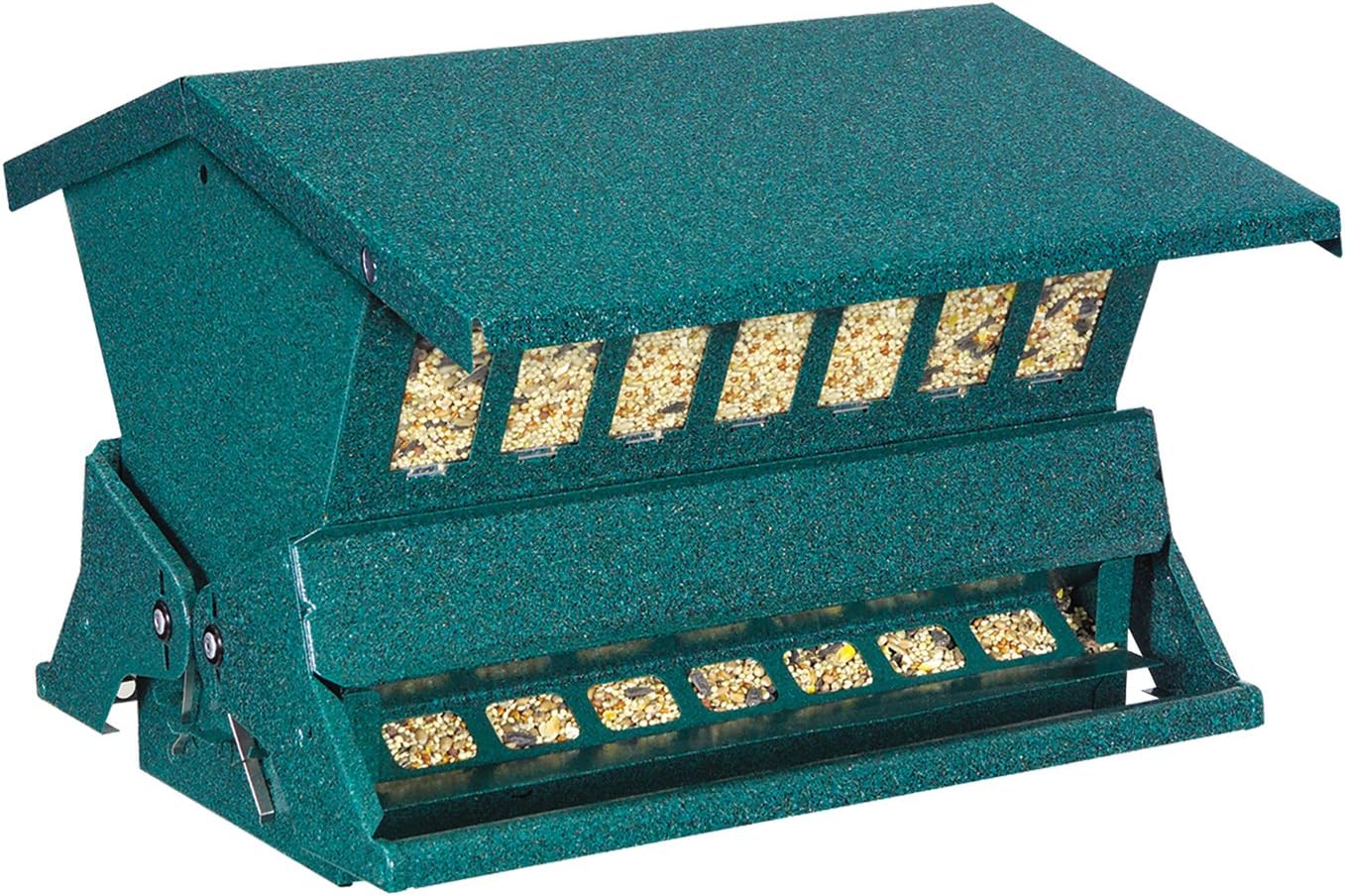
Woodlink Absolute Squirrel-Resistant Feeder
A sturdy feeder with a squirrel-resistant mechanism, balancing price, durability, and everyday usability for typical backyards.
Check Price on AmazonWhat Makes It Different
The Absolute is designed around the idea that squirrel resistance should not be reserved for the most expensive feeders. It uses a closing mechanism that responds to heavier animals, shutting off access to seed when a squirrel tries to feed. The aim is to give most households a dependable solution without a premium price.
Durability Without Overkill
Many mid-priced feeders strike a clever balance. They use metal where it counts, such as ports and perches, and sturdy plastic or polycarbonate for the reservoir. That combination reduces cost while preserving the parts most likely to be attacked. It also keeps the feeder light, which is helpful if you hang it from a delicate branch or a shepherd’s hook.
Everyday Experience
In day-to-day use, the experience is straightforward. You fill it, hang it, and watch. Chickadees and finches drop in, nuthatches hang upside down, and titmice grab a seed and fly to a nearby branch to crack it open. Squirrels may investigate, but they will find that the usual tricks do not pay off. Over time, many of them stop trying.
How It Compares to the Alternatives
Compared with the Brome models, the Absolute is generally more affordable but may not offer the same level of adjustability or longevity. Compared with the Perky-Pet, it often feels more robust. Compared with Droll Yankees, it likely has less of a heritage feel. In other words, it occupies the reasonable middle: a good value for many buyers who want to solve their squirrel problem without overspending.
| Feature | Woodlink Absolute | Perky-Pet Squirrel-Be-Gone | Brome Buster Standard |
|---|---|---|---|
| Price tier | Mid-range | Budget-friendly | Premium |
| Squirrel strategy | Weight-sensitive closure | Squirrel-deterring design | Weight-activated shutoff |
| Best for | Typical yards with moderate squirrel pressure | Beginners and tight budgets | Compact yards, serious squirrel pressure |
| Adjustability | Limited | Limited | Limited |
- Squirrel-resistant mechanism for typical household use
- Balanced mix of metal and durable plastic components
- Easy to fill and hang
- Suitable for common seeds like sunflower and mixed blends
- Priced for people who want solid performance without a premium bill
Pros
- Good balance of price and performance
- Light enough for many hanging setups
- Works well for common songbirds
- Simple maintenance routine
Cons
- May not match the long-term durability of premium models
- Squirrel resistance depends on good placement
- Fewer accessories and add-ons
Practical Advice for Owners
Test the feeder before trusting it fully. After filling, give it a gentle tug with a bit of weight to see how the mechanism responds. If it seems to close too easily for the birds you want to feed, check whether the feeder is hanging straight and the lid is seated correctly. Small misalignments can cause big differences in behavior.
Clean it about every two weeks. Seed dust and moisture can affect how smoothly any moving part works, and a quick scrub keeps everything operating as intended. Make it a habit to inspect the perches and ports at the same time, so small wear issues do not become big problems.
Final Word
The Woodlink Absolute is a solid pick for buyers who want a sensible, no-drama feeder. It will not win awards for glamour, but it does the job. If you are comparing several mid-range options, it deserves a seat at the table.
See the latest price and reviews for the Woodlink Absolute feeder.
NETVUE Birdfy Smart Bird Feeder: Watch Your Visitors Even When You Are Away
For a long time, bird feeding was a purely analog hobby. You hung a feeder, filled it, and watched whatever came by while you happened to be near a window. Smart feeders have changed that. By adding a camera and software, they let you see visitors in real time, review clips, and even learn who they are.

NETVUE Birdfy Smart Bird Feeder
A camera-equipped feeder that captures visitors and helps you identify species through an app, turning your yard into a small wildlife studio.
Check Price on AmazonWhat a Smart Feeder Actually Does
The Birdfy combines a feeder with a built-in camera that detects visitors and records photos or video. A companion app can alert you, store clips, and suggest species names using image recognition. Instead of wondering what flew in while you were at work, you can open your phone and see a chickadee enjoying lunch.
Who Will Love It
Smart feeders are particularly rewarding for families, for beginners who want help with identification, and for people whose schedules keep them away from windows during the day. Children often become far more engaged when they can scroll through photos of the birds that visited. It is also a wonderful way to build a personal species list over a season.
If you already enjoy identifying birds the traditional way, you can combine both approaches. Use the app suggestions as a starting point, then confirm them with field marks and behavior, as described in our guide on identifying birds in your backyard.
Practical Considerations
Technology brings new questions. You will need a reliable Wi-Fi signal near the feeder, or the camera cannot send clips to your phone. Power matters, too: some models rely on rechargeable batteries or optional solar panels, so check which accessories are included in the version you are buying. Camera quality, field of view, and app features can vary between versions, so read the current listing closely.
It is also wise to remember that identification software is helpful but not perfect. Similar species such as house finches and purple finches, or downy and hairy woodpeckers, can confuse even good algorithms. Treat the app as a friendly assistant rather than the final authority.
Does It Handle Squirrels?
That depends on the specific design and the way you hang it. Many smart feeders focus on features rather than aggressive squirrel proofing. If squirrels are a frequent problem, plan to protect the feeder with a baffle or a safer hanging location. The camera itself can be a bonus, since it lets you see exactly how squirrels approach and adjust your setup.
- Built-in camera for capturing visitors
- App-based alerts and species identification support
- Great for families, students, and remote bird watching
- Power options may include battery and solar accessories depending on the version
- Requires a Wi-Fi connection within range of the feeder
Pros
- See birds even when you are away
- Helpful for learning species
- Fun, shareable photos and clips
- Engaging for kids and new birders
Cons
- Higher cost than a traditional feeder
- Needs Wi-Fi and power management
- Identification is not always perfect
- Electronics need protection from weather and squirrels
Setup Tips
Test the Wi-Fi at the exact spot where you plan to hang the feeder before installing it. Position the camera so the sun is not shining directly into the lens in the morning or evening. Keep the lens clean, since seed dust and raindrops quickly degrade image quality. Finally, give birds time. They may hesitate around a new object, especially one with a lens, but most get comfortable within days.
Is It Worth It?
If you enjoy gadgets, or if the idea of reviewing bird photos with your morning coffee appeals to you, the Birdfy is a joyful addition. If you simply want to feed birds with minimal fuss, a simpler feeder will do the job at a lower price. The best answer depends on whether the camera will add to your enjoyment or become another device to manage.
Check current details for the NETVUE Birdfy Smart Bird Feeder.
Nature’s Hangout Window Feeder and Best Choice 4-Hook Station: Two Ways to Expand Your Setup
The previous picks are all hanging feeders. This section covers two products that solve different problems: one brings birds right to your window, and the other gives you a pole with four hooks for building a full feeding area. They are very different products, but both are excellent answers to common backyard challenges.
Nature’s Hangout Long Ranch Window Feeder

Nature’s Hangout Long Ranch Window Feeder
A window-mounted feeder that attaches with suction cups, ideal for watching birds from just inches away.
Check Price on AmazonWindow feeders solve several problems at once. If you live in an apartment or rent a home, you may not be able to install a pole or drill into trees. If you work from home, a window feeder puts the birds right next to your desk. If you have children or older relatives who enjoy wildlife, it creates a front-row seat without anyone stepping outside.
Another advantage is safety. Counterintuitively, feeders placed very close to glass can reduce collision risk, because birds taking off from the feeder do not have time to build up dangerous speed. Feeders placed farther away, in the middle of the flight range, can be riskier. Breaking up reflections with decals or window film adds another layer of protection.
The tradeoff is capacity. Window feeders hold relatively little seed, and the tray may need refilling often. Make sure the suction cups are firmly seated on clean glass, and check them regularly, especially after temperature swings. Fresh sunflower hearts are an excellent choice because they leave less shell mess on the tray.
Pros
- No pole, hook, or tree required
- Excellent for close-up viewing and photos
- Lower collision risk when mounted close to glass
- Squirrels have a hard time reaching it
Cons
- Smaller seed capacity
- Suction cups may weaken over time
- Seed hulls can collect on the window ledge
Best Choice Products 4-Hook Bird Feeding Station

Best Choice Products 4-Hook Bird Feeding Station
A freestanding pole with four hooks that lets you hang several feeders at once and offer a variety of foods.
Check Price on AmazonA feeding station is the quickest way to move from a single feeder to a proper bird buffet. With four hooks, you can hang a tube feeder with sunflower, a nyjer feeder for goldfinches, a suet cage for woodpeckers, and a feeder with safflower for cardinals. Each food attracts a slightly different crowd, and having them close together makes your yard feel like a destination.
The main benefit here is variety. Birds that ignore a sunflower tube might head straight for suet. Birds that avoid one corner might love another. By offering options, you learn what your local birds prefer, and you give more species a reason to stay. It also provides a convenient single point for refilling and cleaning, rather than hunting around the yard for scattered feeders.
Remember that a pole does not stop squirrels on its own. A dome baffle mounted below the feeders, or a slick pole cover, helps a lot. Position the station at least ten feet from anything squirrels can jump from, and keep it stable by pressing the base firmly into the ground or following the included installation instructions. If the ground is soft, check it periodically, since a leaning pole can tip feeders into a vulnerable angle.
Pros
- Multiple feeders in one organized spot
- Encourages greater species variety
- No tree needed
- Easy to refill and clean in one trip
Cons
- Needs a baffle for squirrel protection
- Pole stability depends on soil conditions
- Included accessories vary, so check the listing
Which One Should You Choose?
If you want the simplest path to close-up bird watching, start with the window feeder. If you have a yard and want to attract a wide range of species, the feeding station is the better foundation. Many people eventually own both, using the window feeder for quiet morning viewing and the station for the full outdoor experience. Both pair beautifully with a few native shrubs and a shallow water source, as covered in our guide on how to attract birds to your backyard.
Browse window feeders and feeding stations on Amazon.
Placement, Cleaning, and Troubleshooting: Keeping Any Feeder Working Well
You can buy the best feeder in the world and still end up with an empty yard if it hangs in the wrong spot or turns into a grimy mess. The habits in this section matter as much as the product you choose, and they cost almost nothing.
Choosing the Right Spot
Birds want two things from a feeder location: a quick escape route and a feeling of safety. The ideal spot sits about ten to twelve feet from shrubs or trees. That is close enough for a bird to dash into cover if a hawk appears, and far enough that squirrels and cats cannot easily ambush the feeder. Avoid putting feeders in deep shade where seed stays damp, and avoid spots baked by afternoon sun, where seed can spoil faster.
Think about your own enjoyment, too. A feeder that is visible from a kitchen, office, or favorite chair gets noticed, refilled, and cleaned. A feeder hidden at the far end of the yard tends to be neglected, and neglected feeders are the ones that spread disease.
Reducing Window Collisions
Windows are one of the biggest hazards for backyard birds. There are two safe approaches: place feeders very close to the glass, within about three feet, or far away, at least thirty feet. Anywhere in between is risky. Decals, tape patterns, or exterior screens can break up reflections, making the glass visible to birds in flight.
Discouraging Squirrels and Other Pests
Even with a squirrel-resistant feeder, a few extra steps improve results dramatically:
- Hang feeders at least five feet off the ground and ten feet from launch points
- Use a baffle above a hanging feeder or below a pole-mounted one
- Sweep up spilled seed and hulls regularly so you do not attract rodents
- Offer safflower, which many squirrels dislike
- Consider a separate squirrel feeder far from the bird area as a distraction
A Simple Cleaning Routine
| Task | How Often | How |
|---|---|---|
| Quick rinse and dry | Weekly in warm or humid weather | Rinse with warm water, brush ports, and dry fully before refilling |
| Deep clean | Every two weeks, or whenever seed looks damp | Scrub with soapy water, then soak briefly in a diluted vinegar or mild bleach solution and rinse thoroughly |
| Check seed freshness | Every refill | Discard clumped, moldy, or musty-smelling seed |
| Inspect for wear | Monthly | Look for cracks, loose perches, and worn mechanisms |
| Clean the ground below | Weekly | Rake or sweep hulls and droppings |
Always let parts dry completely before refilling. Damp seed turns moldy fast, and mold can make birds sick. If you ever see a bird that looks fluffed up, lethargic, or has crusty eyes, take down your feeders for a week or two and clean them thoroughly. That gives birds time to disperse and reduces the chance of spreading illness.
Troubleshooting: Why Aren’t Birds Coming?
A new feeder can sit untouched for days, sometimes weeks. That is normal. Birds take time to discover and trust new things. If a feeder stays empty for much longer, work through this checklist:
- Seed quality: Stale or low-grade seed can drive birds away. Try fresh black oil sunflower.
- Location: Too exposed, too shaded, or too close to a cat’s hiding spot all reduce traffic.
- Competition: Aggressive birds such as starlings or house sparrows may dominate. Switching to safflower or caged feeders can help.
- Predators: A nearby hawk or outdoor cat can scare birds off for days.
- Season: In late spring and summer, natural food is plentiful, so feeders get quieter.
If these basics do not explain it, our deeper article on why birds leave backyard feeders walks through additional causes and solutions in detail.
Make the Yard Itself Inviting
Feeders work best as part of a welcoming habitat. Native shrubs provide cover and berries. A shallow birdbath with moving water brings in species that never visit feeders. Leaving a small patch of leaf litter and a few dead branches gives insects a home, and insects are crucial food for nesting birds. Over time, your yard becomes a place birds return to by choice, not just a restaurant they happen to pass.
Planning Your Budget
It is tempting to treat a feeder as a one-time purchase, but the real cost includes seed, cleaning supplies, and the occasional accessory. A typical household spends far more on seed over a year than on the feeder itself, which is a strong argument for buying a durable, easy-to-clean model that wastes less food. Premium squirrel-resistant feeders often pay for themselves by stopping the steady loss of seed to squirrels, while cheap feeders that crack or jam can quietly cost more through replacements.
A practical approach is to start with one dependable feeder, learn which birds visit, and then expand. Add a second feeder with a different seed only after the first is attracting regular guests. This staged method keeps spending under control and teaches you what your local birds prefer, so every later purchase is based on evidence rather than guesswork. If you are decorating the area around your feeders for evening gatherings, set that aside as a separate project and keep the bird setup simple and low-stress.
Finally, think about how much time you realistically want to spend. A large, adjustable feeder is wonderful if you enjoy tinkering, while a simple compact model suits someone who wants a quick weekly routine. Choosing a feeder that matches your personality is the surest way to keep using it, season after season, long after the novelty of a new hobby has worn off.
Feeding Responsibly
Keep feeders clean, offer quality seed, and avoid bread, kitchen scraps, or anything moldy. Do not use honey or sugar water in seed feeders; those belong in dedicated hummingbird feeders with a proper nectar recipe. If you notice a disease outbreak in your area, or if local wildlife officials recommend pausing feeding, follow their guidance. Responsible feeding helps birds far more than it harms them, as long as the basics are respected.
A Weekly Rhythm That Works
Many people find it easiest to attach feeder care to a weekly habit. On Saturday morning, for example, pour out any leftover seed, rinse the feeder, scrub the ports, and set everything out to dry while you make coffee. Refill in the afternoon with fresh seed. Within a month it becomes automatic, and the birds reward your consistency with a steady stream of visitors. That small ritual is the real secret behind every lively backyard feeding station.
Find feeder brushes, baffles, and cleaning supplies on Amazon.
Frequently Asked Questions About Backyard Bird Feeders
What is the best bird feeder for a backyard overall?
For most yards with squirrels, the Brome Squirrel Buster Plus is the strongest all-round choice because it combines large capacity, strong construction, and an adjustable weight-activated mechanism. If you have few squirrels, a simpler tube feeder or the Gray Bunny 6-Port can be a better value.
How do I keep squirrels out of my bird feeder?
Combine a squirrel-resistant feeder with smart placement. Hang it at least five feet high and about ten feet away from fences, branches, and roofs. Add a baffle, offer safflower seed, and clean up spilled seed so squirrels have less reason to visit.
What seed attracts the most birds?
Black oil sunflower is the most popular and versatile choice. Its thin shells are easy to crack and it appeals to cardinals, finches, chickadees, titmice, and nuthatches. Adding suet, nyjer, or safflower in separate feeders broadens the variety of visitors.
How long does it take for birds to find a new feeder?
Sometimes only a few hours, but often several days to a couple of weeks. Birds are cautious, and moving an old feeder to a new spot can slow things down. Keep the seed fresh and the location consistent, and activity should pick up.
How often should I clean my bird feeder?
Rinse weekly in warm or humid weather and deep clean at least every two weeks. Clean immediately if seed becomes wet, clumped, or moldy. Let all parts dry fully before refilling.
Where is the best place to hang a bird feeder?
Pick a spot about ten to twelve feet from shrubs or trees, visible from a window you use often, and away from places squirrels can jump from. Avoid dense shade and spots that bake in full afternoon sun. For windows, keep feeders either very close to the glass or well away from it.
Are smart bird feeders worth the money?
They can be, especially if you enjoy technology, want help with identification, or are away from home during the day. If you simply want to feed birds with minimal effort, a traditional feeder is more affordable and just as effective at attracting birds.
Why did birds stop coming to my feeder?
Common causes include stale seed, a nearby predator, seasonal changes in natural food, a dirty feeder, or competition from aggressive birds. Refresh the seed, clean the feeder, and watch for hawks or cats. Our article on why birds leave backyard feeders covers more fixes.
Do window feeders really work?
Yes. Many birds adapt quickly to window feeders, especially chickadees, finches, and titmice. They are ideal for apartments and close-up viewing. Use fresh, hulled seed to reduce mess, and check suction cups regularly to keep the feeder secure.
Can one feeder attract many different birds?
A single feeder can attract several species, but variety increases when you offer different foods in different feeders. A feeding station with multiple hooks lets you provide sunflower, nyjer, suet, and safflower at once, which appeals to a much wider range of birds.
What size feeder do I need?
Match the size to your bird traffic. A busy yard benefits from larger capacity or more ports, while a small yard is better served by a compact feeder that you refill often. Fresh seed matters more than a large reservoir.
How do I know which birds are visiting my yard?
Watch for size, color, beak shape, and behavior, and consider keeping a simple notebook or using a smart feeder. A step-by-step guide on how to identify birds in your backyard can help you build confidence quickly.
Final Thoughts: Choosing the Best Bird Feeder for Your Backyard
The best feeder is the one that fits your yard, your birds, and your daily routine. If squirrels rule your property, the Brome Squirrel Buster Plus, Squirrel Solution200, and Droll Yankees options offer the most reliable defense, with the Buster Standard and Woodlink Absolute covering smaller budgets and spaces. If you are watching your spending, the Perky-Pet Squirrel-Be-Gone is a sensible way to start. If you have a flock of small birds, the Gray Bunny 6-Port offers plenty of perches. If you love technology, the NETVUE Birdfy adds a camera and a bit of magic. And if you want close-up views or a full feeding area, the Nature’s Hangout window feeder and the Best Choice 4-Hook Station both deserve a spot on your shortlist.
Whichever you choose, remember the basics: fresh seed, regular cleaning, thoughtful placement, and patience. A feeder is not just a product, it is an invitation. Keep it clean and full, and the birds will accept it, one chickadee at a time.
Explore the top-rated backyard bird feeders on Amazon and pick the one that fits your yard.
As an Amazon Associate, we may earn from qualifying purchases made through links on this page, at no extra cost to you.