
Best Fire Pit for Backyard: Ten Top Picks for Every Yard, Budget and Fuel Type
Smokeless stainless bowls, easy propane flames, and big lattice burners compared side by side, so you can pick the one that actually fits the way you gather outside.

There is a particular kind of evening that almost every backyard owner is chasing. The sun has gone down, the air has that first edge of coolness, someone has found the marshmallows, and a low, steady fire is pulling everyone a little closer together. Phones end up face down. Conversations run long. Kids who usually vanish into screens suddenly want to know how to build a better s’more. A fire pit is one of the few purchases that reliably creates that moment, and it does it again and again for years.
The trouble is that shopping for one is more confusing than it looks. A quick search throws up stainless steel double-wall bowls that promise almost no smoke, wide lattice pits that look like they belong at a campground, propane tables that light with a knob, and everything in between. Prices swing from the cost of a nice dinner to the cost of a used appliance. Reviews contradict each other. One person praises a pit as the best purchase they ever made, and the next says it rusted through after one wet winter.
This guide exists to cut through that. We compared ten of the most popular backyard fire pits on Amazon across the things that actually decide whether you will love or resent one: fuel type, smoke behavior, size and portability, durability, how easy it is to light and put out, and how well it suits the kind of gatherings you really host. Along the way you will find plain-spoken pros and cons, a side-by-side comparison table, advice on safety and placement, and a set of answers to the questions people ask most before they buy.
If you are still deciding whether a fire pit is even allowed at your address, start with this breakdown of whether you can have a fire pit in your backyard and then come back. If you are leaning toward a permanent stone ring instead of a portable bowl, the guide on how to build a fire pit in your backyard walks through that route. Otherwise, keep reading and let’s find the right fire for your yard.
Quick answer: For most backyards, a Solo Stove style smokeless wood pit is the best all-rounder because it burns clean, travels easily and looks great. Choose propane if you want flames on demand with no ash, and choose a large lattice or bowl pit if you regularly host crowds or want to cook over the fire.
1. Fire Pit Types Explained: Wood, Propane and Smokeless Designs
Before comparing individual models, it helps to understand the three broad families that nearly every backyard fire pit falls into. Each has a distinct personality, and knowing which one matches your habits will narrow your shortlist faster than any spec sheet.
Traditional wood-burning bowls
This is the classic. A steel bowl or lattice basket holds logs, you light them, and you enjoy crackle, glow and the smell of real woodsmoke. Wood burners are usually the most affordable way into fire pit ownership, and because the fuel is simply firewood, there is no tank to refill and no hookup to worry about. They also deliver the most authentic atmosphere, with popping logs, drifting sparks and a flame that never looks exactly the same twice.
The trade-offs are smoke and cleanup. Open bowls throw smoke in whichever direction the wind happens to be blowing, which means someone is always rotating their chair. You also need a place to dispose of ash, and you need to keep an eye on embers. Large lattice-style pits such as the Amazon Basics 27-inch, the Sunnydaze Crossweave and the Bali Outdoors 40-inch live in this category, and they shine when you want a big, welcoming fire that a crowd can ring.
Smokeless double-wall designs
Smokeless pits are the reason fire pits have become so popular in suburban yards. They use a double-wall construction with vents low on the body. Air is drawn in at the bottom, travels up between the walls where it heats, and re-enters the fire near the top through a ring of holes. That secondary burn consumes much of the smoke before it escapes, so you get a hotter, cleaner fire that produces far less haze when it is fed dry hardwood.
The Solo Stove Bonfire 2.0, the Solo Stove Yukon 2.0, the TIKI Patio Smokeless and the GasOne 23-inch wood burner all use some version of this idea. The marketing sometimes oversells it, because no wood fire is truly smoke free, especially during the first few minutes or with damp wood. In real life the improvement is still dramatic, and it is the single biggest upgrade over an open bowl for anyone with close neighbors or a small patio.
Propane fire pits
Propane pits trade the ritual of building a fire for the convenience of a switch. You connect a standard tank, turn a knob, press an igniter, and flames appear. When the evening is over you turn the knob back and everything is out. There is no ash, no embers, no smoke and no wood to store. For people who want a nice fire on a Tuesday night without a thirty-minute production, that convenience is hard to beat.
The Outland Living Firebowl 893 Deluxe and the Flame King smokeless propane pit represent this category. They give up the crackle and the cooking potential of wood, and gas flames generally produce less radiant heat per visual flame than a roaring log fire, but they make up for it with reliability and low maintenance. They are also friendlier in places where burn bans restrict wood fires but still allow gas appliances, a point worth confirming locally.
Hybrid, charcoal and tabletop options worth knowing
Beyond the three main families, you will run into a few niche designs. Charcoal-compatible bowls let you burn briquettes for cooking, though they do not produce the visual drama of a log fire. Tabletop gel and bioethanol burners add a small flame to a patio table but offer almost no real warmth. Hybrid bowls that accept both wood and a propane conversion exist, though they tend to be more complicated and expensive than simply owning one of each. For a genuine backyard centerpiece that warms people and gives them something to gather around, the three families covered here remain the sensible shortlist.
Heat: what to realistically expect
A fire pit warms the people who sit close to it, mostly through radiant heat on the front of the body. It will not heat an entire yard, and it will not rescue a freezing night. Wood fires produce the strongest radiant heat, large bowls spread it over more seats, and gas pits sit lowest on the scale. If you plan to use your pit mostly in cooler months, favor a larger bowl or a wood pit, and add blankets to the seating area to fill the gap.
Ready to compare fire pits by fuel type?
Browse Fire Pits on Amazon2. What to Check Before You Buy a Backyard Fire Pit
Most fire pit regret comes from a handful of avoidable mismatches. Work through the following considerations honestly and the right model usually becomes obvious.
Size and seating
The diameter of the fire bowl determines how many people can comfortably gather around it and how much wood you will burn. A pit around twenty to twenty-five inches across suits two to four people on a small patio. Pits in the twenty-seven to thirty-six inch range suit a family and a few guests. Anything approaching forty inches is designed for real crowds, and it will dominate a small yard visually and physically. Leave at least three to four feet of clear space around the pit for chairs and walking, and measure your patio before you fall in love with a bowl that will not fit.
Material and weather resistance
Stainless steel resists rust and keeps its good looks, which is why premium smokeless pits use it. Powder-coated or painted steel, common on large lattice pits, is perfectly serviceable but will eventually show rust where the finish wears away, particularly if the pit lives uncovered through rain and snow. The practical answer is a fitted cover. A cover often doubles or triples the life of a painted steel bowl, and it keeps rainwater from pooling inside and accelerating corrosion.
Portability and storage
Do you plan to keep the pit in one spot, or carry it to the campsite, the beach, or the other side of the yard? Compact smokeless pits are surprisingly easy to move, and some are designed to be carried. Heavier bowls with legs and screens are far more of a commitment. If your yard is small and you want to reclaim the space between gatherings, favor something light enough for one person to lift.
Heat output and cooking
If you want to cook, look for a pit with a grate or a grill option. The Bali Outdoors 40-inch model comes with a grill, and several lattice pits accept a cooking grate. Smokeless stainless pits are excellent for roasting marshmallows and hot dogs, and many owners add accessory grills for more serious cooking, but their small diameter limits how much food you can prepare at once.
Budget and long-term value
Fire pits span a wide price range, and the cheapest option is not always the cheapest over time. A very inexpensive painted steel pit may need replacing sooner than a stainless pit that costs several times more but lasts for a decade. Balance the up-front cost against how often you will use the pit and how well you will look after it. If you will light it twice a summer, a budget lattice pit is a sensible choice. If it will be the centerpiece of your evenings for years, the premium pit earns its price.
- Measure first: confirm your patio can hold the pit plus three to four feet of seating clearance.
- Match fuel to habit: wood for ambiance and cooking, propane for speed and low upkeep.
- Prioritize smoke control if neighbors are close or your seating is tight.
- Budget for a cover and a few basic accessories such as a poker and a spark screen.
- Check local rules before you order anything.
Hidden costs to plan for
The sticker price is rarely the whole story. Wood burners mean buying firewood, and a season of regular fires adds up faster than most people expect. Propane pits need tanks and refills. Almost every pit benefits from a cover, a poker, a pair of heat-resistant gloves and a spark screen. If you are placing the pit on a deck or sensitive surface, you will also want a heat shield. None of these items is expensive on its own, but together they can add a meaningful amount to the total, so build them into your budget from the start.
Warranty and customer support
It is worth checking the warranty terms and the return window before you order. Fire pits live outdoors, and sometimes a defect only shows up after a few uses. A pit from a company that stands behind its product offers peace of mind, particularly for premium purchases. Read recent customer reviews for patterns, such as complaints about rust, warped panels or missing parts, rather than focusing on any single comment.
Need a cover, spark screen or poker to go with it?
Shop Fire Pit Accessories3. Safety, Clearances and Local Rules
A fire pit is wonderful right up until it is not, and the difference is almost always preparation. The good news is that safe operation comes down to a short list of habits that become second nature after a couple of uses.
Placement and clearance
Set the pit on a non-flammable surface such as pavers, concrete, gravel or bare soil. Never place it on a wooden deck, on dry grass or under a low branch, awning or pergola. Keep it a safe distance from your house, fences, sheds and hedges. Many manufacturers recommend at least ten to fifteen feet from structures, and some local codes require more. Radiant heat can scorch siding and vinyl from farther away than people expect, and it can damage the surface underneath a pit, so a heat-resistant pad is a smart addition for stainless bowls on pavers or decking.
Wind and weather
Wind is the enemy of fire safety. Embers lift and travel, and a gust can carry them onto dry leaves or a neighbor’s roof. If the breeze is strong or the area is dry, skip the fire. Smokeless pits help with sparks as well as smoke, but they do not eliminate either. A mesh spark screen is inexpensive insurance, and it matters most with open lattice bowls.
Supervision and extinguishing
Never leave a fire unattended, and keep a bucket of water, a garden hose or a fire extinguisher within easy reach. Let wood burn down to ash rather than dousing a roaring fire, because quenching hot steel with cold water can warp it. Stir the ashes, spread them out, and make sure nothing glows before you leave. With propane, close the tank valve as well as the burner knob when you finish.
Local ordinances and neighbors
Rules vary enormously. Some cities allow only gas fires, some require a permit, some restrict burning on certain days or during dry seasons, and many homeowner associations add their own limits. Check with your municipality and, if relevant, your HOA before you buy. The full rundown in our article on whether you can have a fire pit in your backyard covers the usual questions, including setbacks and burn bans.
Safety checklist: level, non-flammable ground; clear space overhead; no strong wind; water or an extinguisher nearby; an adult always watching; ashes fully cold before you walk away.
Rules for kids and pets
Children and animals are drawn to fire and are unpredictable around it. Set a firm rule that nobody approaches the pit without an adult, mark a boundary with chairs or a low barrier, and keep toys, balls and pet leashes well away. Teach kids the idea of staying a long arm’s length back and that marshmallow skewers are for roasting, not for playing. Remember that metal stays hot long after the flames die, so supervision continues until everything is cold to the touch.
What to do if something goes wrong
Keep a plan in mind before you light. If a stray ember lands on grass or furniture, put it out immediately with water. If a fire grows beyond control, step away and call emergency services rather than trying to be a hero. For propane pits, if you suspect a leak, shut off the tank valve, move away and keep ignition sources far from the area. Knowing these steps in advance makes a calm response much easier.
Add a safety extra to your setup.
Find Fire Pit Spark Screens and Mats4. Side-by-Side Comparison of the Best Backyard Fire Pits
Here is the whole field at a glance. Use it to shortlist two or three candidates, then read the detailed reviews that follow. Sizes and capabilities are described in general terms, so always confirm exact dimensions, weights and included parts on the product page before buying.
| Fire Pit | Fuel | Style | Best For |
|---|---|---|---|
| Solo Stove Bonfire 2.0 (with Stand) | Wood | Smokeless, portable | Small patios and easy moving |
| Solo Stove Yukon 2.0 | Wood | Smokeless, large | Families and regular entertainers |
| TIKI Patio Smokeless 25-Inch | Wood | Smokeless, mid-size | Stylish, lower smoke gatherings |
| GasOne 23-Inch Wood Burning | Wood | Compact smokeless-style bowl | Budget-conscious small yards |
| Outland Living Firebowl 893 Deluxe | Propane | Portable gas bowl | Instant flames, camping and patio |
| Flame King Smokeless Propane | Propane | Gas, clean burning | Low-maintenance evenings |
| Amazon Basics 27-Inch Steel Lattice | Wood | Open lattice bowl | Value seekers |
| OutVue 36-Inch 3-in-1 | Wood | Large, multi-use | Crowds and versatile use |
| Sunnydaze Crossweave 36-Inch | Wood | Decorative large bowl | Style-forward patios |
| Bali Outdoors 40-Inch with Grill | Wood | Extra-large with grill | Big groups and outdoor cooking |
Notice how the list divides itself. Four pits focus on clean-burning wood fires in a smaller footprint, two focus on gas convenience, and four are larger open or semi-open bowls built for volume. Most households will be happiest choosing the family that matches their lifestyle first, then picking the best model within it, which is exactly how the rest of this guide is organized.
How to read the table
Treat the “best for” column as a starting point rather than a verdict. A pit labeled for small patios will still work in a big yard, and a large bowl will fit a smaller yard if you do not mind a snug arrangement. The columns that matter most are fuel and style, because those determine the experience you will have every single time you light it. Once those two columns point to a short list, price and size can break the tie.
See current prices and customer ratings.
Check Best-Selling Fire Pits5. Solo Stove Bonfire 2.0 (with Stand): The Smokeless Benchmark
If you have seen a stainless steel fire pit glowing in a neighbor’s yard or across social media, there is a good chance it was a Solo Stove. The Bonfire 2.0 is the model that made the brand famous, and the version with a stand is the one most backyard owners should consider, because it raises the fire off your patio surface and protects the ground beneath it.
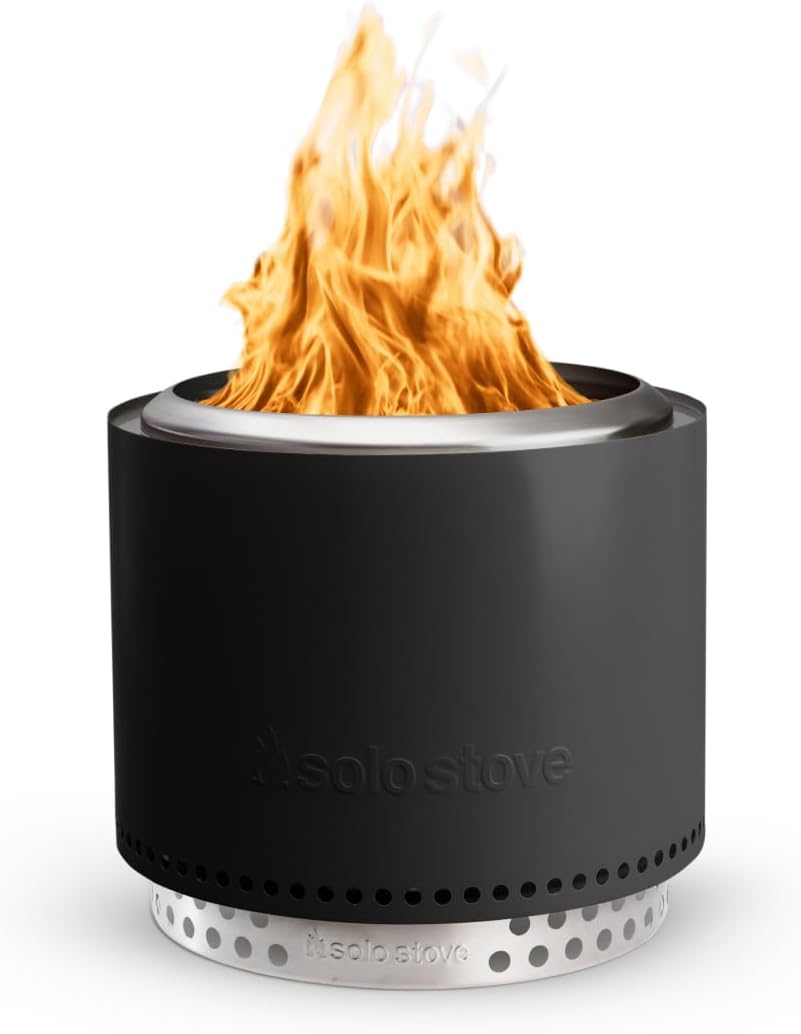
Solo Stove Bonfire 2.0 (with Stand)
- Fuel: Wood
- Design: Double-wall stainless steel with secondary burn ring
- Footprint: Compact, roughly a twenty-inch class bowl
- Setup: Minimal, with a removable ash pan for easy cleanup
Pros
- Dramatically less smoke with dry hardwood
- Compact and easy to carry or store
- Stand protects the surface below
- Attractive, durable stainless finish
Cons
- Higher price than basic bowls
- Small diameter limits big groups
- Needs seasoned, fairly small logs
How it performs in a real backyard
The Bonfire 2.0 is at its best on a normal weeknight with two to four people and a handful of dry split logs. It lights without much fuss, settles into a bright, tall flame within minutes, and then keeps burning with a noticeable lack of smoke compared with an open steel bowl. That secondary burn is not marketing fluff. When you feed it dry oak, maple or hickory, you can sit within a few feet and rarely need to dodge a plume.
The design also keeps the outer shell cooler to the touch than a single-wall pit, though it still gets hot and should be treated with respect, especially around kids and pets. The base vents draw air smoothly, so the fire responds quickly when you add wood. When the night ends, the ash pan lifts out so you can empty cold ashes without scooping from a deep bowl.
Why the stand matters
Many buyers skip the stand to save money and then regret it. Without elevation, heat radiates downward into the surface below, which can discolor pavers, damage a deck, or scorch grass. The stand lifts the pit, improves airflow from underneath and acts as a barrier, so it is worth paying for the bundle. If you ever plan to use it on or near a wooden structure, add a proper heat shield as well.
Who should buy it
Choose the Bonfire 2.0 if your priorities are low smoke, a tidy footprint and a pit you can move around. It suits townhouse patios, small suburban yards and anyone who wants a clean-looking fire without running a campsite in the middle of the lawn. If you regularly entertain eight or more guests, you will probably want to step up to its bigger sibling, which is next.
For the polished extras, a fitted cover, a spark screen and a carry case will extend its life and make it more pleasant to use. And if you want to take the evening further, pairing your new fire with overhead lighting makes the whole space feel finished. Our guide to the best string lights for backyard spaces has easy options that complement a fire pit glow.
Getting the best burn out of a Bonfire 2.0
Owners who love this pit tend to follow the same few habits. They stack logs loosely so air can move, they keep the wood below the upper vent ring, and they let the fire establish itself before adding larger pieces. They also avoid wet or resinous wood, which clogs the airflow with soot. Small, dry splits about the length of the bowl’s width give the cleanest results, and a gentle stir with a poker every now and then keeps the flame bed healthy. Accessories such as a lid, a shield and a carry bag extend what the pit can do, and the lid in particular makes it quick to put the fire out and keep the ash dry.
Ready to bring smokeless fires home?
Check the Solo Stove Bonfire 2.0 Price6. Solo Stove Yukon 2.0: Smokeless Power for Bigger Gatherings
The Yukon 2.0 takes everything people like about the Bonfire and scales it up. It is the pit for households where “a few friends over” can quickly become a dozen people with folding chairs and a cooler. The larger diameter makes it a genuine focal point and gives you room to burn bigger logs, which means fewer trips to the woodpile during the evening.

Solo Stove Yukon 2.0
- Fuel: Wood
- Design: Large double-wall stainless steel, smokeless airflow
- Footprint: Roughly a twenty-seven-inch class bowl
- Setup: Simple, with ash removal built in
Pros
- Room for larger logs and bigger flames
- Warmth reaches more seats
- Clean burn, similar to the smaller model
- Strong build quality and finish
Cons
- Heavier and less portable
- Premium price
- Takes more wood per evening
Bigger fire, same clean burn
A larger fire is not automatically a smokier fire, and the Yukon 2.0 proves it. The same double-wall airflow principle is at work, so you get the secondary burn across a wider flame bed. The result is a fire that looks more dramatic and warms a broader circle of chairs without turning your guests into ghosts. People standing a few feet away still feel the heat, which is the difference between a fire pit that is simply pleasant and one that is useful on cool evenings.
Living with a larger pit
Size has costs. The Yukon is heavier, so moving it is a two-hand job and sometimes a two-person job. It also consumes more firewood, particularly if you like to keep a tall flame going. If you burn regularly, buy wood in bulk and store it dry, because that is the single biggest factor in smoke performance. A cover is practically mandatory for a pit this size, since a rain-filled bowl is heavier and more awkward to handle.
Because the pit sits at a slightly higher heat level than smaller models, give it a bit more clearance from furniture and low-hanging branches. It is a statement piece, and it deserves a spot with open sky and a clear area around it.
Bonfire 2.0 or Yukon 2.0?
This is the most common question about these two pits, and the answer is simple. Pick the Bonfire if your gatherings are mostly small, your patio is tight, or you want to move the pit often. Pick the Yukon if you routinely host groups, enjoy a big dramatic fire, or have the space to give it room. If you are on the fence and you entertain more than you would like to admit, the larger pit is the safer long-term choice.
Wood supply and storage for a larger pit
A pit this size rewards planning. Buy firewood by the face cord or in bundles of reasonable size, stack it off the ground, and cover the top so rain cannot soak the pile. Keep a small amount of kindling dry in a bin close to the pit. Having wood stacked at a safe distance means you are never tempted to bring in damp logs on the night of a party, and that single habit does more for smoke control than any gadget you can buy.
It is also worth thinking about seating geometry. Because the Yukon throws warmth over a wider arc, you can place chairs a little farther back than you would for a smaller pit and still keep everyone comfortable. A circle of benches or a mix of chairs and low stools gives you a flexible arrangement that welcomes guests of any age.
Planning bigger backyard nights?
See the Solo Stove Yukon 2.0 on Amazon7. TIKI Patio Smokeless and GasOne 23-Inch: Compact Wood Burners
Not everyone wants to spend premium money, and not everyone has room for a large pit. These two compact wood burners fill that middle ground. Both aim to give you a cleaner, more controlled fire in a footprint that suits smaller patios, though they approach the job in different ways and appeal to different buyers.

TIKI Patio Smokeless 25-Inch
- Fuel: Wood
- Design: Smokeless-style airflow, mid-size bowl
- Footprint: Around twenty-five inches
- Best use: Evening conversation for four to six people
Pros
- Cleaner burn than an open bowl
- Good middle size for most patios
- Attractive outdoor-living styling
- Often more affordable than top-tier smokeless pits
Cons
- Needs dry wood to stay low smoke
- Finish may need a cover to stay fresh
- Less brand-proven than the market leaders
The TIKI Patio Smokeless 25-Inch is a sensible compromise. Its mid-size bowl accommodates a small group without overwhelming a modest patio, and the smokeless airflow design takes the edge off the haze that makes open bowls so tiresome for close neighbors. It looks at home beside patio furniture and string lights, which matters more than people admit when the pit is the visual centerpiece of the yard.
Treat it the way you would any smokeless pit. Burn seasoned hardwood, keep the logs a little shorter than the bowl is wide, and avoid overloading it. A pit that is stuffed to the brim with wet wood will smoke no matter how clever the airflow is. With reasonable care and a cover, it gives you most of the benefit of the pricier names at a gentler price.
Looking for a smokeless pit with style?
Check the TIKI Patio Smokeless Price
GasOne 23-Inch Wood Burning Fire Pit
- Fuel: Wood
- Design: Compact steel bowl
- Footprint: Around twenty-three inches
- Best use: Small patios, balconies where permitted, casual use
Pros
- Small footprint suits tight spaces
- Budget-friendly entry into wood fires
- Light enough to relocate
Cons
- Smaller flame bed limits group size
- Painted steel will need care over time
- Smoke control is not as strong as premium designs
The GasOne 23-Inch wood burning fire pit is the pick for people who simply want a safe, decent fire without spending much. Its compact size works well on smaller patios, and its simple construction keeps things straightforward. There is no fancy engineering to maintain, just a steel bowl, a fire and a few chairs.
The honest caveat is longevity. Lower-priced painted steel bowls typically do not last as long as stainless models, especially in wet climates, and they benefit enormously from a cover and a dry storage spot between uses. If you light it a handful of times each season and treat it kindly, it will serve you well. If you plan to burn it multiple nights a week, consider saving for something sturdier.
Compact pit buying tips
- Use short, dry logs so the fire stays below the rim and burns evenly.
- Always use a base or heat mat under smaller pits that sit close to the ground.
- Keep a spark screen handy on any pit that does not fully contain embers.
- Cover it between fires to protect paint and prevent standing water.
Want an affordable compact fire pit?
See the GasOne 23-Inch Fire Pit8. Outland Firebowl 893 Deluxe and Flame King: The Easy Propane Picks
Wood fire purists sometimes dismiss propane, but anyone who has tried to light a damp log pile on a chilly evening understands the appeal. Propane pits start with a click, hold a steady flame, stop with a turn of a knob and leave nothing to clean. For busy households they can be the pit that actually gets used.
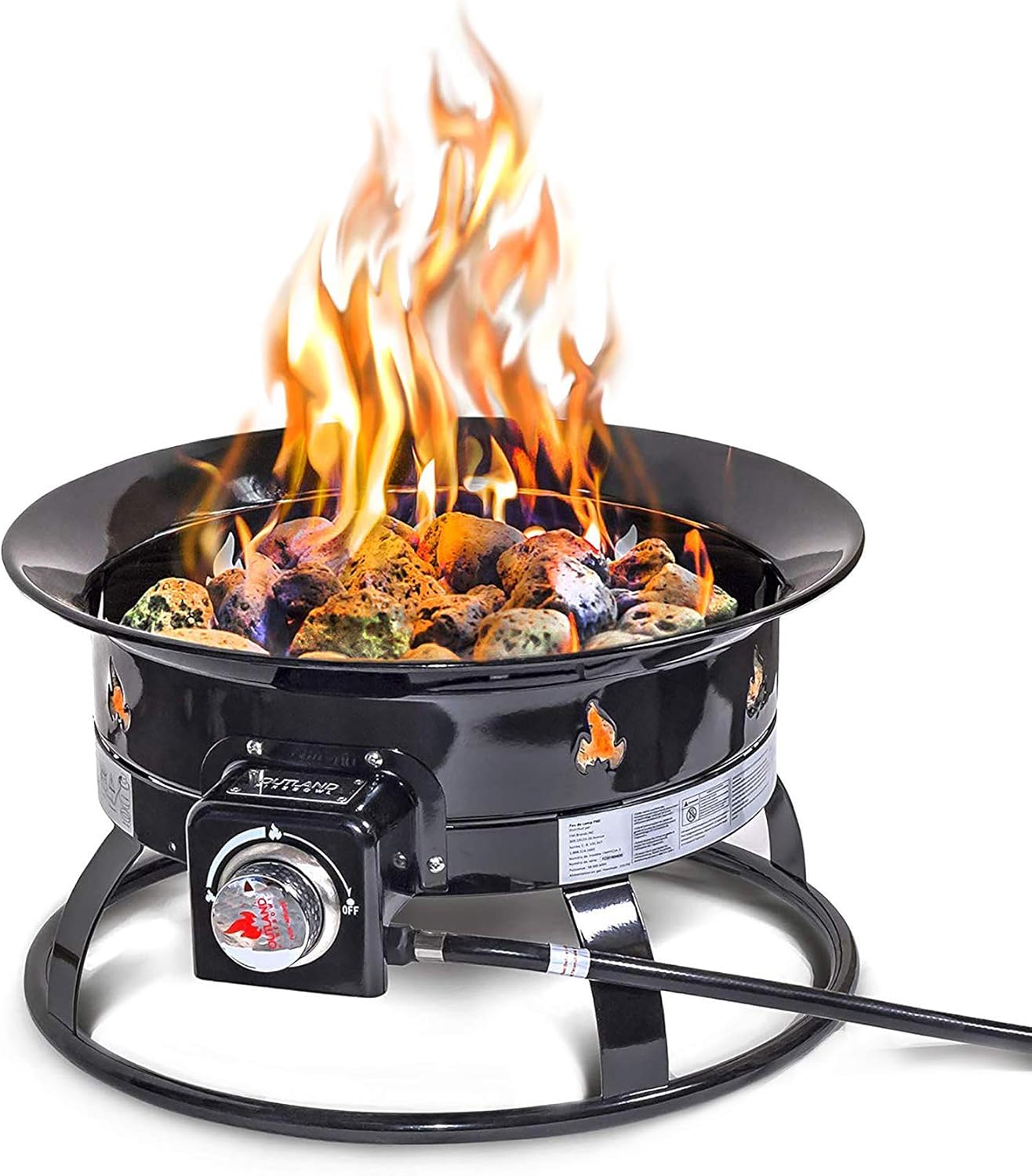
Outland Living Firebowl 893 Deluxe (Propane)
- Fuel: Propane
- Design: Portable gas fire bowl with push-button ignition
- Best use: Patio, camping, tailgating and quick fires
- Cleanup: None, since there is no ash
Pros
- Lights in seconds and shuts off just as fast
- No smoke, ash or sparks
- Portable and easy to take along
- Adjustable flame
Cons
- No wood crackle or real-log smell
- Needs propane tanks refilled or swapped
- Less heat than a big wood fire
The Outland Living Firebowl 893 Deluxe is one of the best-known portable propane fire bowls, and it earns its reputation by being genuinely easy. You connect a tank, turn it on, press the igniter and you are done. The flame can be adjusted, so you can run it low for a quiet evening or higher when the air turns cold. It is also compact enough to move between a patio and a campsite.
What you give up is atmosphere. A gas flame is attractive, but it does not snap, pop or leave that campfire scent on your clothes. It also does not support cooking over embers, so s’mores are a matter of holding a skewer in the flame rather than cooking over a bed of coals. For many people that is a fair trade for how often they will actually use the pit.
Want flames without the fuss?
Check the Outland Firebowl 893 Deluxe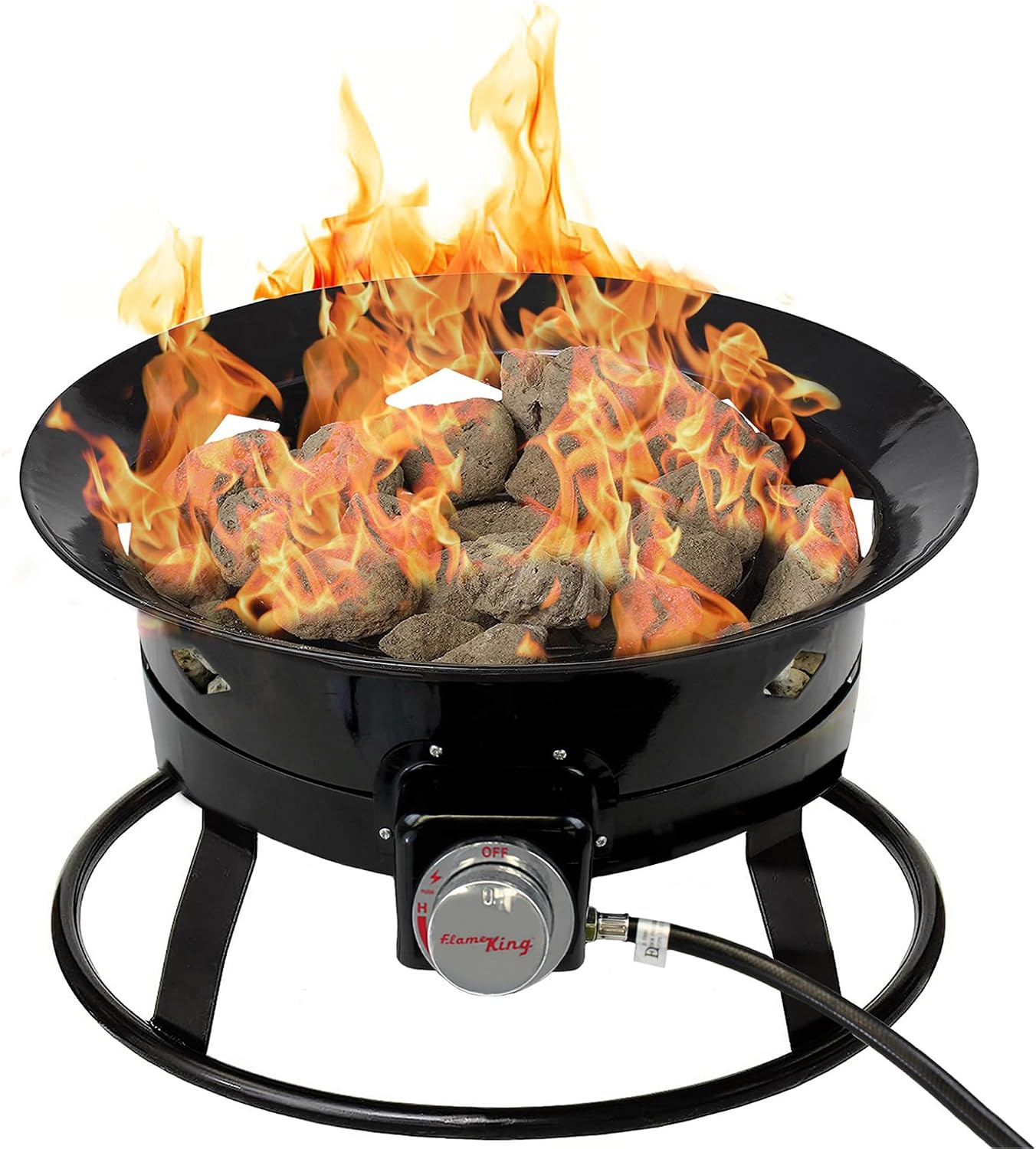
Flame King Smokeless Propane Fire Pit
- Fuel: Propane
- Design: Clean-burning gas fire pit
- Best use: Evening lounging and small gatherings
- Cleanup: Practically none
Pros
- No smoke or ash at all
- Quick, dependable startup
- Friendly to smaller outdoor spaces
Cons
- Requires propane supply and safe tank storage
- Gas flame lacks real-wood ambiance
- Cannot burn wood
The Flame King smokeless propane pit leans into the convenience side of the category. It is the sort of pit you can use on a work night when you only have half an hour to sit outside. Because there is no smoke at all, it is also a polite neighbor, which counts for a lot if your fence line is only a few feet from someone else’s windows.
Propane safety essentials
Gas pits are simple but not forgiving of carelessness. Keep tanks upright and stored outdoors, never inside a garage or house. Inspect hoses and connections for cracks before each season, and use a mixture of soapy water on the fittings to check for bubbles that signal a leak. Always turn off the tank valve when you finish, not just the burner knob, and keep the pit away from structures and overhead obstructions just as you would a wood fire. Follow the manufacturer’s manual for clearances and ventilation.
Propane or wood: how to choose
Ask yourself how you want to spend the first twenty minutes of a fire night. If you enjoy stacking logs, tending coals and talking while the fire builds, wood will reward you. If you want to sit down and have warmth right now, propane will. Many households keep one of each, using gas for quick evenings and wood for the weekend gatherings that deserve the full experience.
Compare gas and wood pits side by side.
See the Flame King Propane Fire Pit9. Large Wood-Burning Bowls: Amazon Basics, OutVue, Sunnydaze and Bali Outdoors
When the guest list is long and the yard is generous, a larger bowl is the right tool. These four pits trade some of the clean-burning sophistication of the smokeless models for sheer size, flexibility and, in most cases, a much friendlier price. They are the workhorses of backyard entertaining.

Amazon Basics 27-Inch Steel Lattice Fire Pit
- Fuel: Wood
- Design: Steel lattice bowl with open sides
- Footprint: Around twenty-seven inches
- Best use: Everyday family fires on a budget
Pros
- Very affordable and simple
- Good airflow and a bright flame
- Classic fire pit look
Cons
- Open lattice allows smoke and sparks
- Painted finish will wear without a cover
- Ash can fall through onto the ground
The Amazon Basics 27-Inch Steel Lattice Fire Pit is the no-nonsense choice. It does not try to reinvent the fire pit. It gives you a sturdy bowl, a lattice sides that let the fire breathe, and a price that makes it easy to say yes. For casual use, it is hard to argue with.
The lattice design is also its main limitation. Because the sides are open, embers and ash can escape, so a spark screen is essential and you should place it on a surface that can handle falling debris. It also smokes more than a double-wall pit, so be ready to move chairs as the wind shifts.
Making a budget pit last
Painted steel bowls respond very well to routine attention. Empty ashes promptly, because they hold moisture and corrode the metal. Wipe the bowl dry, cover it when the fire is out, and touch up chips in the finish with high-heat paint. Lifting the pit slightly off the ground on bricks or pavers improves airflow, protects the surface underneath and keeps the base from sitting in puddles. A few minutes of care after each fire can easily add several seasons to the life of an inexpensive pit.
Looking for the easiest value pick?
Check the Amazon Basics 27-Inch Fire Pit
OutVue 36-Inch 3-in-1 Fire Pit
- Fuel: Wood
- Design: Large bowl with multiple functions
- Footprint: Around thirty-six inches
- Best use: Crowds, cooking and flexible entertaining
Pros
- Large flame bed for groups
- Multiple uses add value
- Plenty of room for bigger logs
Cons
- Takes up significant space
- Heavier to move
- Not a smokeless design
The OutVue 36-Inch 3-in-1 Fire Pit appeals to people who like a pit that can do more than one job. That flexibility is a real advantage, because the same piece of outdoor furniture can serve as a cozy fire on Friday and a cooking station on Saturday. The generous diameter gives guests plenty of space to gather, and the wide bowl makes it easy to build a classic log-cabin fire.
Need one pit that does more?
See the OutVue 36-Inch 3-in-1 Fire Pit
Sunnydaze Crossweave 36-Inch Fire Pit
- Fuel: Wood
- Design: Woven-look steel bowl with decorative sides
- Footprint: Around thirty-six inches
- Best use: Style-focused patios and social evenings
Pros
- Eye-catching woven design
- Large enough for groups
- Fire shows through the sides at night
Cons
- Decorative styling means more cleaning around crevices
- Open sides allow some smoke and sparks
- Needs a cover to protect the finish
The Sunnydaze Crossweave 36-Inch Fire Pit is for the buyer who thinks a fire pit should look good even when it is not lit. The woven pattern throws flickering light through the sides after dark, and it gives the pit a more designed look than a plain lattice bowl. If your patio has a particular aesthetic, this is the pit that is least likely to look out of place.
Want a statement piece for the patio?
Check the Sunnydaze Crossweave Fire Pit
Bali Outdoors 40-Inch Fire Pit with Grill
- Fuel: Wood
- Design: Extra-large bowl with cooking grill
- Footprint: Around forty inches
- Best use: Big groups and outdoor cooking
Pros
- Biggest flame bed in this lineup
- Includes a grill for real cooking
- Seats a crowd comfortably around it
Cons
- Needs lots of space and lots of wood
- Heavy and hard to relocate
- Cooking over live fire takes practice
The Bali Outdoors 40-Inch Fire Pit with Grill is the biggest bowl here, and it is built for people who like to cook and gather in the same spot. With a grill in place, you can turn the evening fire into dinner, searing burgers over coals and finishing with marshmallows over the dying flames. The large diameter means a crowd can ring it and still have elbow room.
Bigger means more commitment. You will need a large, level space with generous clearance, a steady supply of firewood and a cover big enough to protect it. The heat output can be intense, so build smaller fires than you think you need, especially when guests are close.
Lattice and large bowl pit tips
- Burn on a hard surface such as pavers or gravel, not on a deck or lawn.
- Use a spark screen on windy nights or when logs are damp and pop.
- Let coals build before cooking and cook over embers, not tall flames.
- Cover the pit in wet months to prevent rust.
Cooking over a large fire pit: a few practical ideas
Good fire pit cooking starts with patience. Let the logs burn down until you have a bed of glowing coals, then rake them to one side so you have both a hot zone and a cooler zone. Foods such as sausages, skewers, burgers and corn on the cob do well over medium coals, while foil packets of vegetables and potatoes can sit at the edge and cook slowly. Keep long-handled tongs and a pair of heat-resistant gloves nearby, and use a meat thermometer to check that everything is cooked through. Finish the evening with the classic: toasted marshmallows, chocolate and graham crackers.
Cleanliness matters too. Scrape the grill after each use while it is still warm, wipe it once cool and oil it lightly to prevent rust. Keep raw meat away from ready-to-eat food and from the area where kids are roasting snacks, and always put out the fire fully when dinner is finished.
Hosting a crowd or cooking over the fire?
Check the Bali Outdoors 40-Inch Fire Pit with Grill10. Best Fire Pit by Situation: Matching the Pit to Your Life
Specs only tell you so much. The right pit is the one that fits the way you live, so here is how the ten options line up against the most common backyard scenarios.
Best for small patios and townhouse yards
Space is the deciding factor here, and smoke is a close second. The Solo Stove Bonfire 2.0 is the strongest all-round answer because it burns clean in a compact footprint. The GasOne 23-Inch is the budget alternative, and a propane model such as the Outland Firebowl or Flame King removes smoke from the equation entirely, which can matter a great deal when neighbors share a fence line.
Best for families with kids
Families care about two things: easy supervision and easy cleanup. Propane pits win on both counts, since you can shut the fire off instantly and there are no live coals left behind. If you prefer wood, a smokeless stainless pit keeps the outer walls cooler than a single-wall bowl, but any fire pit gets hot, so establish a clear boundary and keep children at a safe distance at all times.
Best for entertaining groups
For a lot of people, the Solo Stove Yukon 2.0 is the sweet spot because it delivers a large, clean fire without a huge footprint. If you want a true gathering circle for ten or more guests, the OutVue 36-Inch, Sunnydaze Crossweave and Bali Outdoors 40-Inch give you room to spread out. The Bali model is the clear choice if you also want to cook for the group.
Best for cooking
Cooking over a fire pit rewards a pit with a grill or at least a grate, and a wide flame bed that you can divide into a hot zone and a cooler zone. The Bali Outdoors 40-Inch with Grill is purpose-built for this. The OutVue 3-in-1 adds flexibility as well. Smokeless pits can be fitted with accessories for cooking too, but their narrower bowls limit capacity.
Best on a tight budget
The Amazon Basics 27-Inch lattice pit and the GasOne 23-Inch are the most economical routes into wood fires. Expect to protect them with a cover and replace them sooner than a stainless pit, and plan on adding a spark screen to be safe.
Best low-maintenance option
Propane. The Flame King and the Outland Firebowl need no ash removal and no wood storage, and they are ready whenever you are. If you want low maintenance and real wood together, choose a stainless smokeless pit and keep it covered.
Best for the style-conscious
The Sunnydaze Crossweave puts the design first, with a woven look that glows through the sides at night. The Solo Stove models appeal to people who prefer a clean, modern aesthetic, and the TIKI pit leans into a relaxed outdoor-living look.
| Your Situation | Top Pick | Runner-Up |
|---|---|---|
| Small patio | Solo Stove Bonfire 2.0 | GasOne 23-Inch |
| Family evenings | Outland Firebowl 893 Deluxe | Solo Stove Bonfire 2.0 |
| Large gatherings | Solo Stove Yukon 2.0 | OutVue 36-Inch 3-in-1 |
| Outdoor cooking | Bali Outdoors 40-Inch | OutVue 36-Inch 3-in-1 |
| Tight budget | Amazon Basics 27-Inch | GasOne 23-Inch |
| Zero smoke | Flame King Propane | Outland Firebowl 893 |
| Decor-first | Sunnydaze Crossweave | TIKI Patio Smokeless |
When two pits seem equally right
If you are torn between two models, ask which problem you would rather live with. A small pit is easy to move and store, but it caps your group size. A large pit is impressive and sociable, but it demands space, wood and effort. A smokeless pit costs more but saves you from smoke. A budget pit saves money but may need replacing sooner. Whichever trade-off you can accept without resentment is the right pick. And if you truly cannot decide, the smokeless wood pit in the middle of the size range is rarely a mistake.
Common buying mistakes to avoid
- Buying too big for the patio and leaving no space for chairs or safe clearance.
- Skipping the cover and watching a good pit rust prematurely.
- Ignoring local rules until a neighbor or an inspector brings them up.
- Burning wet wood and blaming the pit for the smoke.
- Placing it under branches or overhangs where heat and sparks can cause trouble.
Found your match?
Shop Top-Rated Fire Pits11. Designing the Space Around Your Fire Pit
A great fire pit in a bad spot is a disappointment, and an average one in a thoughtfully designed space can feel like a luxury. A little planning around the pit pays off in comfort, safety and how often you actually use it.
Choose the right spot
Pick a level, open area away from structures, fences, trees and overhead cover. Think about the prevailing wind in your yard and place the pit so smoke blows away from your house and your neighbors rather than into them. Consider sightlines too. A fire pit positioned where you can see it from the kitchen window draws people outside naturally.
Create a comfortable seating ring
Arrange chairs in a loose circle with three to four feet between the seats and the pit. Adirondack chairs, benches, outdoor sofas and even log stumps all work. Weather-resistant cushions and throw blankets make a surprising difference, because cool nights are exactly when people want a fire. If you tend to host larger groups, include a few extra stools that can be tucked away afterward.
Add lighting that supports the glow
Fire is bright, but it does not light paths, steps or the snack table. A soft layer of ambient lighting solves that, and it keeps the fire from being the only light source, which makes the area feel cozy rather than dim. Overhead strands, lanterns and low pathway lights all work. If you want inspiration, our list of the best string lights for backyard setups is a good place to start, and the walkthrough on how to string lights across a backyard shows how to hang them safely and keep them well away from open flames.
Think about wildlife and quiet hours
Fire pits and backyard wildlife can coexist, but they require a little thought. Evening fires are noisy and bright for birds, so keep feeders and nesting spots a respectable distance from the pit and out of the smoke. If you enjoy watching feathered visitors, browsing our roundup of the best bird feeders for backyard gardens can help you plan a layout that keeps both the birds and the bonfire happy.
Respect the neighbors
Be thoughtful about timing, smoke and noise. A quick conversation with the people next door can save headaches later, and a fire that is out by a reasonable hour keeps relationships friendly. Smokeless and propane pits make this much easier, and burning only dry, seasoned wood always helps.
Add storage and convenience
A small outdoor storage bench or covered rack keeps firewood dry and tools handy. A bin for ash, a fireplace poker and a pair of heat-resistant gloves live nearby. A cooler stand, a side table and a basket of blankets complete the setup.
Make it feel like an event
The little touches are what make people linger. Keep a basket of s’mores supplies and roasting sticks near the pit. Set out a speaker playing soft music at a polite volume. Offer warm drinks such as cider or cocoa in insulated mugs. A few blankets draped over chairs turn a chilly evening into something inviting. Even a small table for snacks keeps people from wandering inside, and that means more time around the fire.
Seasonal ideas
Spring and fall are prime fire pit seasons, with cool evenings that invite warmth. Summer fires work well after sunset once the heat fades, and winter fires can be magical if you dress warmly and keep the area clear of snow and ice. Adjust your setup for the season, with lighter seating in summer and cozy layers in winter, and your pit will earn its place all year.
Round out the setup.
Shop Outdoor Seating and Patio Essentials12. Fuel, Cleaning and Care: Keeping Your Fire Pit Great for Years
The difference between a pit that lasts a decade and one that looks tired after two summers is rarely the price. It is how you feed it, clean it and store it.
Choose the right firewood
Dry, seasoned hardwood is the best fuel for any wood-burning pit. Oak, maple, hickory and ash burn hot and steady, with little smoke once they are properly dried. Softwoods such as pine burn fast, spark and throw off more smoke and resin, which can leave deposits in smokeless pits. Avoid burning trash, painted or treated lumber, plywood or anything with chemical coatings, because they release harmful fumes and damage the pit.
Firewood should typically be seasoned for six months to a year, and it should be stored off the ground and covered on top so the sides can breathe. If a split log feels heavy, hisses when burned or produces a lot of steam, it is too wet and will smoke no matter how good the pit is.
Light it properly
Start with a small bundle of dry kindling and a natural fire starter, then add a few small splits before moving up to larger logs. In a smokeless pit, keep the fuel below the line of the upper air holes so the secondary burn can work. Do not use gasoline or other accelerants, which are dangerous and can damage the finish.
Clean it regularly
Wait until the ashes are completely cold, often the next day, before cleaning. Empty them into a metal container, wipe down the interior, and clear any air vents. Stainless pits can usually be wiped with a damp cloth and mild soap, and a stainless cleaner can restore shine. Avoid abrasive pads that can scratch the finish. Remember that stainless can discolor with heat. That is normal, and it often gives pits a lived-in character.
Protect it from the weather
A fitted cover is the most worthwhile accessory you can buy. It keeps rain, snow, leaves and critters out, and it prevents the standing water that rusts steel bowls from the inside out. For painted pits, touch up scratches with high-heat paint to stop rust from taking hold. In winter, store smaller pits in a garage or shed if you can.
Propane pit maintenance
Inspect the hose, regulator and connections each season. Keep the burner clear of debris and spider webs, which can block gas flow, and store tanks upright in a ventilated outdoor area. If you notice a gas smell, turn off the tank valve and stay away until the problem is resolved.
A simple seasonal routine
- Spring: inspect for rust, clean the vents, test the ignition on gas models and restock dry wood.
- Summer: keep it covered between uses and check the spark screen for damage.
- Fall: clean thoroughly, touch up paint and stock up on firewood before demand rises.
- Winter: store smaller pits indoors and keep larger ones fully covered.
Troubleshooting common problems
If your pit smokes more than you expect, the cause is almost always the fuel. Switch to drier hardwood, use smaller splits and avoid overfilling. If a smokeless pit is hard to light, check that the air vents are clear and that you are not packing logs too tightly. If a gas pit will not ignite, check the tank, the connections and the igniter battery, and make sure the burner ports are free of debris. If rust appears on painted steel, sand it lightly, wipe it clean and apply high-heat paint before the damage spreads.
Protect your investment.
Shop Fire Pit CoversFrequently Asked Questions About Backyard Fire Pits
What is the best fire pit for a backyard overall?
For most households, a smokeless wood-burning pit such as the Solo Stove Bonfire 2.0 offers the best balance of clean burning, portability and looks. If you host larger groups, the Yukon 2.0 is the better match, and if you want effortless convenience, a propane pit is hard to beat.
Are smokeless fire pits really smokeless?
Not entirely. They dramatically reduce smoke by pulling air through a double-wall design and burning off much of the smoke in a secondary burn. You will still see some smoke during startup, and wet or unseasoned wood will produce more. With dry hardwood, the difference compared with an open bowl is striking.
Is a wood or propane fire pit better?
It depends on what you value. Wood gives you crackle, scent, higher heat and the ability to cook. Propane gives you instant flames, no ash and no smoke. Many people choose wood for weekend entertaining and propane for quick, easy evenings.
How far should a fire pit be from the house?
Manufacturers commonly suggest at least ten to fifteen feet from the house, fences and other structures, and many local codes set their own distances. Always follow the instructions that come with your pit and check municipal rules. Our guide on having a fire pit in your backyard covers distances and permits in more detail.
Can I use a fire pit on a wood deck?
Generally you should not use a wood-burning pit directly on a wooden deck or on grass. If you must, use a pit specifically rated for deck use, a stand, and a certified heat shield, and follow the manufacturer’s directions. Propane pits can sometimes be used on non-combustible surfaces but still require careful clearance.
What size fire pit do I need?
For two to four people, a pit about twenty to twenty-five inches across is plenty. For a family and a few guests, twenty-seven to thirty-six inches works well. For larger crowds, look at pits of thirty-six to forty inches, and make sure your patio has the room for it plus seating clearance.
What wood is best for a fire pit?
Dry, seasoned hardwoods such as oak, maple, hickory and ash burn hot and clean. Avoid softwoods like pine when possible, and never burn treated lumber, plywood, painted wood or trash.
How do I put out a fire pit safely?
Let the wood burn down to ash, then spread the coals and sprinkle water gradually while stirring until nothing glows. Avoid dousing a very hot stainless pit with a flood of water, which can warp metal. For propane pits, turn off the burner and the tank valve.
Do fire pits need a cover?
Yes, it is strongly recommended. A cover keeps out rain and debris, slows rust and helps the finish last. It is especially important for painted steel and large lattice pits.
Can I cook on a backyard fire pit?
Yes, with the right equipment. Pits with a grill or grate, like the Bali Outdoors 40-Inch, are designed for it. Always cook over embers rather than flames for better results, and use tools with long handles.
Should I build a permanent fire pit instead of buying a portable one?
A permanent stone pit adds lasting value and looks beautiful, but it takes effort, budget and a good spot. Portable pits offer flexibility and can be moved, replaced or taken to a campsite. If a built-in pit appeals, read our walkthrough on how to build a fire pit in your backyard.
Will a fire pit bother birds or other backyard wildlife?
Smoke and flame can disturb wildlife, so keep feeders, birdhouses and nesting spots well away from the pit. Fires are best enjoyed in the evening when most birds have settled, and clean-burning pits reduce any impact.
Still weighing your options?
Compare Fire Pits on AmazonFinal Thoughts: Choosing the Best Fire Pit for Your Backyard
The best fire pit is the one you will actually light. That sounds obvious, but it is the lens that makes every choice in this guide easier. A premium smokeless pit is a joy if you will use it weekly, but it is wasted if you only want a fire twice a year. A propane bowl is wonderful if convenience gets you outside, but it will disappoint someone who wants a log fire and a skillet of sizzling food.
If you want a single recommendation, the Solo Stove Bonfire 2.0 with its stand is the best all-rounder for most yards, while the Yukon 2.0 is the upgrade for bigger gatherings. The TIKI Patio Smokeless and GasOne 23-Inch are smart compact options. The Outland Firebowl 893 and Flame King deliver effortless propane flames. If you love scale and cooking, the Amazon Basics, OutVue, Sunnydaze and Bali Outdoors pits give you value and room to host.
Whichever you pick, a few habits do the heavy lifting: place it safely, burn dry fuel, cover it when it is idle and keep water close. Do that and your fire pit will become the place where your best backyard memories happen, night after night and season after season.
Ready to start your backyard fire pit nights?
Browse current prices, ratings and availability for the top fire pits.