

Best Backyard Trampolines: 9 Picks for Every Yard, Age, and Budget
From full-size family trampolines with enclosures to toddler-safe mini jumpers and springless premium designs — here is how to choose the right trampoline for your backyard, and the models worth buying.
Why a Trampoline Is Still the Best Backyard Upgrade for Active Families
There is a specific kind of joy that shows up the day a trampoline lands in a backyard: kids who were bored within five minutes of breakfast suddenly disappear outside for hours, and the adults who “supervise” end up taking just as many turns on the mat.
A backyard trampoline is one of the few pieces of outdoor gear that earns its footprint. It becomes a workout station, an after-school energy dump, a weekend gathering magnet, and — if you have ever hosted a birthday party — an instant party venue. Compared with the cost-per-use of most backyard entertainment, a good trampoline that lasts several seasons is remarkably good value.
But “good trampoline” is doing a lot of heavy lifting in that sentence. The category spans everything from a toddler bouncer that lives in a corner of the yard to a full-size rectangle model built for gymnastic-style tumbling, and the difference between a model you love and one you resent comes down to details: how the enclosure integrates with the jumping surface, how the frame handles years of weather, how much clearance the yard needs, and how forgiving the bounce is for lighter jumpers.
This guide covers nine trampolines that represent the best of what is available right now across those categories. We have grouped them by the job they actually do in a real backyard — overall best, family workhorse, activity-packed, performance, budget, compact, premium springless, and toddler-friendly — so you can match a trampoline to the people who will use it rather than to a spec sheet.
What you will get from this guide
- A scannable comparison table with every trampoline, its best use case, and a direct link.
- Detailed review blocks covering design, safety thinking, pros, cons, and who each model suits.
- A practical section on measuring your yard and choosing a size and shape.
- Safety setup and supervision guidance, plus a maintenance checklist that extends the life of the frame, mat, and net.
One note before we dive in: trampoline buying is mostly about fit, not features. The most expensive trampoline in the world is the wrong purchase if it overwhelms a small yard or is too stiff for a seven-year-old. Read the buying guide section even if you already have a favorite model in mind — it will either confirm your choice or save you from an expensive mistake.
If you are still shaping the rest of the yard around your new setup, our companion guides to the best backyard playsets and the best backyard mosquito repellents are worth reading alongside this one. Nothing ends an evening jumping session faster than a swarm of mosquitoes.
Browse current backyard trampoline listings to compare sizes, enclosure styles, and availability in your area.
Quick Comparison: Our Top Picks
Every trampoline in this guide appears in the table below. Specs are described the way a buyer actually uses them — jump feel, footprint, intended age group, and standout design choices — rather than in marketing numbers. Use the links to jump straight to the full review block for each model.
| # | Product | Best For | Key Specs | Verdict | Where to Buy |
|---|---|---|---|---|---|
| 1 | |
Top Pick Zupapa 1800LBS No-Gap Trampoline with Enclosure Best Overall |
|
The one to beat for most families: clever gap-free safety thinking and a sturdy, quiet ride. | Check Price on Amazon |
| 2 | 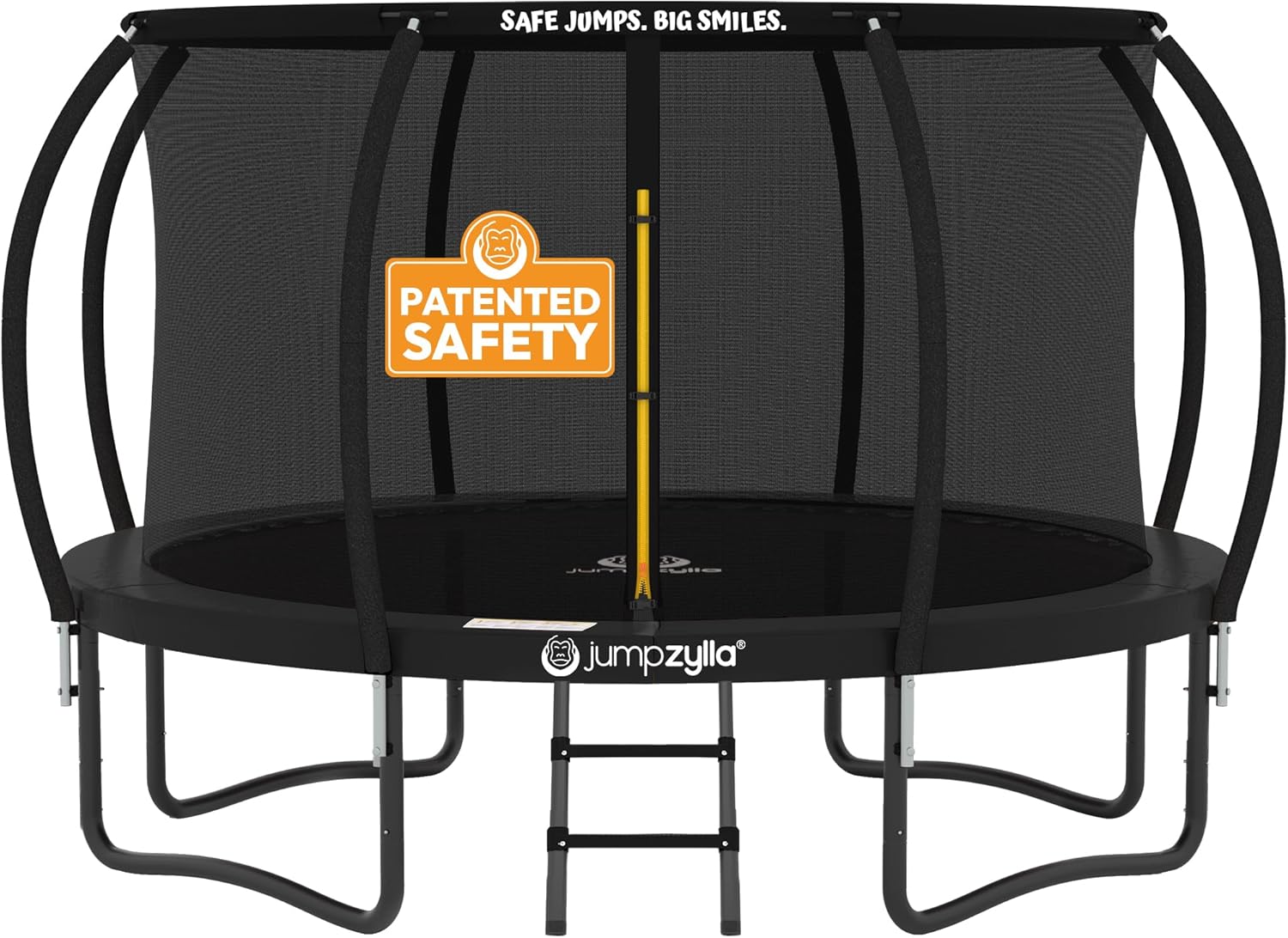 |
JUMPZYLLA Outdoor Trampoline with Enclosure Best for Families |
|
A polished, family-first design that looks as good as it jumps. | Check Price on Amazon |
| 3 |  |
ORCC 1300LBS Trampoline with Hoop and Sprinkler Best Activity Center |
|
Turns the trampoline into an all-afternoon hangout, not just a jumping surface. | Check Price on Amazon |
| 4 |  |
Skywalker Signature Series Rectangle Trampoline Best for Serious Jumpers |
|
The shape gymnasts and multi-kid households keep asking for. | Check Price on Amazon |
| 5 | 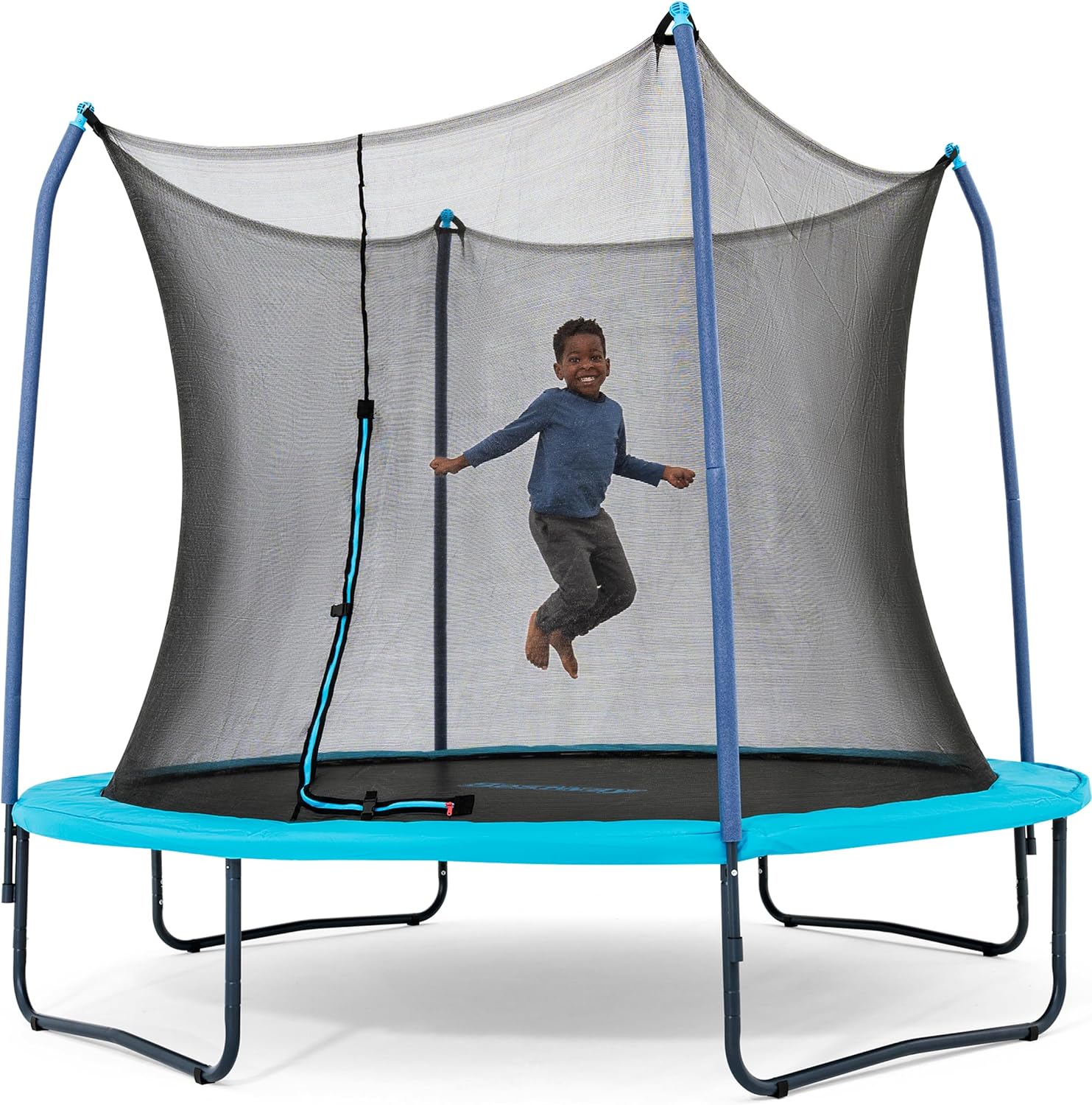 |
Bestway Xtreme Air Trampoline Best Budget Pick |
|
Proof that a fun, safe backyard trampoline does not have to be a major investment. | Check Price on Amazon |
| 6 |  |
AOTOB 8FT Trampoline with Net Best for Small Yards |
|
Fits where bigger models simply cannot, without feeling like a toy. | Check Price on Amazon |
| 7 |  |
Springfree Trampoline (Oval) Best Premium Springless |
|
The safety-and-comfort reference point; more expensive, and it feels it. | Check Price on Amazon |
| 8 | 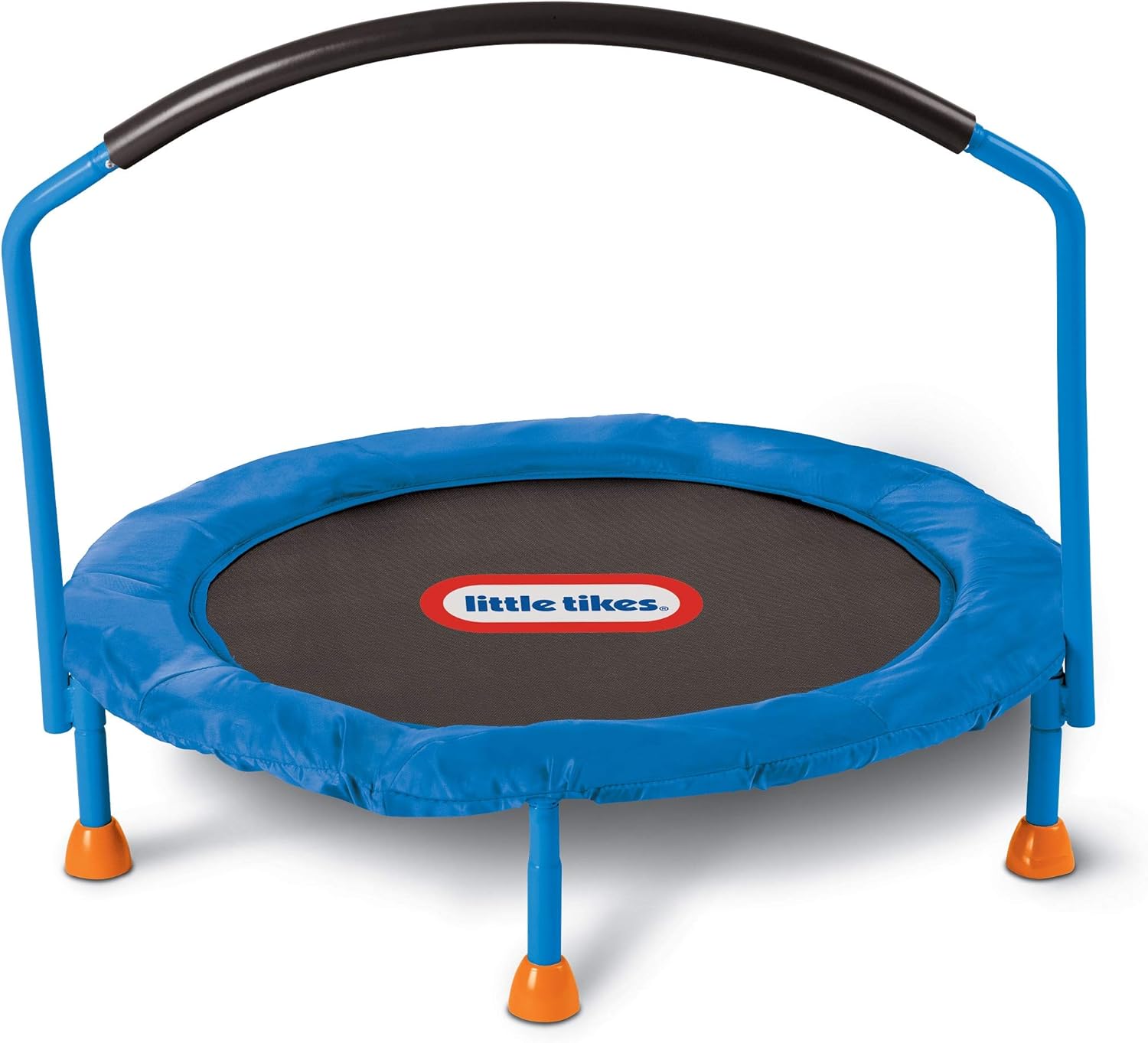 |
Little Tikes Trampoline (Kids, Amazon Exclusive) Best for Young Kids |
|
A confidence-building first trampoline for jumpers who are not ready for the big frame. | Check Price on Amazon |
| 9 |  |
Giantex 6FT Toddler Trampoline with Swing Best Toddler Play Set |
|
Two playground activities in one footprint — clever for smaller spaces. | Check Price on Amazon |
Keep scrolling for the full review of each trampoline, including who it is best for and what to know before you buy.
Start with the top pick, then compare it against the runner-up in your size category.
How We Chose These Trampolines
Every trampoline on this list had to clear the same bar: it has to be genuinely safe in a real family backyard, genuinely enjoyable to jump on, and genuinely durable enough to survive sun, rain, and enthusiastic children. That sounds obvious, but a surprising number of trampolines fail at least one of those three.
We started with safety architecture, because it is the part of a trampoline you cannot retrofit later. Models where the enclosure integrates cleanly with the jumping surface — where there is no obvious gap for a foot or ankle to find — ranked higher than models where the net sits awkwardly far from the mat. Frame stability mattered just as much: a trampoline that flexes noticeably when a heavier jumper lands is not just unpleasant, it accelerates wear on the legs and joints.
Then we looked at jump quality across body weights. A trampoline that only feels good under a heavy adult is useless in a family setting, and one tuned only for toddlers will bore a teenager within a week. The best family trampolines give lighter jumpers a lively, encouraging bounce while still absorbing an adult landing without bottoming out.
Build quality came next. Trampolines live outside, permanently, in an environment that is essentially a slow-motion stress test: UV exposure, temperature swings, moisture, wind loading, and repeated dynamic force. The stitching around the mat, the quality of the enclosure netting, the thickness of the padding over springs or frame, and the corrosion resistance of the hardware all tell you how a trampoline will look after its third season.
Finally, we weighed the practical stuff that decides whether you actually enjoy owning the thing. Assembly time and clarity. How much yard it eats. Whether replacement parts and accessories are easy to find. Whether the design is something you are happy to look at every day from the kitchen window. And, of course, value — because a trampoline should deliver years of use per dollar, not just a good first week.
Our selection criteria at a glance
- Safety design: enclosure integration, gap management, padding coverage, frame stability.
- Jump quality: bounce character across a range of body weights and ages.
- Durability: materials, weather resistance, and how the structure handles repeated load.
- Practicality: footprint, assembly, aesthetics, and parts availability.
- Value: what you get for the money compared with alternatives in the same category.
No single model wins every criterion, which is exactly why this guide is organized by use case rather than by a single ranking. The right trampoline for a small suburban yard with one six-year-old is not the right trampoline for a family of four with a gymnast in the house.
Open several listings side by side and check the enclosure style and frame design against the criteria above.
Zupapa 1800LBS No-Gap Trampoline with Enclosure — Best Overall
The Zupapa is the trampoline we keep coming back to when someone asks the simple question: “I just want the best all-around one for my family.” It solves the problem that matters most — the seam between jumping surface and enclosure — with a no-gap design that keeps feet and ankles away from springs and frame edges, and it does it inside a frame that feels reassuringly planted no matter who is jumping.
The name itself tells you where this model positions itself in terms of structural capacity: the 1800LBS designation points to a heavy-duty frame design intended to handle more demanding use than entry-level backyard trampolines. In practice, that shows up as stability. Bounce on the Zupapa and the frame stays composed; there is very little of that unsettling flex you get when a lighter trampoline absorbs a big landing.
The no-gap concept deserves more than a passing mention, because it is the design decision that sets this trampoline apart. On traditional trampolines, the mat stops, then there is a spring zone, then the frame, and the enclosure rises from somewhere near that edge. Every seam in that chain is a place where a misplaced foot can find trouble. By pulling the enclosure net and the jumping surface together, Zupapa removes that seam. For parents of enthusiastic, spatially optimistic children, that is not a gimmick — it is the feature you will be most grateful for.
Key features
- No-gap mat and enclosure design — the jumping surface and net integrate to minimize exposed spring and frame zones.
- Heavy-duty steel frame — the 1800LBS positioning points to a reinforced structure built for stability under repeated load.
- Full-height safety enclosure — netting surrounds the jumping area to keep jumpers contained.
- Weather-resistant materials — components selected for outdoor exposure across seasons.
- Family-scale proportions — large enough for older kids and adults, still approachable for younger jumpers.
What it is like to live with
Setup follows the familiar trampoline pattern — frame first, then legs, mat, springs, padding, and enclosure — and it rewards a second pair of hands. The payoff of the no-gap design is felt immediately on the first jump: the mat feels like the edge is simply “further away,” which encourages confident jumping without the cautious half-step you see kids do near the perimeter of lesser trampolines.
Bounce character is on the stable, controlled side rather than the wildly springy side. That is a good trade for a family trampoline. Teenagers who want maximum air may prefer a performance-oriented rectangle model, but for mixed-age use where a six-year-old and a forty-year-old both take turns, controlled and predictable is exactly right.
What we like
- No-gap design meaningfully improves perimeter safety.
- Stable, confidence-inspiring frame with minimal flex.
- Bounce suits a wide range of ages and body weights.
- Enclosure integration feels designed, not bolted on.
Keep in mind
- Large footprint — measure the yard before committing.
- Assembly is a full-morning project for most households.
- Controlled bounce may underwhelm dedicated air-seekers.
See current availability, colors, and bundle options for the top pick.
JUMPZYLLA Outdoor Trampoline with Enclosure — Best for Families
The JUMPZYLLA is the trampoline for people who care about how the backyard looks as much as how it jumps. Where many trampolines are purely functional — a tangle of steel, black netting, and blue padding — this one reads as a considered piece of outdoor equipment. The enclosure lines are clean, the frame padding is tidy, and the overall silhouette is something you can leave standing year-round without apologizing for it.
That matters more than buyers expect. A trampoline is a permanent architectural feature of the yard, visible from the patio, the deck, and often the kitchen. Trampolines that look like a science experiment tend to end up in arguments about whether they should be taken down; trampolines that look intentional tend to become part of the family routine.
Underneath the styling, the fundamentals are right. The enclosure is properly integrated, the frame padding covers the impact zones, and the bounce has that middle-of-the-road character that works for a household with kids at different ages. It is not trying to be a gymnastics trampoline and it is not trying to be a toddler toy — it is trying to be the one trampoline a family uses together, and that focus shows.
Key features
- Integrated safety enclosure — netting designed to work with the frame rather than against it.
- Generous frame padding — covers the perimeter impact zones where jumpers land.
- Family-tuned bounce — lively enough for kids, controlled enough for adults.
- Refined outdoor design — a cleaner, more intentional look than most backyard trampolines.
- Weather-ready construction — built to live outside through the season.
What it is like to live with
The JUMPZYLLA earns its “family” label through consistency. Jumpers of different weights get a similar experience, so nobody is stuck with the trampoline that is “too bouncy” or “too flat” for them. That is a real quality-of-life detail in a household where the trampoline is shared rather than claimed.
Assembly is standard for the category: spread everything out, confirm the orientation before tightening anything, and bring a friend for the mat installation. Once it is up, day-to-day ownership is about the usual rhythm — sweep off leaves, check the enclosure zips and clips, and give the mat a quick inspection before heavy-use weekends.
What we like
- Best-looking trampoline in the lineup for design-conscious yards.
- Bounce genuinely works for mixed ages.
- Padding and enclosure feel generous and thoughtfully placed.
- Easy to live with on a day-to-day basis.
Keep in mind
- Styling comes at a premium over bare-bones options.
- Not built for advanced tumbling practice.
Check the current listing for size options and enclosure details.
ORCC 1300LBS Trampoline with Hoop and Sprinkler — Best Backyard Activity Center
Some trampolines are a product. The ORCC is more like a venue. By shipping with a basketball hoop and a sprinkler system alongside the enclosure, it answers the question every parent eventually asks: how do I keep this thing interesting after the novelty wears off?
The answer, it turns out, is to give the trampoline a second and third job. A hoop turns jumping into a game with rules and goals, which means kids stay engaged far longer than they do with free jumping alone. A sprinkler turns the same space into summer relief on the hottest days, when outdoor play would otherwise end at noon. Between the two, the trampoline becomes the default destination in the yard rather than one option among several.
Under the accessories, the fundamentals hold up. The 1300LBS designation in the name points to a reinforced frame build, and the enclosure does its core job of containing jumpers. The jump feel leans lively — appropriate for a trampoline built around play and games rather than serious training.
Key features
- Basketball hoop included — adds a structured game element to the jumping surface.
- Sprinkler accessory — designed to integrate with the trampoline for hot-weather play.
- Safety enclosure — full netting around the jumping zone.
- Reinforced frame design — the 1300LBS positioning suggests a robust structural build.
- Activity-first bundle — more ways to use the trampoline out of the box.
What it is like to live with
Expect the ORCC to be the loudest, most sociable trampoline on the block. The hoop invites competition and spectators; the sprinkler invites shrieking. If your goal is a backyard that fills up with neighborhood kids, this is the setup that does it.
One practical note: accessory-heavy trampolines reward a slightly more diligent setup routine. Attachments should be checked before play, the hoop should be inspected for looseness after vigorous games, and the sprinkler should be drained and stored rather than left connected through storms. Ten minutes of that kind of care keeps everything playing nicely together.
What we like
- Hoop and sprinkler keep kids engaged for far longer.
- Great value when you consider what the bundle includes.
- Strong social magnet for neighborhood play.
- Solid frame build for the category.
Keep in mind
- Accessories add a small amount of ongoing checking and upkeep.
- Bounce is playful rather than performance-focused.
- Games can get competitive — house rules are worth setting early.
See what is included in the current bundle before it sells out for the season.
Skywalker Signature Series Rectangle Trampoline — Best for Serious Jumpers
Shape changes everything. Round trampolines pull jumpers toward the center, which is a safety feature as much as a performance characteristic. A rectangle trampoline does something different: it delivers a more even, predictable response across the whole mat, which is exactly what tumbling practice, sequences of tricks, and older, heavier jumpers need.
The Skywalker Signature Series rectangle is built for that audience. The rectangular layout gives jumpers a longer usable axis, so a running approach or a linked combination has somewhere to go. And because the mat response is more consistent across its surface, jumpers learn to trust where they land — the single biggest factor in progressing safely from simple jumps to skills.
It is also the right shape for multi-jumper households who have outgrown the “one person at a time” rule that round trampolines effectively enforce. A rectangle gives two jumpers separate zones far more gracefully than a round surface, where both end up chasing the same center.
Key features
- Rectangle performance shape — even mat response across a longer usable jumping axis.
- Signature Series build — a step up in construction ambition from entry models.
- Integrated safety enclosure — containment for dynamic, moving-jumper play.
- Skill-friendly surface — encourages sequences, approach jumps, and controlled landings.
- Great for older jumpers — the response rewards weight and technique.
What it is like to live with
If you have a child in gymnastics, cheer, martial arts, or diving, this is the trampoline that will actually support practice rather than just burn energy. Coaches and athletes consistently prefer rectangle shapes precisely because the bounce is honest: what you put in is what you get back, and the landing zone behaves the same way every time.
The trade is space. Rectangle trampolines need a generous clearance footprint, and the shape tends to read as more “equipment” than “yard furniture.” For a household that will use it seriously, that trade is easy to accept.
What we like
- Even, predictable bounce across the entire mat.
- Ideal shape for tumbling and skill progression.
- Handles multiple jumpers and older, heavier users well.
- Enclosure suits dynamic, moving play.
Keep in mind
- Requires a larger, clearly rectangular yard space.
- Less forgiving for very small or timid beginners.
- Visual footprint is more functional than decorative.
Check current dimensions and enclosure details in the listing.
Bestway Xtreme Air Trampoline — Best Budget-Friendly Pick
Not every backyard trampoline needs to be a decade-long investment. Maybe you are testing whether your kids will actually use one. Maybe you are renting. Maybe the budget is simply the budget. In those cases, the worst thing you can do is either skip the trampoline entirely or overspend on a premium model you are nervous about.
The Bestway Xtreme Air is the answer to that problem. It delivers the core experience — a real jumping surface, a real safety enclosure, a real trampoline feel — at a price that does not require a family meeting. The “Xtreme Air” framing suggests a bounce-tuned design that prioritizes lively, fun jumping, which is exactly what you want from a trampoline whose main job is enjoyment.
Crucially, “budget” here does not mean “toy.” The enclosure is a proper enclosure, the frame is a proper trampoline frame, and the assembly follows the same logic as models costing considerably more. What you give up is mostly refinement: simpler styling, fewer premium touches, and a build philosophy aimed at good value rather than maximum lifespan.
Key features
- Accessible price point — one of the most affordable ways into a real backyard trampoline.
- Safety enclosure included — no separate purchase required to get containment.
- Bounce-focused design — the “Air” concept points to a lively jump feel.
- Approachable assembly — straightforward construction for first-time buyers.
- Low-commitment ownership — ideal for testing the trampoline habit.
What it is like to live with
Owners of budget trampolines who follow the basic care routine get far more life out of them than those who treat them as disposable. Sweep the mat, check the enclosure regularly, tighten hardware after storms, and consider a cover for extended bad weather. Do that, and the Bestway delivers seasons of jumping that would have cost multiples more at a trampoline park.
Where it fits in a household matters too. This is an excellent first trampoline, an excellent choice for younger kids who will eventually upgrade, and a genuinely sensible buy for anyone who wants the fun without the financial gravity.
What we like
- Genuine trampoline experience at a budget price.
- Enclosure included from the start.
- Lively, fun-oriented bounce character.
- Smart low-risk way to test the trampoline habit.
Keep in mind
- Less long-term durability focus than premium models.
- Fewer refined styling and comfort touches.
- May be outgrown by serious, heavy-use jumpers.
See the current listing and available sizes.
AOTOB 8FT Trampoline with Net — Best for Small Yards
The most common trampoline problem has nothing to do with trampolines. It is that the yard is small. Suburban lots, townhouse green space, the patch behind a rental house — there are millions of backyards where a full-size family trampoline simply does not fit, and where owners wrongly conclude that trampolines are not for them.
The AOTOB 8FT exists for exactly that situation. Eight feet is the sweet spot of the compact trampoline world: big enough that older kids and adults can take real jumps, small enough that it leaves the yard usable for other things. Its round footprint is naturally efficient, and the enclosed net design keeps the usable jumping area safely contained without sprawling.
What separates this from a “kids’ trampoline” is proportion. The AOTOB is a scaled-down real trampoline, not a large toy. The frame, mat, and enclosure follow the same logic as their bigger siblings — they simply occupy less ground. That means younger children can use it with confidence while older ones do not feel like they have been demoted.
Key features
- 8FT compact footprint — the size comes straight from the product name and fits small yards.
- Safety net enclosure — full containment around the jumping area.
- Efficient round shape — maximizes jumpable space per square foot of yard.
- Real trampoline construction — scaled down, not dumbed down.
- Flexible placement — fits patios, corner lots, and shared outdoor space.
What it is like to live with
Smaller trampolines have one underrated advantage: they are easier to supervise. When the entire jumping zone is visible from the patio chair, from the kitchen window, from where you are standing with a coffee, supervision becomes natural rather than a chore. Parents of younger children in particular find that the smaller size turns “watching the kids on the trampoline” into something that fits alongside other things they are doing.
The compact size also softens the visual impact on the yard. A full-size trampoline can dominate a small garden; an 8FT model reads as one feature among several. Pair it with the ideas in our guide to stringing lights across the backyard and you have a genuinely lovely evening hangout spot.
What we like
- Fits yards where larger models are impossible.
- Real trampoline feel, not a toy.
- Easy to supervise from close range.
- Leaves plenty of yard for everything else.
Keep in mind
- Single-jumper model in practice.
- Older teens wanting maximum air will want something bigger.
Confirm dimensions against your space before ordering.
Springfree Trampoline (Oval) — Best Premium Springless Design
Every category has a reference product — the one everyone else is measured against — and in premium trampolines, that reference is Springfree. The name tells the story: this design replaces traditional metal springs with a flexible rod system beneath the jumping surface, which removes the hard, pinch-prone edge zone that defines conventional trampolines.
It is a genuinely different engineering approach, and you feel it in three ways. First, safety: with no spring zone to step on or fall against, the perimeter of the mat becomes far less hazardous. Second, comfort: the soft-edge concept means jumpers who drift toward the edge meet a forgiving response instead of a hard metal transition. Third, durability: without springs to stretch, rust, or lose tension, one of the classic aging problems of trampolines simply does not apply.
The oval shape is a deliberate middle ground between round and rectangle. It gives you a longer jumping axis than a round trampoline — useful for older kids and linked jumps — while keeping the natural centering feel that makes round trampolines intuitive for beginners. For a family that includes both cautious and confident jumpers, the oval is arguably the most versatile shape available.
Key features
- Spring-free flex-rod design — removes the traditional hard spring and frame edge zone.
- Oval shape — blends the approach-friendly feel of round with extra jumping length.
- Soft-edge mat concept — forgiving response near the perimeter.
- Premium build quality — materials and finish a clear step above the category norm.
- Longevity-focused engineering — fewer classic wear points to fail over time.
What it is like to live with
Premium trampolines are judged on whether the experience justifies the cost over years, not over a weekend. The Springfree case is built on cumulative comfort: the reduced edge anxiety, the consistent bounce, the absence of spring maintenance, and the fact that the design still feels modern several seasons in.
This is also the trampoline we recommend most often to parents who are nervous about trampolines in general. If the classic metal-spring image is what has been holding you back, the springless approach addresses that concern directly rather than asking you to simply accept it.
What we like
- Spring-free design removes the classic impact and pinch zone.
- Oval shape suits a wide range of jumpers and skill levels.
- Excellent long-term durability profile.
- The most reassuring option for cautious parents.
Keep in mind
- Premium positioning means a premium price.
- Bounce feel is unique — worth trying if you can before buying.
- Footprint is still substantial in an oval configuration.
See current availability and configuration options.
Best Backyard Trampolines for Toddlers and Little Kids
There is a stage where a full-size trampoline is simply the wrong tool. Toddlers and preschoolers do not need height — they need a surface they can trust, a way to steady themselves, and a size that matches their body rather than dwarfing it. Put a three-year-old on a family trampoline and you get hesitant, wobbly jumping. Put the same child on a properly scaled kids’ trampoline and you get twenty minutes of pure, confident joy.
The two models below take different approaches to that problem, and both are excellent. One focuses on a stable, indoor-outdoor first trampoline with a handle for balance; the other expands the concept into a mini play set by combining jumping with a swing. Below the table, you will find the detail on each.
| # | Product | Best For | Key Specs | Verdict | Where to Buy |
|---|---|---|---|---|---|
| 1 | |
Top Pick Little Tikes Trampoline (Kids, Amazon Exclusive) Best First Trampoline |
|
The confidence-builder. Handle bar makes early jumping feel safe and easy. | Check Price on Amazon |
| 2 | |
Giantex 6FT Toddler Trampoline with Swing Best Play Set Combo |
|
Two activities, one footprint — brilliant for small yards and short attention spans. | Check Price on Amazon |
| 3 | |
AOTOB 8FT Trampoline with Net Best to Grow Into |
|
The sensible step up when the toddler trampoline has been fully conquered. | Check Price on Amazon |
Little Tikes Trampoline (Kids, Amazon Exclusive) — Best First Trampoline
Little Tikes has spent decades making play equipment for small children, and the design intelligence shows in the details. The proportions are genuinely child-scale, the mat sits low to the ground, and the stabilizing handle gives young jumpers something to hold onto while they work out how bouncing actually works.
That handle is the feature that matters most. Balance is still developing at this age, and having a fixed point to grip lets children focus on the fun of the bounce rather than the fear of the wobble. It is also why this trampoline works indoors as well as out — on rainy days, it becomes a rainy-day energy solution instead of a wasted investment.
As an Amazon Exclusive edition, it is a listing worth checking directly for current availability and configuration.
- Stabilizing handle bar — gives new jumpers confidence and balance support.
- Child-scale proportions — sized for small bodies and short legs.
- Low jumping height — keeps early jumping close to the ground.
- Indoor and outdoor flexibility — usable in any weather.
- Amazon Exclusive edition — distinctive listing with its own configuration.
What we like
- Handle bar is a genuine safety and confidence feature.
- Perfect scale for toddlers and preschoolers.
- Works indoors on bad-weather days.
Keep in mind
- Strictly for small children — older kids will outgrow it fast.
- Limited jumping area for growing bodies.
Check the current listing for this exclusive edition.
Giantex 6FT Toddler Trampoline with Swing — Best Toddler Play Set
The Giantex takes the smart step of asking what else the trampoline footprint can do. The answer, in this case, is a swing — turning a single piece of play equipment into a two-activity station that occupies about as much yard as a normal toddler trampoline.
For young children, that variety is gold. Attention spans at this age run in short bursts, and the ability to switch from jumping to swinging and back without going anywhere keeps play going much longer. The 6FT size from the product name makes it a compact addition to the yard, suitable for smaller gardens and shared outdoor spaces.
It also fits naturally into a wider play area. If you are building out a kid-friendly backyard, this pairs well with the ideas in our roundup of the best backyard playsets, giving you multiple activity zones without needing a huge lot.
- Trampoline plus swing combo — two activities in a single footprint.
- 6FT size from product name — compact enough for small yards.
- Toddler-focused design — proportions and height aimed at young children.
- Attention-friendly variety — keeps short-burst play going longer.
- Play-area friendly — sits naturally alongside other backyard play equipment.
What we like
- Swing adds genuine play value to the same footprint.
- Compact enough for small gardens.
- Holds young children’s attention longer than a single-activity piece.
Keep in mind
- Toddler-only — this is not a grow-with-them trampoline.
- Combination designs deserve the usual attachment checks before play.
See what is included in the current set.
How to Choose the Right Trampoline Size and Shape for Your Yard
Most trampoline regrets are space regrets. The model that felt perfect in a product listing turns out to swallow the lawn, block the garden bed, or sit three feet too close to the fence. The good news is that avoiding this is genuinely easy — it just requires measuring before ordering rather than after.
Start with clearance, not the trampoline
The trampoline itself is only half the footprint. You need clear space around the entire perimeter — above, below, and to every side — for the simple reason that jumpers do not always land where they intend to, and enclosure nets flex under impact. Walk the proposed area and check for branches, clotheslines, fences, walls, sheds, trampolines of neighbors, and anything overhead. A trampoline tucked under a tree looks charming right up until someone reaches for a low branch mid-jump.
Then think about the ground itself. Trampolines want flat, level ground. A slope that seems gentle in passing can create a trampoline that leans subtly, which affects both jump feel and stability. Choose the flattest area you have, even if it is not the most convenient one.
Match the shape to the jumpers
Round trampolines are the classic backyard choice and with good reason. The mat naturally guides jumpers back toward the center, which is a passive safety feature — a self-correcting one that works even when you are not watching. They are also the most space-efficient shape, delivering the most jumping area per square foot of yard.
Rectangle trampolines are the performance choice. The even mat response and longer axis support running approaches, linked tricks, and skill practice. The trade is that they need clear, rectangular space and read as more equipment than garden feature.
Oval trampolines sit between the two. You get extra jumping length without giving up all of the intuitive centering feel, making them a strong all-rounder for mixed-skill households.
Size categories and who they suit
As a rough guide to how trampolines are typically sized in practice: the compact range (roughly six to eight feet) suits small yards and single younger jumpers; the mid range (around ten to twelve feet) is the family workhorse that fits most suburban gardens; and the larger range (fourteen feet and up) delivers maximum room for older kids, multiple jumpers, and anyone who wants real air. Your yard and your jumpers will tell you which category is yours.
| Yard Situation | Recommended Pick | Why It Fits | Where to Buy |
|---|---|---|---|
| Small garden or patio-adjacent space | AOTOB 8FT Trampoline with NetCompact & efficient | Small round footprint that leaves the yard usable, with a full safety net. | Check Price on Amazon |
| Average suburban backyard, mixed ages | Zupapa 1800LBS No-GapAll-rounder | Family-scale size with the safest perimeter design in the lineup. | Check Price on Amazon |
| Large yard, design-conscious household | JUMPZYLLA Outdoor TrampolineStyle + substance | Clean, intentional styling that suits a well-kept outdoor space. | Check Price on Amazon |
| Large yard, serious jumpers | Skywalker Signature RectanglePerformance | Even mat response and the length needed for approach jumps and tumbling. | Check Price on Amazon |
Think about the whole backyard, not just the trampoline
A trampoline does not exist in isolation. It changes how the yard is used, where people walk, and where the eye goes. Leave a clear path between the house and the trampoline, keep the area around the access point free of toys and debris, and consider how the trampoline relates to the rest of the outdoor space. If you are still planning the yard itself, our guides to the best fire pits for your backyard and how to build a pond in your backyard cover the other pieces that turn a lawn into a living space.
Once you know your clearance area, compare trampoline sizes directly and pick the one that leaves breathing room.
Backyard Trampoline Safety: Setup, Rules, and Supervision
A trampoline is one of the safest pieces of backyard equipment when it is set up correctly and used with a few basic rules — and one of the least safe when either of those things is missing. The difference is almost entirely in preparation and habits, both of which are entirely within your control.
Setup: where safety actually begins
Every safe trampoline starts with a safe location. Choose flat, level ground with clear space on all sides and nothing overhead. Anchoring matters more than most owners realize: a trampoline that is not secured can move in strong wind, and a trampoline that moves is a trampoline that shifts out of its safe clear zone. Consider a proper anchoring system, particularly in exposed or windy gardens.
Assembly quality matters equally. Follow the manufacturer’s sequence, tighten every bolt to the specified fit, and resist the urge to rush the mat and spring installation — that is the step where shortcuts become hazards. Before the first jump, do a full walk-around: check that the enclosure is properly seated and closed, that padding covers every hard point, that the mat is uniformly tensioned, and that nothing is left over from assembly.
Rules that actually get followed
The most effective trampoline rules are the fewest ones. Long rule lists get ignored; three clear rules get remembered:
- One jumper at a time. The majority of trampoline injuries involve collisions between multiple jumpers. This single rule prevents more problems than any other.
- No flips or tricks without training. Acrobatic moves belong in a coached environment, not in casual backyard play.
- Enter and exit at the designated point. Climbing over the frame or through the enclosure is how minor injuries happen.
Post them visibly if you can. A small sign near the access point does more than a verbal reminder, and it extends to visiting children whose parents are not standing there.
Supervision that fits real life
Supervision does not mean standing at the edge of the mat for two hours. It means an adult who is aware of the trampoline’s presence, has line of sight, and intervenes when rules slip. Small children need close supervision at all times; older kids can be trusted with the rules once they understand them, provided an adult remains aware of what is happening.
It also helps to keep the surrounding environment calm and uncluttered. Toys, garden tools, and balls around the trampoline create trip hazards and invitations for improvised games. If mosquito season is cutting evening sessions short, our guide to getting rid of mosquitoes in the backyard covers how to reclaim those hours.
Three checks before every big jumping day
- Enclosure: zips, clips, and netting fully closed and undamaged.
- Surface: mat dry, clear of leaves and objects, evenly tensioned.
- Structure: frame steady, padding in place, nothing loose after recent weather.
Anchoring kits and safety accessories are the cheapest insurance you can add to a backyard trampoline.
Trampoline Maintenance: How to Make Your Backyard Trampoline Last
Trampolines fail in predictable ways. Mat stitching frays where it is stressed most. Netting degrades where sun hits it hardest. Metal corrodes where water sits. Padding thins where people step every single time. Almost all of it is preventable with a maintenance rhythm that takes minutes, not hours.
The monthly routine
Once a month through the season, walk the trampoline with three questions in mind. Is anything loose? Is anything worn? Is anything wet or dirty in a way that will not dry? Tighten hardware that has worked free, clear leaves and debris off the mat and out of the frame area, and look closely at the mat edges and enclosure netting where stress concentrates.
Seasonal care
At the start of the season, do a full inspection before anyone jumps: every bolt, every attachment point, the entire perimeter of the mat, the full run of the enclosure, and the padding. At the end of the season, decide whether your climate means the trampoline should be disassembled, covered, or simply secured. In harsh winter regions, taking the mat and enclosure down dramatically extends their life. In milder climates, a good cover and periodic clearing is often enough.
Whatever you decide, never leave a trampoline unsecured through windy weather. Wind is the single most common cause of catastrophic trampoline damage — not jumping, not age, but an unanchored frame catching air like a sail.
Replace parts early, not late
The cheapest trampoline maintenance advice is also the most valuable: replace wear components before they fail. A worn mat, frayed netting, or thin padding does not give warnings — it gives way. Keep track of what your model uses, and source replacements before you need them rather than after. Nothing ends a summer faster than a trampoline that is out of commission while you wait for a part.
Protecting the area around the trampoline
Good trampoline maintenance includes the ground around it. Trim overhanging branches, keep the access area clear, and manage the things that make outdoor play unpleasant. If insects are the problem, see our recommendations for backyard mosquito repellents. And for evening sessions, a few strands of lighting make the whole area safer and more inviting — our guide to stringing lights across the backyard shows how.
Replacement mats, nets, padding, and hardware are widely available for popular models — stock up before peak season.
Frequently Asked Questions About Backyard Trampolines
These are the questions families ask most often before buying — and the ones they wish they had asked sooner.
What size trampoline should I buy for my backyard?
Measure your clear area first, then choose. Small yards are best served by compact models in the six-to-eight-foot range, such as the AOTOB 8FT. Average suburban gardens handle the ten-to-twelve-foot family range comfortably, and larger yards can accommodate full-size models or rectangle shapes. Always allow clear space on every side and overhead — the trampoline’s footprint is only part of the space it needs.
Are trampolines with enclosures actually safer?
An enclosure is a meaningful safety feature, and we consider it essential on any trampoline used by children. It keeps jumpers contained on the mat and away from the frame and ground. That said, an enclosure is one layer of safety, not a substitute for rules and supervision. Design details matter too — models where the net integrates closely with the jumping surface, like the Zupapa no-gap design or the Springfree soft-edge concept, reduce the exposed zones around the perimeter even further.
Is a round, rectangle, or oval trampoline better?
It depends on who is jumping. Round trampolines naturally guide jumpers to the center and are the most space-efficient, making them the default family choice. Rectangle trampolines give an even, performance-oriented bounce across the whole mat and suit tumbling practice and older jumpers. Oval trampolines split the difference, offering extra length while keeping a familiar, approachable feel. For most families with mixed ages, round or oval is the sweet spot.
At what age can children start using a trampoline?
Very young children are best served by a purpose-built kids’ trampoline rather than a full-size model. Products like the Little Tikes kids trampoline are scaled for small bodies and include stabilizing features such as a handle bar, which makes early jumping much safer and more enjoyable. When children are ready for a family trampoline, close supervision and the one-jumper rule become essential.
How much space do I need around a trampoline?
Plan for clear space on all sides of the frame and clear space above. Jumpers and enclosure nets both move under load, so a trampoline placed hard against a fence, wall, or tree branch is a trampoline waiting for an accident. Check the manufacturer’s guidance for the specific model, and always walk the area at ground level and look up before finalizing placement.
Do I need to anchor my trampoline?
In most climates, anchoring is strongly recommended. Wind is the most common cause of major trampoline damage, and an unsecured frame can move or lift during storms. Anchoring kits are inexpensive relative to the trampoline itself and take only a short time to install. If your garden is exposed or windy, treat anchoring as a requirement rather than an option.
How long does a backyard trampoline last?
Lifespan depends heavily on build quality, climate, and care. Trampolines that are anchored, inspected monthly, kept clear of debris, and properly stored or covered through harsh weather last dramatically longer than those left to fend for themselves. Wear components like mats, netting, and padding are the usual first points of failure — replacing them early keeps the frame going for years.
Can adults use a family trampoline?
Absolutely, and on many models adults are among the heaviest regular users. The key is choosing a trampoline whose structural capacity matches its users — models like the Zupapa 1800LBS are explicitly positioned for heavier-duty use. As always, the one-jumper rule applies, and more acrobatic moves should stay out of casual backyard play.
What is the difference between a spring and a spring-free trampoline?
Traditional trampolines use metal springs to tension the mat, which creates a hard transition zone at the perimeter. Spring-free designs, like the Springfree oval, replace those springs with flexible rods positioned away from the jumping surface. The result is a softer edge, no pinch-prone spring zone, and fewer classic wear points. Spring-free trampolines cost more, but many parents find the safety and comfort benefits worth it.
Should I leave my trampoline up over winter?
It depends on your climate. In areas with heavy snow, ice, or severe storms, disassembling the mat and enclosure — or at minimum removing them for storage — substantially extends their life. In milder regions, a quality cover plus regular clearing of snow and debris is usually sufficient. Whatever you choose, anchor the frame securely before the windy season arrives.
Are backyard trampolines worth the money?
For families who will use them regularly, trampolines deliver an unusually high amount of activity per dollar compared with most backyard entertainment. The trick is buying the right one: a trampoline that fits the yard, suits the ages of the jumpers, and is built to last several seasons. A budget model like the Bestway Xtreme Air is a sensible way to test the habit, while premium options reward families who know they will use it daily.
How do I make the backyard around the trampoline more enjoyable?
Treat the trampoline as one part of a play zone rather than an isolated object. Good lighting extends usable hours into the evening, insect control keeps the area comfortable in warm months, and nearby seating lets supervising adults actually relax. Our guides to backyard lighting, mosquito control, and playsets cover the other elements that make the whole space work.
Browse current listings and compare enclosure styles, sizes, and bundles side by side.
Final Verdict: Which Backyard Trampoline Should You Buy?
If you want the simple answer, buy the Zupapa 1800LBS No-Gap Trampoline. It is the most complete package in this guide: a safety design that solves the problem that actually matters, a frame that stays composed under any jumper, and a bounce character that works for the whole family. For most households, it is the last trampoline question you will need to ask.
If your priorities point elsewhere, there is a genuinely strong pick for every situation. Design-conscious families will love the JUMPZYLLA. Households that want the trampoline to be the center of after-school entertainment should look at the ORCC with hoop and sprinkler. Aspiring gymnasts and older jumpers belong on the Skywalker Signature Series Rectangle. Budget buyers get real value from the Bestway Xtreme Air, and small yards finally have an answer in the AOTOB 8FT.
For those buying once and buying right, the Springfree Oval remains the safety-and-comfort reference point. And for households with little ones still finding their balance, the Little Tikes kids trampoline and the Giantex 6FT with swing make the first jumping experiences safe, scaled, and genuinely delightful.
Whichever you choose, do the two things that make any trampoline safer and more enjoyable: measure your space properly before you buy, and set clear rules before the first jump. Get those right and a backyard trampoline becomes the kind of purchase families talk about for years — in the best possible way.
Check today’s price on our top pick and see why it leads this guide.
You May Also Like
Best Backyard Playsets
Swings, slides, and climbing frames that turn a lawn into a full playground.
Buying GuideBest Backyard Grill
Charcoal, gas, and everything-in-between picks for serious outdoor cooking.
Buying GuideBest Backyard Projector
Movie-night setups that turn a blank wall or screen into outdoor cinema.
Buying GuideBest Backyard Pizza Oven
From casual weekend baking to serious high-heat outdoor pizza making.
Buying GuideBest Backyard Wildlife Camera
See who visits the garden after dark — from foxes and raccoons to songbirds.
How-ToHow to Build a Fire Pit in Your Backyard
A step-by-step build that turns cool evenings into the best part of the day.
ExplainerCan I Have a Fire Pit in My Backyard?
What to check before you light the first fire — rules, placement, and safety.
Buying GuideBest Bird Feeders for Backyard
Feeders that bring more songbirds to the garden and keep them coming back.
How-ToHow to Attract Birds to Your Backyard
Food, water, shelter, and planting choices that turn a yard into a bird magnet.
How-ToHow to Identify Birds in My Backyard
A practical field-guide approach to naming the visitors at your feeder.
ExplainerWhy Birds Leave Backyard Feeders
The common reasons your feeder suddenly goes quiet — and how to fix them.
Buying GuideBest String Lights for Backyard
Warm, weather-ready lighting that extends outdoor evenings well past sunset.
Buying GuideBest Backyard Mosquito Repellent
Practical ways to keep biting insects from ending your evening outdoors.
ExplainerCan I Have Chickens in My Backyard?
What to know before adding a coop, from space needs to neighborhood rules.
ExplainerCan You Bury Your Dog in Your Backyard?
A gentle, practical look at the rules and considerations involved.