

Best Backyard Grill: 14 Grills That Earn Their Keep Outside
Charcoal kettles, wood pellet smokers, propane workhorses, and portable kamados — compared side by side so you can pick the grill that matches your yard, your schedule, and the way you actually cook.
Why the Right Backyard Grill Changes Everything
A grill is the one piece of outdoor equipment that turns a patch of grass into a place people want to gather. It is part cooking tool, part excuse to stay outside longer. But walk into any store or open any product page and the choices blur together fast: kettles, barrels, pellet hoppers, gas burners, ceramic eggs, portable tabletop units, all of them promising the best burgers of your life.
The honest answer is that there is no single best grill for every backyard. There is only the best grill for your backyard — the space you have, the number of people you usually feed, how much time you are willing to spend babysitting a fire, and whether you care more about the ritual of cooking or the convenience of eating.
That is the approach we took here. We grouped fourteen grills by the job they actually do best, then compared them on the things that matter after the novelty wears off: how predictable they are to run, how much attention they demand, how much space they occupy, how forgiving they are for beginners, and how much of a chore they are to clean up afterward. Some are charcoal purists’ tools. Some are designed for the cook who wants to set a temperature and walk away. A few do double duty as smokers, and two are small enough to live on a balcony or in a trunk.
Where a spec is not something we can state with confidence, we describe the grill in general terms rather than inventing a number — because a made-up cooking area or a guessed hopper size does not help anyone choose. Use this guide as a filter: find the category that matches how you cook, then read the individual reviews to see which model fits.
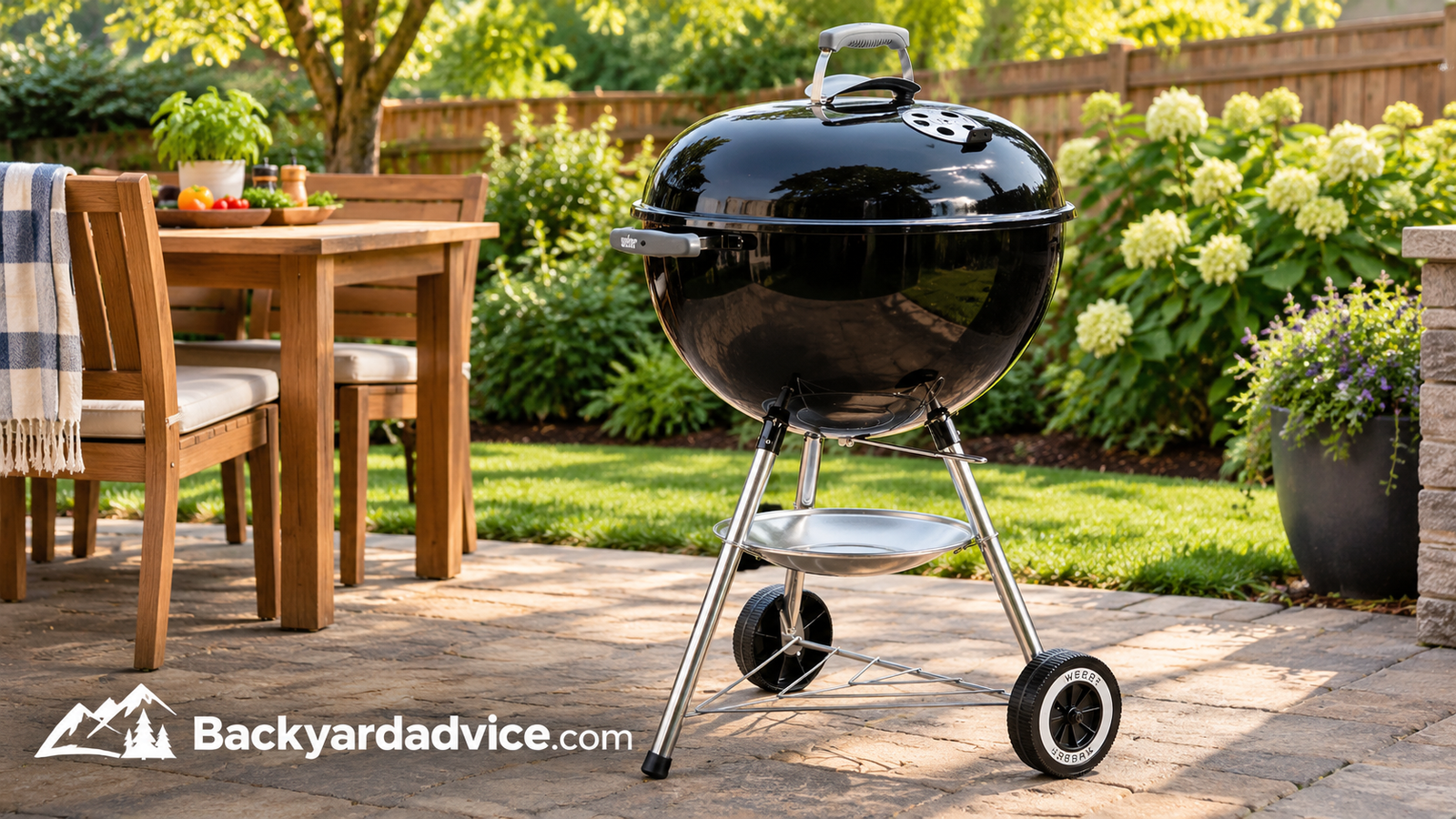
How we evaluated each grill. We looked at four things in every category: consistency of heat management, ease of use for a first-time owner, footprint and storage practicality, and the amount of cleanup involved after a typical cook. Everything else — shelf count, lid thermometers, hopper design — is secondary to those four.
Quick Comparison: Our Top Picks
Every grill in this guide appears below with its fuel type, format, and the reason it earned its spot. Product names link to the full review further down the page.
Swipe to see more →
| # | Image | Product | Key Specs | Verdict | Buy |
|---|---|---|---|---|---|
| 1 | 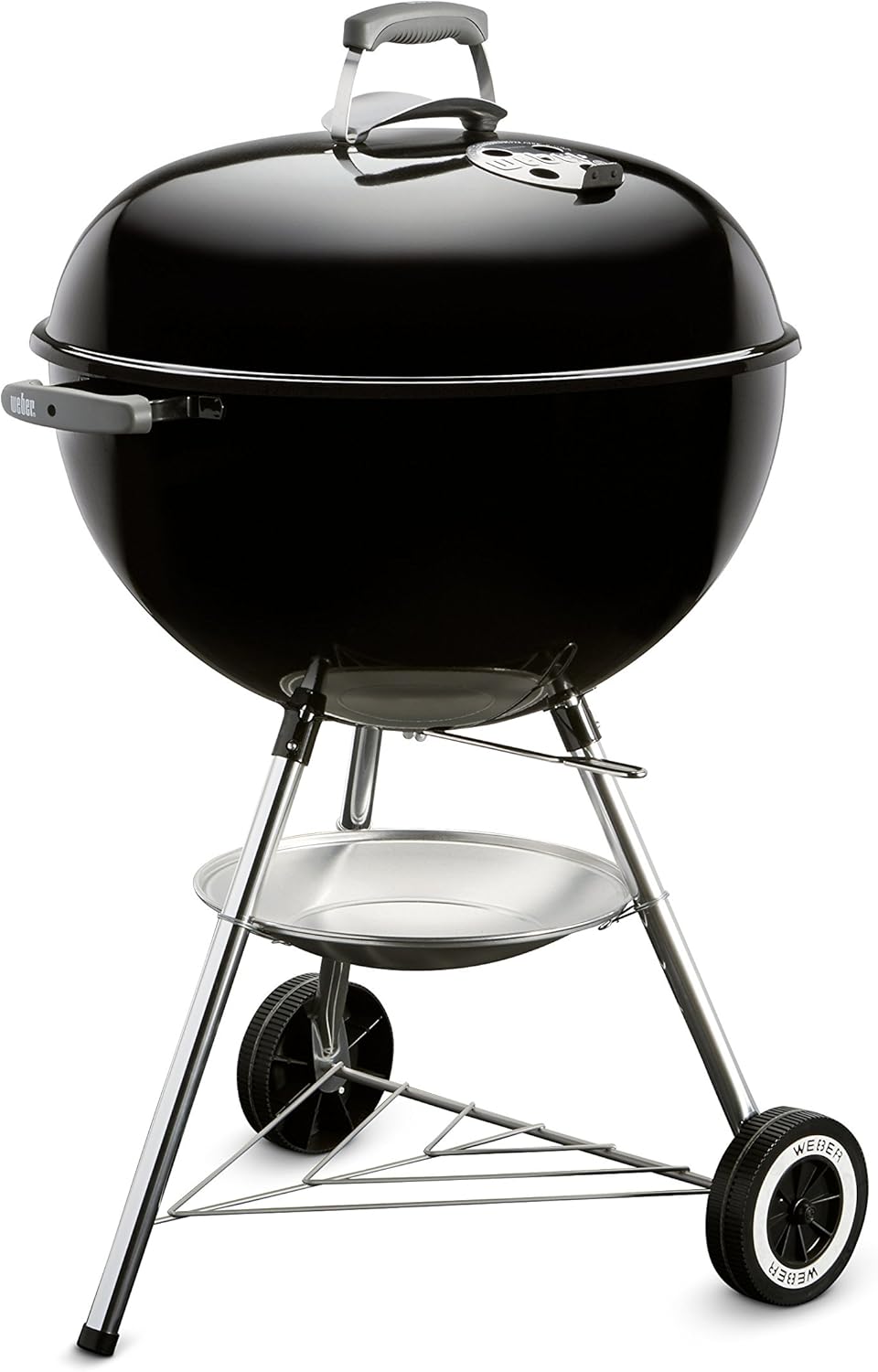 |
Top Pick Weber Original Kettle Charcoal Grill (22″) Best Overall |
|
The do-everything charcoal grill. Steep learning curve of about one weekend, then it just works. | Check Price on Amazon |
| 2 |  |
Traeger Pro 34 Wood Pellet Grill Best Pellet Grill for Beginners |
|
The easiest route into real wood-fired flavor without learning to manage a live fire. | Check Price on Amazon |
| 3 |  |
Pit Boss 850 FB2 Wood Pellet Grill Best for Big Groups |
|
Roomy and versatile — the one to choose when “a few friends” always turns into a party. | Check Price on Amazon |
| 4 |  |
Z GRILLS ZPG-450A Wood Pellet Grill Best Value Pellet Grill |
|
Pellet convenience at a friendlier scale — great for first-time pellet owners. | Check Price on Amazon |
| 5 |  |
Ninja FlexFlame Grill and Smoker Best Hybrid Grill-Smoker |
|
Fast, controlled, and flavor-forward — a modern twist on outdoor cooking. | Check Price on Amazon |
| 6 |  |
Royal Gourmet CC1830S Charcoal Grill & Offset Smoker Best Charcoal Grill with Smoker |
|
Two cooking zones in one footprint — ideal if you want to try smoking on a budget. | Check Price on Amazon |
| 7 |  |
Char-Griller Classic Charcoal Grill Best Barrel Charcoal Grill |
|
Wide, open, and simple — a no-fuss charcoal grill for feeding a crowd. | Check Price on Amazon |
| 8 |  |
Megamaster 22″ Charcoal Grill Best Budget Kettle |
|
Classic kettle cooking without the premium price tag. | Check Price on Amazon |
| 9 |  |
KEYO GRILL 22.5″ Kettle Grill Best Kettle for Entertaining |
|
Generous grate plus a lid built for longer, slower cooks. | Check Price on Amazon |
| 10 |  |
Electactic 3-Burner Propane Gas Grill Best Value Gas Grill |
|
Three-zone control at a sensible price — heat management made easy. | Check Price on Amazon |
| 11 |  |
MASTER COOK 3-Burner Propane Gas Grill Best Compact Gas Grill |
|
Big-grill control in a footprint that fits a tight patio. | Check Price on Amazon |
| 12 |  |
HUGROVE 4-Burner Propane Gas Grill Best for Large Families |
|
More burners means more room to juggle mains, sides, and veg at once. | Check Price on Amazon |
| 13 |  |
Cuisinart 14″ Portable Charcoal Grill Best Portable Grill |
|
Real charcoal flavor in a package you can carry with one hand. | Check Price on Amazon |
| 14 |  |
London Sunshine 15″ Ceramic Kamado Charcoal BBQ Grill Best Ceramic Kamado |
|
Heat retention and versatility in a compact ceramic body. | Check Price on Amazon |
How to Choose the Best Backyard Grill
Before you compare individual models, it pays to sort out a few fundamentals. Most grill regret comes not from buying a bad product, but from buying a good product that does not match the way someone actually cooks. The person who grills twice a week after work has completely different needs from the person who cooks once a month for twelve people, and the grill that suits one will frustrate the other.
Start with fuel type, not brand
Fuel determines almost everything: how quickly you can cook, how much attention the grill needs, what flavors you can build, and how much cleanup waits for you at the end. Charcoal rewards patience and gives you the widest range of cooking techniques, but it asks for fire management. Gas gives you push-button speed and precise zone control, at the cost of that smoky depth. Pellet grills sit in the middle, delivering real wood flavor with digital temperature control so you are not constantly adjusting vents. Electric and hybrid units bring yet another option, favoring convenience and small-space living.
There is no wrong choice here, only trade-offs. The trick is being honest about how often you will actually fire up the grill on a busy Tuesday.
Think about capacity in terms of meals, not square inches
Instead of staring at spec sheets, picture a real cookout. Burgers and hot dogs for six people take a very different amount of space than two whole chickens and a tray of vegetables. As a rough way of thinking about it, a compact or portable grill handles everyday meals for a couple or a small family. A mid-size kettle or three-burner gas grill covers most family dinners with room to spare. Larger barrel grills, four-burner gas models, and big pellet grills are built for entertaining, batch cooking, or running multiple items at different temperatures.
It is worth choosing a grill slightly larger than you think you need. Extra grate space is never wasted — it gives you a cooler zone to move food to when things flare up, which is one of the most useful techniques in outdoor cooking.
Match the grill to the space
Measure your patio, deck, or balcony before you fall in love with a model. Consider not just the grill’s footprint but the clearance around it: you need room to open the lid, stand comfortably in front of the grate, and keep the unit away from siding, railings, and anything overhead. Cart-style grills with side shelves are wonderful for prep work but demand more square footage. Compact kettles and tabletop units tuck away neatly and can be stored when not in use.
Storage matters too. If you have no garage or shed, factor in a fitted cover and a plan for protecting the grill through the off-season.
Decide how much involvement you want
- Hands-on cooks thrive on charcoal and offset smokers, where vent adjustments and fire building are part of the fun.
- Convenience-first cooks do best with gas or pellet, where the grill reaches temperature and holds it with minimal fuss.
- Experimenters who want to grill, smoke, roast, and bake in one unit should look at pellet grills, kamados, and hybrid designs.
Set a budget for the accessories too
A grill is only as good as the tools that come with it. Budget for a quality cover, a long-handled tool set, a reliable thermometer, and a good cleaning brush or scraper. Those items cost far less than the grill itself and make a dramatic difference in results and longevity.
Quick rule of thumb: if you want dinner on the table fast with zero ceremony, choose gas. If you want the best flavor and enjoy the process, choose charcoal. If you want wood-fired results with minimal babysitting, choose pellet.
Best Overall: Weber Original Kettle Charcoal Grill (22″)
If you could only own one grill, this is the shape that has been earning that recommendation for generations — and it is still the most complete backyard cooking tool for the money.
Weber Original Kettle Charcoal Grill (22″)Charcoal · Classic round kettle · Direct and indirect cooking
The Weber kettle is the reference point for a reason. It is simple enough that a complete beginner can cook a respectable dinner on day one, yet deep enough that experienced cooks keep discovering new techniques with it years later. The round shape creates natural convection, the lid turns it into an oven for roasting and indirect cooking, and the vent system gives you real control over airflow and temperature once you learn to read it.
What makes it our overall pick is versatility per dollar. This single unit sears steaks over blazing coals, roasts a whole chicken with the lid on, bakes a pizza on a stone, holds a low-and-slow temperature for ribs, and does it all without electricity, gas lines, or a single digital component that can fail.
Key Features
- Iconic round kettle design that promotes even airflow and consistent heat across the grate
- Lid and bowl built to hold heat for roasting, baking, and indirect cooking — not just direct grilling
- Adjustable vents that let you dial in temperature by controlling airflow to the coals
- Roomy cooking surface that handles a full family meal or a modest gathering with ease
- Classic ash management setup that makes end-of-cook cleanup straightforward
- Huge ecosystem of compatible accessories, from rib racks and rotisseries to pizza stones
What We Like
- Exceptionally versatile — grill, roast, smoke, and bake on one unit
- Forgiving for beginners, rewarding for experienced cooks
- Compact circular footprint fits most patios and decks
- Durable, simple construction with very little to break
- Endless accessory support for expanding your technique
Keep in Mind
- Requires charcoal, a chimney starter, and a little extra lead time
- Temperature control takes a few cooks to master
- Not ideal for cooking for very large crowds in a single pass
Who it’s best for: Anyone who wants one grill that does everything well. If you value flavor and flexibility over push-button convenience — or if you simply want to learn how grilling actually works — the Weber kettle is the smartest place to start and the hardest to outgrow.
The learning curve deserves a word of reassurance, because charcoal grilling intimidates people more than it should. Your first cook might run hot. Your second will be better. By the third you will understand roughly how much charcoal produces how much heat, and how the vents push temperatures up or pull them down. After that, the kettle becomes second nature — and it never develops the quirks of a gas regulator, an igniter, or a pellet auger.
Pair it with a chimney starter and a two-zone fire setup and you have a cooking system that handles everything from smash burgers to slow-roasted pork shoulder.
Best Wood Pellet Grills for Low-and-Slow Cooking
Pellet grills are the shortcut to genuine wood-fired flavor without the fire management. Load the hopper, set your temperature, and the grill takes over — feeding compressed hardwood pellets into the fire as needed while circulating smoke around your food.
The appeal is obvious: you get the flavor profile of a smoker with the control of an oven. That makes pellet grills enormously popular with people who want brisket-quality results without spending a day tending a fire. They also shine for roasting, baking, and everyday grilling, which is why the category has expanded so quickly.
The trade-offs are worth knowing. Pellet grills need power to run, they use pellets as an ongoing fuel cost, and they generally do not sear as aggressively as charcoal or gas unless you use a dedicated searing setup. For most backyard cooking, though, the convenience-to-flavor ratio is unmatched.
Swipe to see more →
| Product | Best For | Format | Standout | Buy |
|---|---|---|---|---|
| Traeger Pro 34 | Beginners | Barrel with cart | Smooth, predictable temperature control | Check Price |
| Pit Boss 850 FB2 | Big groups | Large barrel smoker | Extra room for entertaining | Check Price |
| Z GRILLS ZPG-450A | Value buyers | Compact barrel | Pellet convenience at a smaller scale | Check Price |
Traeger Pro 34 Wood Pellet GrillHardwood pellets · Barrel format · Digital temperature management
Traeger essentially created the home pellet grill category, and the Pro 34 is the model that shows why the format took off. It behaves more like an outdoor oven than a traditional grill: you choose a temperature, the controller manages the pellet feed, and you get consistent, even heat with a steady stream of hardwood smoke.
That predictability is the whole story. Where charcoal demands attention and gas demands technique, a pellet grill demands almost nothing — and the Pro 34 makes a compelling case for anyone who wants smoked flavor without becoming a fire tender.
Key Features
- Digital temperature management that maintains a steady set point through long cooks
- Hardwood pellet fuel delivers authentic smoke flavor across grilling, roasting, and baking
- Generous cooking surface suited to family meals and weekend entertaining alike
- Cart-style build with side shelves for prep space and tool storage
- Straightforward hopper loading so you can top up mid-cook without losing heat
- Strong recipe and community support that shortens the learning curve dramatically
What We Like
- Genuinely hands-off temperature control
- Real wood smoke flavor without fire management
- Excellent for smoking, roasting, and everyday grilling
- Beginner-friendly from the very first cook
Keep in Mind
- Needs an electrical outlet to operate
- Pellets are a recurring fuel cost
- Less aggressive searing than charcoal or gas
Who it’s best for: Anyone who wants wood-fired results but does not want to spend their afternoon managing coals. It is the friendliest introduction to smoking, and a strong everyday grill for households that value consistency.
Pit Boss 850 FB2 Wood Pellet GrillHardwood pellets · Large barrel format · Grill, smoke, roast, bake
When your backyard gatherings tend to expand, you need grate space more than anything else — and the Pit Boss 850 FB2 is built around that idea. Its larger format means fewer batches, less juggling, and the ability to cook proteins and sides simultaneously without crowding the fire.
Like other pellet grills, it trades hands-on fire management for set-and-forget convenience, but the extra capacity turns it into a genuine entertaining tool. Ribs alongside a whole chicken, vegetables over the cooler side, dessert finishing while the mains rest — that kind of flexibility is what makes a big pellet grill worth the footprint.
Key Features
- Large cooking surface designed for entertaining and multi-item cooks
- Wood pellet fuel system for consistent smoke and steady heat over long sessions
- Versatile cooking modes covering grilling, smoking, roasting, and baking
- Cart design with working space and storage for tools and pellets
- Lid and body designed to hold temperature through extended cooks
- Well suited to batch cooking and make-ahead meal prep
What We Like
- Roomy enough for parties and holiday cooks
- Excellent set-and-forget temperature control
- Handles multiple foods at once without crowding
- Strong value for the amount of cooking space
Keep in Mind
- Takes up real estate on a smaller patio
- Requires power and a pellet supply
- Heavier to move than a compact grill
Who it’s best for: Hosts. If your weekends involve feeding extended family, meal-prepping for the week, or cooking a main and several sides at once, the extra capacity pays for itself in calm.
Z GRILLS ZPG-450A Wood Pellet GrillHardwood pellets · Compact barrel · Multi-function cooking
The ZPG-450A makes the case that you do not need a sprawling pellet grill to get pellet-grill results. Its more compact format suits smaller households and tighter patios while keeping the core experience intact: wood-fired flavor, digital temperature control, and the ability to grill, smoke, roast, and bake without switching equipment.
That smaller scale is genuinely useful. Less pellet consumption per cook, a shorter warm-up, and a unit that fits where a full-size barrel simply would not — for a lot of backyards, that is the smarter trade.
Key Features
- Compact footprint that fits smaller patios, decks, and balconies
- Wood pellet system for authentic smoke flavor across multiple cooking styles
- Digital temperature control for consistent, repeatable results
- Multi-function cooking covering grilling, smoking, roasting, and baking
- Efficient pellet use thanks to the smaller cooking chamber
- Approachable entry point into pellet cooking
What We Like
- Pellet convenience without a huge footprint
- Great starter grill for the pellet curious
- Efficient for everyday family meals
- Straightforward operation and cleanup
Keep in Mind
- Less room for large entertaining cooks
- Still requires power and pellets
- Not intended for heavy-duty commercial-style use
Who it’s best for: Smaller households and first-time pellet owners who want the flavor and convenience without dedicating half the patio to a single appliance.
Best Hybrid Grill-and-Smoker Combos
Not everyone wants to choose between a grill and a smoker. Hybrid designs solve that problem — some through clever engineering, others through a classic offset firebox that gives you two cooking zones in one unit.
Hybrids make particular sense for people with limited space who refuse to limit their cooking. One footprint, multiple techniques: hot and fast searing on one side, gentle smoke on the other, or an entirely different approach where modern electric heating and wood flavor work together for precise results.
Swipe to see more →
| Product | Best For | Format | Standout | Buy |
|---|---|---|---|---|
| Ninja FlexFlame Grill and Smoker | Modern hybrid cooking | Compact outdoor unit | Fast, controlled heat with wood flavor | Check Price |
| Royal Gourmet CC1830S | Traditional smoking | Barrel with offset firebox | Two zones, one footprint | Check Price |
Ninja FlexFlame Grill and SmokerElectric with wood flavor · Compact format · Grill, smoke, roast
The FlexFlame takes a different route to outdoor flavor. Rather than managing charcoal or pellets, it brings fast, controlled heat to the process and layers wood flavor on top — the result being a grill that behaves predictably while still delivering the taste people want from cooking outside.
For anyone living with restrictions on open flames, limited outdoor space, or simply a preference for precision, this kind of approach is a genuine revelation. You get grill marks, smoke character, and reliable temperature control without a chimney starter in sight.
Key Features
- Controlled electric heat that reaches cooking temperature quickly and holds it steadily
- Wood flavor infusion for authentic outdoor taste without managing a live fire
- Compact form factor suited to patios, balconies, and smaller outdoor areas
- Multiple cooking modes spanning grilling, smoking, and roasting
- Straightforward controls that make repeatable results easy
- Fast cleanup compared with traditional charcoal setups
What We Like
- Quick heat-up and precise temperature handling
- Wood flavor without charcoal or pellet management
- Compact and apartment-friendly
- Very little learning curve
Keep in Mind
- Requires access to power
- Traditionalists may prefer charcoal flavor depth
- Capacity suits everyday cooking more than large parties
Who it’s best for: Cooks who want outdoor flavor with indoor-appliance reliability — especially anyone with limited space or rules that restrict traditional grilling.
Royal Gourmet CC1830S Charcoal Grill & Offset SmokerCharcoal · Barrel with offset firebox · Grill plus low-and-slow
This is the classic backyard pitmaster layout: a main barrel for grilling and a side firebox that feeds smoke into it for low-and-slow cooking. You can grill burgers over direct heat in the main chamber in the morning and run a slow smoke in the afternoon without owning two separate units.
For anyone curious about smoking but not ready to invest in a dedicated smoker, the offset design is a fantastic gateway. It teaches real fire management — airflow, fuel placement, heat zones — while still functioning as a perfectly capable everyday charcoal grill.
Key Features
- Offset firebox design that converts the grill into a smoker for low-and-slow cooks
- Large main chamber for direct grilling of burgers, steaks, and vegetables
- Adjustable vents for controlling airflow, heat, and smoke density
- Cart construction with shelves and workspace for prep and tools
- Classic charcoal operation that rewards hands-on technique
- Two-zone cooking flexibility in a single outdoor footprint
What We Like
- Grill and smoke without buying two appliances
- Real charcoal flavor with authentic smoke character
- Teaches proper fire management skills
- Great capacity for family cooking
Keep in Mind
- Needs more patio space than a kettle
- Requires active attention during long smokes
- Charcoal and cleanup take more effort than gas
Who it’s best for: The cook who has mastered burgers and wants to move into ribs, shoulders, and smoked chicken — without giving up everyday grilling.
Best Charcoal Grills for Traditionalists
There is a reason charcoal grilling has never gone out of style. The flavor is unmistakable, the heat is intense, and the process forces you to slow down and pay attention — which is exactly what many people love about cooking outdoors.
The three grills below cover the spectrum: a wide-open barrel for volume cooking, an affordable kettle for first-time owners, and a generous round kettle designed for cooks who like to stretch out and entertain. All three are pure charcoal, with no electronics and nothing to plug in.
Swipe to see more →
| Product | Best For | Format | Standout | Buy |
|---|---|---|---|---|
| Char-Griller Classic | Volume grilling | Horizontal barrel | Wide grate for big batches | Check Price |
| Megamaster 22″ | Budget buyers | Round kettle | Classic kettle results, friendly price | Check Price |
| KEYO GRILL 22.5″ | Entertaining | Large kettle | Generous grate plus slow-cook ability | Check Price |
Char-Griller Classic Charcoal GrillCharcoal · Horizontal barrel · Direct grilling
Barrel grills are built for one thing above all: cooking a lot of food at once. The wide, rectangular grate gives you room to spread out burgers, sausages, corn, and vegetables without stacking anything — which matters more than people realize when the hungry crowd arrives at the same time.
The Char-Griller Classic keeps things simple. Open the lid, spread your coals, and cook. There is a pleasant ruggedness to it that suits real-world backyard use, where grills get moved, bumped, and left out through the seasons.
Key Features
- Wide barrel-shaped cooking surface ideal for large batches of food
- Classic charcoal operation with straightforward heat management
- Open grate layout that makes flipping and rearranging food easy
- Durable construction suited to regular outdoor use
- Side workspace and shelf options for prep and tools
- Simple design with minimal parts to maintain or replace
What We Like
- Excellent capacity for burgers, dogs, and cookout staples
- Simple, honest charcoal performance
- Easy to manage with basic tools
- Great for people who grill for crowds
Keep in Mind
- Wider footprint than a round kettle
- Heat can be less even without deliberate coal placement
- Requires regular ash removal
Who it’s best for: The household where grilling means feeding a crowd. If your default is a tray of burgers and a pile of sides, the barrel format is a natural fit.
Megamaster 22″ Charcoal GrillCharcoal · Round kettle · Direct and indirect cooking
The kettle format is hard to beat, and the Megamaster 22″ brings it within reach of buyers who do not want to spend a fortune. Round body, lid on top, vents for airflow — the fundamentals that make kettle grilling work are all here, and the results speak for themselves.
For a first grill, a vacation property, or a household that cooks outdoors occasionally through the season, this is a sensible, no-drama choice. You get the two-zone cooking technique, you get the lid-roasting capability, and you keep money in your pocket for good charcoal and better ingredients.
Key Features
- Classic round kettle shape for even airflow and reliable convection cooking
- Lid-included design that supports roasting and indirect cooking
- Roomy grate suitable for everyday family meals
- Simple assembly and operation for first-time grill owners
- Compact storage footprint compared with barrel-style grills
- Easy-to-clean ash handling for quick post-cook tidying
What We Like
- Accessible price for a full-featured kettle
- Versatile cooking styles in one simple unit
- Small footprint, easy to store
- Great learning platform for new grillers
Keep in Mind
- Lighter construction than premium kettles
- Basic accessory support
- Best suited to regular home use rather than heavy daily grilling
Who it’s best for: Budget-conscious buyers and first-time grill owners who want classic kettle results without a premium investment.
KEYO GRILL 22.5″ Kettle GrillCharcoal · Large round kettle · Grilling and smoking
The KEYO kettle leans into the “generous” side of the format. Its slightly larger footprint means more grate to work with — enough to spread out a full cookout spread while still keeping a cooler zone available for finishing or holding food.
Like any quality kettle, the lid is the secret weapon. Close it, adjust the vents, and you can move from searing to roasting to a gentle smoke without changing equipment. It is a genuinely capable weekend grill for people who like to cook outside for company.
Key Features
- Generous round cooking surface for larger cookouts and multi-item meals
- Lid design that supports roasting, baking, and low-and-slow smoking
- Vent controls for managing airflow and cooking temperature
- Classic charcoal operation with full flavor payoff
- Stable base and wheels for repositioning around the yard
- Two-zone cooking capability for searing and finishing in one session
What We Like
- Extra grate space makes entertaining easier
- Handles both fast grilling and slower cooks
- Simple, reliable charcoal performance
- Good balance of capacity and footprint
Keep in Mind
- Charcoal requires a bit more planning than gas
- Needs a dry place for storage in harsh weather
- Large batches still mean multiple rounds for big parties
Who it’s best for: Weekend hosts who want the classic kettle experience with a bit more room to spread out and cook for company.
Best Propane Gas Grills for Weeknight Convenience
Gas grills win on one metric above all: time. From decision to dinner, a propane grill cuts out fire building, ash cleanup, and most of the waiting. That is why so many households end up cooking outdoors three or four nights a week once they own one.
The three-burner and four-burner models below also give you something charcoal struggles to offer: precise zones. Turn one burner low for vegetables, keep another hot for steaks, and leave the third off as a safety net. It is a practical, forgiving way to cook.
Swipe to see more →
| Product | Best For | Format | Standout | Buy |
|---|---|---|---|---|
| Electactic 3-Burner | Value | Cart with side shelves | Zone control at a friendly price | Check Price |
| MASTER COOK 3-Burner | Small patios | Compact cart | Big-grill control, smaller footprint | Check Price |
| HUGROVE 4-Burner | Large families | Wide four-burner cart | Room to juggle mains and sides | Check Price |
Electactic 3-Burner Propane Gas GrillPropane · Cart with side shelves · Zone grilling
Three burners is the sweet spot for most families. It is enough to create meaningful heat zones — hot for searing, moderate for cooking through, cool for resting — without pushing the grill into oversized territory.
The Electactic hits that balance neatly. Side shelves give you somewhere to set tongs and a tray, the cart design keeps everything at a comfortable working height, and the overall package is aimed squarely at the cook who wants weeknight grilled dinners without a complicated setup.
Key Features
- Three-burner configuration for flexible heat zones across the grate
- Push-button ignition and quick preheat for fast weeknight cooking
- Side shelves that provide prep space and tool storage
- Cart design with a stable base and easy access to the fuel tank
- Practical capacity for family meals and casual entertaining
- Straightforward cleanup with accessible grease management
What We Like
- Fast start-to-dinner timeline
- Useful zone control for cooking different foods at once
- Good balance of capacity and price
- Low maintenance compared with charcoal
Keep in Mind
- Less smoke flavor than charcoal or pellet
- Needs a propane tank and occasional regulator checks
- Cover recommended for outdoor storage
Who it’s best for: Households that grill often and want it easy. If dinner decisions happen at five o’clock, this is the format that says yes.
MASTER COOK 3-Burner Propane Gas GrillPropane · Compact cart · Fast direct grilling
Not every backyard can host a wide four-burner cart. The MASTER COOK 3-burner keeps the useful part of the gas grill experience — multiple burners, quick ignition, real cooking capacity — in a footprint that respects a smaller patio or deck.
That compactness has practical advantages beyond fitting in. It is easier to cover, easier to clean around, and less imposing in a shared outdoor space while still delivering the weeknight convenience that makes gas grilling so popular.
Key Features
- Compact cart design that fits smaller patios, decks, and balconies
- Three burners for basic zone cooking and temperature flexibility
- Quick ignition and fast preheat for convenient everyday use
- Side shelves and storage that keep essentials within reach
- Capacity suited to family dinners and small gatherings
- Easy-to-wipe surfaces and accessible grease management
What We Like
- Small footprint without sacrificing burner control
- Fast, predictable cooking
- Simple to keep clean and covered
- Great fit for urban patios and townhomes
Keep in Mind
- Less room for very large cooks
- Smaller workspace than full-size carts
- Gas flavor profile rather than charcoal smoke
Who it’s best for: Anyone short on outdoor space who still wants full gas-grill convenience and proper burner control.
HUGROVE 4-Burner Propane Gas GrillPropane · Wide four-burner cart · Multi-zone grilling
Four burners is where gas grilling starts to feel genuinely roomy. You can keep a hot searing zone on one end, a gentler cooking zone in the middle, and a holding area on the far side — all while running sides and vegetables on the same surface.
For a family that cooks full meals outside rather than just proteins, that extra real estate transforms the experience. Nothing gets cold waiting for a batch to finish, and the whole meal comes together at once.
Key Features
- Four-burner layout for serious multi-zone cooking and large meals
- Wide cooking surface that accommodates mains and sides simultaneously
- Independent burner control for precise heat management
- Cart design with shelving and storage for a full outdoor cooking setup
- Fast preheat and quick ignition for convenient frequent use
- Practical grease management for easier post-cook cleanup
What We Like
- Excellent capacity for full-family meals
- Flexible heat zones reduce cooking stress
- Great for entertaining and multi-course grilling
- Convenient, low-fuss operation
Keep in Mind
- Requires more patio space
- Uses more fuel on large cooks
- Bulkier to store and cover
Who it’s best for: Larger households and frequent hosts who want to cook an entire meal outside without playing kitchen Tetris.
Best Portable and Small-Space Grills
Sometimes the best backyard grill is the one that barely takes up any of it. Compact grills earn their keep on balconies, in small courtyards, at campsites, and at tailgates — anywhere the full-size cart simply does not belong.
The two picks below represent two ends of the compact spectrum: a lightweight charcoal unit made to travel, and a ceramic kamado that delivers serious performance in a surprisingly small footprint.
Swipe to see more →
| Product | Best For | Format | Standout | Buy |
|---|---|---|---|---|
| Cuisinart 14″ Portable | Travel and tailgating | Tabletop kettle | Real charcoal flavor you can carry | Check Price |
| London Sunshine 15″ Kamado | Small-space enthusiasts | Ceramic kamado | Heat retention and versatility | Check Price |
Cuisinart 14″ Portable Charcoal GrillCharcoal · Compact tabletop kettle · Direct grilling
Portability and charcoal flavor rarely come in the same package, which is exactly what makes this little kettle appealing. It is small enough to carry with one hand, set up on a picnic table, and pack away when you are done — yet it cooks with real fire rather than an electric substitute.
Think of it as the grill that follows you: beach days, campsites, tailgates, a friend’s balcony, or simply a small backyard where a full-size unit would be overkill.
Key Features
- Compact, lightweight format that travels easily and stores in small spaces
- Tabletop-friendly design for campsites, tailgates, and balconies
- Authentic charcoal cooking for real grilled flavor anywhere
- Simple setup and shutdown with minimal fuss
- Sufficient capacity for meals for a couple or small family
- Easy-to-clean ash and grate components
What We Like
- Genuine charcoal flavor in a portable package
- Takes up almost no storage space
- Perfect for travel and small outdoor areas
- Quick to set up and pack away
Keep in Mind
- Limited capacity for large groups
- Direct grilling only — no deep smoking setup
- Requires a heat-safe surface for tabletop use
Who it’s best for: Adventurous cooks, apartment dwellers, and anyone who wants a second grill that goes wherever the day does.
London Sunshine 15″ Ceramic Kamado Charcoal BBQ GrillCharcoal · Ceramic kamado · Grill, smoke, roast, bake
Kamados are the Swiss army knives of the charcoal world. The thick ceramic body holds heat remarkably well and reflects it back at the food, which means stable temperatures, excellent fuel efficiency, and the ability to move from a blazing sear to a gentle smoke simply by adjusting the vents.
The compact 15″ format makes that versatility available to people who assumed they did not have the space for it. A kamado of this size fits on a modest patio yet handles pizza night, smoked chicken, and grilled vegetables with equal confidence.
Key Features
- Ceramic construction that retains heat and stabilizes cooking temperatures
- Multi-function cooking — grilling, smoking, roasting, and baking on one unit
- Compact footprint that fits small patios and outdoor kitchens
- Vent-driven temperature control for precise heat management
- Efficient charcoal use thanks to superior heat retention
- Distinctive design that looks great as part of an outdoor space
What We Like
- Outstanding heat retention and temperature stability
- Grill, smoke, roast, and bake with one compact unit
- Efficient with charcoal
- Perfect for small spaces with big ambitions
Keep in Mind
- Ceramic is heavy and needs careful handling
- Learning curve for vent-based temperature control
- Smaller capacity than full-size grills
Who it’s best for: Enthusiasts who want maximum versatility per square foot — and who enjoy mastering the art of temperature control.
Portable and compact grills also make brilliant second units. Plenty of households keep a gas cart for weeknights and a small charcoal grill for weekends and trips — a combination that covers nearly every scenario without either unit feeling oversized.
Charcoal vs Gas vs Pellet: Which Fuel Type Fits Your Backyard?
Ask ten grill owners which fuel is best and you will get ten confident answers. That is because fuel choice is personal — it depends on what you value most. Here is an honest breakdown of what each type actually gives you and what it asks in return.
Charcoal: maximum flavor, maximum involvement
Charcoal produces the flavor people mean when they say “tastes like it came off the grill.” It also reaches searing temperatures that gas struggles to match, and it allows techniques — smoking, indirect roasting, wok cooking, pizza baking — that are hard to replicate on other fuel types.
The cost is time and attention. You will light a chimney, wait for coals, manage vents, and clean out ash. For many people, that ritual is the entire point. For others, it is a barrier that means the grill sits unused on busy weeknights.
Gas: maximum convenience, honest trade-offs
Propane grills are the workhorses of the suburban backyard for good reason. They heat fast, hold temperature reliably, offer precise zone control, and shut down cleanly. If your goal is to grill often and effortlessly, gas is very difficult to argue against.
What you give up is some flavor depth and a bit of the theater. A gas grill can absolutely produce excellent food — a good sear, clean grill marks, properly cooked chicken — but it does not add the smoke character that charcoal and wood deliver naturally.
Pellet: the middle path
Pellet grills run on compressed hardwood and use a digital controller to feed fuel into the fire automatically. The result is real wood flavor with the kind of temperature stability you would expect from an indoor oven. For smoking, roasting, and long cooks, they are outstanding.
They do require electricity, they consume pellets as an ongoing expense, and they generally need a searing accessory for high-heat finishing. If you dream about low-and-slow barbecue but have no interest in tending a fire, this is your answer.
Electric and hybrid: space-friendly specialists
Modern electric outdoor cookers have come a long way, offering precise heat and wood flavor in a compact, low-maintenance package. They are ideal for balconies and small patios where charcoal or gas may be restricted. Hybrid designs that combine offset smoking with conventional grilling serve the versatility crowd instead.
Swipe to see more →
| Fuel Type | Flavor | Convenience | Cleanup | Best For |
|---|---|---|---|---|
| Charcoal | Rich, smoky, classic | Hands-on | Ash removal required | Flavor-first cooks and enthusiasts |
| Propane Gas | Clean, straightforward | Very high | Quick and easy | Busy households and weeknight grilling |
| Wood Pellet | Deep wood smoke | High | Moderate | Smoking, roasting, and set-and-forget cooks |
| Electric / Hybrid | Light smoke character | Very high | Minimal | Small spaces and restricted areas |
Our take: choose charcoal if the cooking is your hobby, gas if the eating is the point, and pellet if you want smoke flavor without the smoke management. Whichever you choose, mastering that one style will make you a far better outdoor cook than owning three half-learned grills.
Grill Size, Layout, and the Space Around It
Grill sizing is usually explained with square inches and burner counts, which are not wrong but are not very helpful either. A more practical approach is to think about the meals you cook and the space those meals need.
Cooking for two to four people
A compact kettle, a two- or three-burner gas grill, or a smaller pellet grill covers this comfortably. You will have room for a main and a couple of sides, and the unit will not dominate the patio. This is the most common household size and the one with the widest range of good options.
Cooking for five to eight people
Look for a full-size kettle, a three-burner gas grill with good zone separation, or a mid-size pellet grill. The key feature here is not raw surface area but the ability to create temperature zones — a hot side for searing and a cooler side for holding and finishing.
Cooking for a crowd
Entertaining is where capacity stops being a luxury. A barrel charcoal grill, a four-burner gas cart, or a large pellet grill lets you cook in fewer passes and keep everything hot at once. If you regularly host, size up. Batch cooking means some guests eat while others wait, and that is no fun for anyone.
The space around the grill matters as much as the grill
- Clearance: keep the grill away from siding, railings, fences, and anything overhead like pergola beams or tree branches.
- Prep space: a side shelf or a small adjacent table transforms the cooking experience. Without one, you will be carrying everything back and forth to the kitchen.
- Traffic flow: position the grill where people do not have to squeeze past it. A hot lid and a crowd do not mix well.
- Storage: plan where the cover, charcoal or pellets, and tools will live. Cluttered decks make cooking stressful.
Grill placement also shapes the rest of the yard. A cooking zone pairs beautifully with seating, lighting, and a gathering area — think about how the whole space works together rather than treating the grill as an isolated appliance. If your yard doubles as a play space, our guides to the best backyard playsets and the best backyard trampolines cover the layout side of that equation.
Measure before you buy. Mark the grill’s footprint on the ground with tape or cardboard boxes, then stand in front of it and open an imaginary lid. If you bump into anything, size down or rearrange before spending money.
Backyard Grill Safety, Placement, and Local Rules
Nothing ruins a cookout faster than an avoidable accident. Grilling is very safe when the basics are respected, and those basics are worth repeating even if you have heard them before.
Placement fundamentals
- Keep the grill well away from the house, garage, deck railings, and any overhead structure. Heat and sparks travel further than people expect.
- Set the grill on a stable, level, non-combustible surface. Never grill under a covered porch or inside any enclosed space.
- Leave room around the grill for you to move safely, and keep children and pets at a comfortable distance.
- Keep a fire extinguisher, a bucket of sand, or a garden hose within reach whenever you cook.
Check your local rules
Before lighting anything, confirm what is allowed where you live. Many municipalities, homeowners associations, and apartment complexes have specific rules about open flames, charcoal use, propane storage, and where grills may be placed — particularly on wooden decks and balconies. The same applies to other fire features: our guide to whether you can have a fire pit in your backyard walks through the same kinds of considerations, and the principles carry over directly to grills.
Fuel and storage safety
Store propane tanks upright and outdoors, never indoors or in a closed shed. Keep charcoal dry and away from ignition sources. Let coals cool completely before disposing of them, and use a metal container rather than a plastic bin. For pellet grills, keep pellets dry — moisture ruins them and can jam the feeding system.
Food safety outdoors
Outdoor cooking adds one complication people often overlook: temperature control of the food itself. Keep raw proteins separate from ready-to-eat items, use a thermometer to confirm doneness, and do not leave perishable food sitting in the sun while the grill heats up. A cooler with ice nearby solves almost every problem.
A note on yard fire features. If you love the atmosphere of an open flame, a fire pit is a natural companion to a grill — just follow the same rules around placement, clearance, and local regulations. Our step-by-step guide to building a fire pit in your backyard covers the planning side, and our roundup of the best fire pits for your backyard covers ready-made options. And if you are thinking about animals or livestock in the yard alongside your cooking space, it is worth checking what is permitted locally — see our guide to whether you can have chickens in your backyard.
Cleaning, Maintenance, and Off-Season Care
A grill that is cleaned regularly lasts dramatically longer and cooks more evenly. The good news is that maintenance is mostly about small habits rather than big jobs. Ten minutes after each cook saves you hours later.
After every cook
- Turn the heat up for a few minutes with the lid closed to burn off residue, then scrape the grates while they are still warm.
- Empty ash from charcoal grills once everything is fully cool. Ash holds moisture and speeds up corrosion.
- Wipe shelves and side tables to prevent grease buildup and staining.
- Check the drip tray or grease management system and empty it before it overflows.
Every few weeks during the season
Give the grates a deeper clean with a brush or soak, inspect burners or vents for blockages, and check that all fasteners are still tight. For gas grills, look over the hoses and connections periodically and follow the leak-check method in your owner’s manual. For pellet grills, keep the fire pot clear of ash so ignition stays reliable.
Protecting the finish
A fitted cover is the single best investment you can make after the grill itself. It protects against rain, pollen, sun, and tree sap — the four things that age a grill fastest. Look for a cover that fits snugly and allows some airflow so moisture does not get trapped against the metal.
Off-season storage
- Clean the grill thoroughly before storing it, so grease does not sit and harden for months.
- Store charcoal in a dry, sealed container and bring pellets indoors if your winters are wet.
- Disconnect and store propane tanks outdoors in an upright position, away from direct sun.
- Consider a garage or shed spot if your area sees heavy snow or ice — even a covered corner helps enormously.
Replacement parts are worth it. Grates, igniters, and heat shields wear out over time and are usually replaceable. Swapping one part restores a grill that would otherwise get scrapped — better for your wallet and for the landfill.
If your cooking space extends beyond the grill, the same maintenance mindset applies to everything outside. Proper care of lighting, seating, and planting keeps the whole yard inviting — and the right gear makes upkeep far easier, from backyard string lights to wildlife-friendly additions.
Building a Backyard Cooking Space You’ll Actually Use
The best backyard grill is only one part of an outdoor space that works. The difference between a grill that gets used weekly and one that sits under a cover is often the environment around it — where you set plates down, where people sit while you cook, how comfortable it is to be outside once the sun goes down.
Lighting changes everything
Most grilling happens in the evening, which means lighting is not decoration but function. Warm overhead string lights over the cooking and dining area make the space usable and welcoming long after sunset. If you are planning an install, our guide to how to string lights across your backyard covers the practical layout questions, and our pick of the best string lights for your backyard helps you choose the right ones. For a more theatrical option, an outdoor screen turns dinner and a movie into a real event — see the best backyard projectors for that setup.
Deal with mosquitoes before they deal with you
Nothing sends guests indoors faster than mosquitoes. A good control strategy — removing standing water, treating the yard, and using repellents where people gather — makes warm evenings far more enjoyable. Start with our guides to the best ways to get rid of mosquitoes in your backyard and the best backyard mosquito repellents for a combined approach.
Make the yard welcoming to people and wildlife
A backyard that feels alive is a backyard people want to spend time in. Birdsong while you tend the grill is one of the quiet pleasures of outdoor cooking, and it is easy to encourage. Our guide to how to attract birds to your backyard covers the basics, and the best bird feeders for your backyard rounds up the gear. Position feeders away from the cooking zone so smoke and activity do not disturb your visitors.
Design the layout around how you move
Think of the yard as a kitchen with zones: a cooking zone with the grill and prep space, a serving zone with a table or counter, and a seating zone where people relax. Keep the path between them short and clear. Add ambient warmth for cooler evenings — a fire feature nearby extends the season considerably, and our guide to the best fire pits for your backyard is a natural companion piece to any grill setup.
The one-yard philosophy. Instead of buying one big item at a time, plan the whole outdoor space as a single project. A grill, good lighting, comfortable seating, and a bit of pest control cost less together than most people spend on a single patio renovation — and they transform how often you use the yard.
Frequently Asked Questions
Quick answers to the questions people ask most often before buying a backyard grill.
What is the best type of grill for a backyard?
For most people, a charcoal kettle or a three-burner gas grill is the best all-round choice. A kettle offers the widest range of cooking techniques and the best flavor, while a gas grill offers speed and convenience. If you love slow-smoked food, a pellet grill is the best fit. The right answer depends on how you cook, not on which fuel has the loudest fan base.
Is charcoal better than gas for flavor?
Charcoal and wood produce the smoky, seared flavor most people associate with outdoor cooking, and that advantage is real. Gas grills can still produce excellent food — a hot grate gives you proper searing and grill marks — but they do not add smoke character naturally. Many gas grillers compensate with smoker boxes, wood chips, or marinades.
Are wood pellet grills good for beginners?
They are arguably the easiest way into smoking. You set a temperature and the grill manages the fire automatically, which removes the steepest part of the learning curve. The main things to know beforehand are that pellet grills need electricity and that pellets are an ongoing fuel purchase. Beyond that, they are very beginner-friendly.
How big of a grill do I need for a family?
A compact kettle, a two- or three-burner gas grill, or a mid-size pellet grill handles everyday family meals with room to spare. Size up if you entertain often, cook multiple items at once, or like to use a cooler zone for finishing and holding food. Extra grate space is always useful; too little is always frustrating.
Can I use a grill on a wooden deck or balcony?
Often, but not always — and never without precautions. Keep the grill well away from railings and siding, use a heat-resistant mat or grill pad beneath it, and confirm that your building rules or local regulations allow it. Many apartment and condo complexes restrict charcoal and open flames on balconies entirely, so check before buying.
How far should a grill be from the house?
As a general rule, keep grills away from the house, garage, deck railings, and any overhead structure like a pergola or tree canopy. Heat, grease, and stray sparks travel further than people expect, and most grill fires involve proximity to a building. Follow your grill’s manual for specific clearance guidance and check local fire codes as well.
What is the easiest grill to clean?
Gas grills are generally the easiest, since you can burn off residue and scrape the grates without dealing with ash. Electric and hybrid units are similarly low-fuss. Charcoal grills involve ash removal, but a good ash management system makes the job quick. Whatever the fuel, cleaning while the grates are still warm is the trick that saves the most effort.
Do I really need a grill cover?
Yes, unless your grill lives indoors. A fitted cover protects against rain, sun, pollen, and tree sap — the factors that age a grill fastest. Choose one that fits snugly and breathes a little so moisture does not get trapped against the metal. It is a small purchase that dramatically extends the life of the grill.
Can I leave my grill outside over winter?
You can, with preparation. Clean it thoroughly, remove ash and grease, disconnect and store propane tanks outdoors in an upright position, keep charcoal and pellets dry, and cover the grill securely. If you have indoor storage available, use it — but a covered outdoor spot is perfectly workable in most climates.
What accessories are worth buying with a new grill?
A quality cover, a long-handled tool set, a reliable instant-read thermometer, and a good grill brush or scraper. Those four items cover almost everything you need to cook well and maintain the grill. Beyond them, a chimney starter is essential for charcoal, and a grill basket is a game-changer for vegetables and fish.
Are ceramic kamado grills worth it?
For enthusiasts, absolutely. The ceramic body holds heat remarkably well, which means stable temperatures, fuel efficiency, and genuine versatility — searing, smoking, roasting, and baking on a single unit. The trade-offs are weight, a learning curve around vent control, and a higher entry point than a standard kettle. If you love the craft of cooking, they deliver.
How do I prevent flare-ups when grilling?
Flare-ups come from fat and marinade dripping onto the heat source. Trim excess fat, avoid sugary marinades over direct high heat, keep a cooler zone on the grill to move food to, and resist the urge to spray water on grease fires — close the lid and vents to smother them instead. A clean grill is also a calmer grill, since old grease is the most common fuel for flare-ups.
Conclusion: The Best Backyard Grill Is the One You’ll Use
After working through fourteen grills across every major category, one pattern stands out: the grills people love are the ones that match their habits. The charcoal devotee is thrilled with a kettle and frustrated by a pellet hopper. The busy parent who wants dinner at six feels the opposite. Neither is wrong — they simply cook differently.
If you want a single recommendation and you are not sure where your tastes lie yet, the Weber Original Kettle 22″ remains the safest, most complete choice. It teaches you the craft, it grows with your skills, and it does everything from fast searing to slow roasting without demanding anything except charcoal and a little attention.
From there, the path is yours. Choose pellet if smoke flavor and low effort are your priorities. Choose gas if weeknight speed matters most. Choose a barrel or offset if you want to learn the art of live-fire cooking. Choose a kamado or a portable unit if space is tight but ambition is not.
Whichever direction you go, pair the grill with the essentials — a cover, a thermometer, good tools — and build the space around it so that cooking outside feels like a pleasure rather than a project. That is the real secret to a backyard that gets used: not the fanciest equipment, but the setup that makes it easy to say, “Let’s cook outside tonight.”
Ready to Fire Up Your Backyard?
Our top pick delivers charcoal-grill versatility, classic flavor, and a footprint that works in nearly any yard. Start there, and you will be cooking outdoors for years.
Check Price on Amazon