
Can I Have Chickens in My Backyard? What the Rules Really Say (and What Life With Hens Actually Looks Like)
Before you buy a coop, find out what’s allowed where you live, how much space hens genuinely need, what they cost, how loud and smelly they get, and how to decide whether backyard chickens fit your yard, your neighbors, and your routine.

Introduction
Why “Can I Have Chickens?” Is Really Three Questions
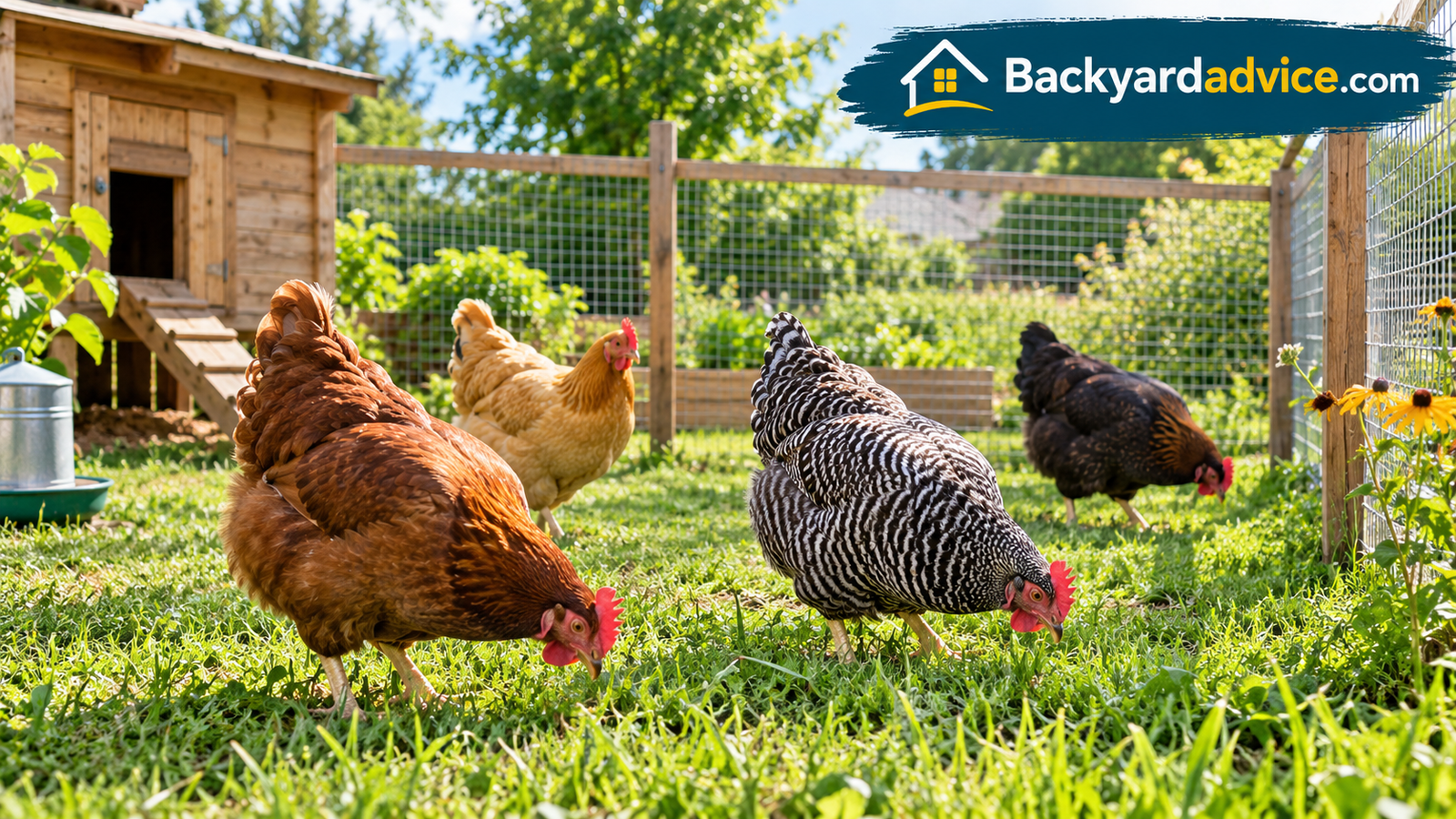
On the surface, this is a simple yes-or-no question. In reality it is three questions stacked on top of each other: Am I allowed?, Can I do it well here?, and Do I actually want the daily reality of it? People who answer only the first one tend to end up with a coop for sale in a few months. People who answer all three tend to keep hens for years and wonder how the garden ever felt complete without them.
The appeal is obvious. Fresh eggs are the headline, but they are honestly not the best part. Chickens turn kitchen scraps into fertilizer, scratch through garden pests, produce compost that improves beds and borders, and give the backyard a sense of life and purpose that even the most beautifully designed patio cannot match. There is a particular quiet pleasure in walking out in the morning, opening a coop, and collecting something warm.
The reality is equally plain. Chickens need a predator-proof home, fresh water every single day, feed you must buy whether or not you are on holiday, and a coop that needs cleaning in all weather. They attract rodents if you manage feed badly. They can be surprisingly noisy at dawn, and a poorly kept coop smells exactly as bad as you fear. None of those are reasons to avoid chickens — they are reasons to plan properly instead of buying birds on impulse from a farm supply store on a sunny Saturday.
This guide walks through the whole decision in the order it actually matters. We start with the rules, because everything else is irrelevant if your municipality says no. Then we get into space, breeds, coop and run design, daily care, eggs and food safety, neighborhood relationships, honest costs, health and safety, and finally a practical checklist you can use to make the call.
A note on where this fits in a wider backyard: chickens change how the rest of the yard works. They are compatible with gardens, children, water features, and outdoor living, but the layout matters — and if you are already planning other projects, thinking about the whole space at once saves a lot of rework later. Let’s start with the part that stops more people than anything else: the rules.
Curious what chicken keeping gear looks like? Browse coops and starter supplies to see what’s out there.
Browse Chicken Coops on AmazonWatch
Watch: Backyard Chickens, What to Expect
If you want to see what chicken keeping looks like day to day — the coop, the run, feeding, and egg collecting — this walkthrough gives you the visual reality behind the written advice. Watch it before you commit so the routine is no surprise.
Key takeaway: notice how much of the daily routine is simply water, feed, and a quick check of the birds — the workload is genuinely small once the setup is right, but it never pauses.
Ready to compare setups? Start with the space and coop requirements below.
See Chicken Coop KitsDeep Dive · The Answer
The Short Answer: Can You Keep Chickens in Your Backyard?
The short answer
In most places, yes — usually a small number of hens, often with conditions. Backyard hens have become broadly accepted across much of the country as more municipalities update their codes to allow small flocks. But permission is almost never unconditional: typical rules limit flock size, restrict or ban roosters, set setback distances from neighboring homes, require a certain coop size or design, and sometimes require a permit or a neighbor notification. Your specific address is the only one that counts.
What this means practically is that “can I have chickens?” is not really a question about chickens at all. It is a question about your local code, your homeowners association if you have one, your property layout, and the tolerance of the people who live within earshot. Get those four answers and you will know exactly where you stand.
The Common Shape of Local Rules
While every jurisdiction writes its own ordinance, the same handful of conditions appear again and again. Understanding the patterns helps you read whatever your local code says — and helps you ask the right questions when you call the planning or animal control office.
- Flock limits: many places cap the number of hens a residential property can keep, often in the range of a handful of birds rather than a flock.
- Rooster restrictions: roosters are banned outright in many residential zones because of crowing. Assume no roosters until you confirm otherwise.
- Setback requirements: coops frequently must sit a set distance from property lines and neighboring dwellings.
- Coop and enclosure standards: rules may specify minimum space per bird, construction standards, and that birds be confined or have a covered run.
- Permits or registration: some areas require a simple permit, a one-time fee, or proof of a predator-proof enclosure before you keep birds.
- Sales limits: keeping hens for personal eggs is treated differently from selling eggs or keeping birds for breeding or meat.
Why Roosters Are Usually the Line in the Sand
It is worth understanding the logic, because it explains most backyard chicken rules. The complaints that drive restrictions are almost always about noise, odor, and rodents — not about the birds themselves. A rooster crows loudly, repeatedly, and early. Hens are dramatically quieter: they cluck, they announce an egg, and they make alarmed noises if something frightens them. That difference is exactly why so many ordinances permit hens and prohibit roosters in residential areas.
You Do Not Need a Rooster to Get Eggs
This is the single most common misconception among first-time keepers, and it matters. Hens lay eggs whether or not a rooster is present. A rooster is only necessary if you want fertile eggs to hatch chicks. For a backyard flock kept for fresh eggs, hens alone are complete — quieter, simpler, and usually legal where roosters are not.
Before anything else, make this call
Phone your local planning, zoning, or animal services office and ask three questions: how many hens are allowed, are roosters permitted, and what setback or permit requirements apply. That single conversation settles the legal question in minutes and is far more reliable than reading old forum posts about your town.
While you confirm the rules, it’s worth familiarizing yourself with what a legal, predator-proof setup requires.
Check Chicken Keeping SuppliesDeep Dive · The Rules
Local Laws, Ordinances, and HOA Rules: Reading Yours Properly
Once you know that rules exist, the next step is reading them correctly. Municipal codes are written in dense language, and two clauses that seem to contradict each other often work together once you understand the structure. This section gives you a reliable method for finding your answer and understanding exactly what you are agreeing to.
Where to Find the Answer
Start with your municipal or county website and search for terms like “poultry,” “fowl,” “chickens,” “keeping of animals,” or “accessory structures.” If the code search is difficult, calling is faster and often more accurate — staff deal with these questions regularly and can point you to the exact section. If you are in an unincorporated area, the county is the authority rather than a city.
Separately, if your property is governed by a homeowners association or similar covenant, that is a second, independent layer. HOA rules can be more restrictive than local law, and violating them can carry financial penalties even when the municipality allows hens. Read your covenants and any architectural guidelines before you build anything.
Decoding the Typical Clauses
Swipe to see more →
| Rule Area | What It Usually Says | What to Confirm | Common Gotcha |
|---|---|---|---|
| Flock size | A maximum number of hens per household or per lot size | Whether the limit changes with property size | Counting chicks that will mature into the limit |
| Roosters | Prohibited in residential zones | Whether any exception exists for your zoning | Buying straight-run chicks and ending up with males |
| Setbacks | Minimum distance from property lines and homes | Whether that is measured from the coop or the run | Building first and measuring after |
| Coop standards | Minimum space, construction, or enclosure requirements | Whether plans must be submitted | Coop kits that don’t meet local minimums |
| Permits | A permit, fee, or inspection before keeping birds | Renewal requirements and annual fees | Assuming small flocks are always exempt |
| Confinement | Birds kept in a coop and run, or limited free-ranging | Whether birds may roam the yard at all | Allowing birds into a neighbor’s garden |
What to Do If Chickens Are Not Currently Allowed
It happens more often than you would think, and it is not necessarily permanent. Municipal codes get revised as more residents express interest in small flocks. If your area currently prohibits backyard hens, the practical route is to attend a council or planning meeting, present a well-organized case covering noise, waste management, and rodent control, and propose reasonable conditions such as flock limits and no roosters. Communities that have gone through this process usually land on sensible, limited allowances rather than blanket permission.
Neighbors matter in that conversation. If you speak with the households closest to your proposed coop location before any official process, you can address concerns early — and often discover that the people who would be most affected are supportive once they know how you plan to manage noise and smell.
Renting and Shared Properties
If you rent or share a property, local law is only half of the equation. Landlord permission should be in writing and should specifically cover the coop structure, not just the animals. Coops are structures that sit on the ground and alter the property, and verbal agreements about animals often do not extend to construction.
Keep a record
Whatever you learn, write down who you spoke to, what they said, and the code section they referenced. Ordinances get amended, and if a question ever comes up later, a dated note of your research is worth more than a memory.
Once the rules are clear, planning a compliant coop is the natural next step.
Explore Coop Plans and KitsDeep Dive · Space
How Much Space Chickens Actually Need
Space is where aspiration and reality most often collide. Birds kept in cramped conditions get stressed, sick, aggressive, and destructive; birds with sensible room behave completely differently. The good news is that a small, well-designed setup in an ordinary suburban yard is entirely realistic — it just has to be planned around real numbers rather than guesswork.
Coop Space, Run Space, and Ranging
There are three distinct kinds of space, and conflating them leads to trouble. Coop space is the enclosed, roofed shelter where birds roost at night and lay eggs. Run space is the fenced, covered outdoor area attached to the coop where birds spend most daylight hours. Ranging space is the wider yard, if and when you let birds out under supervision or in a secure area.
General guidance from experienced keepers and poultry welfare resources favors generous allowances in each — enough roosting room that birds are not crowded on the bar at night, and enough run room that the ground does not turn to bare mud within weeks. As a working principle, treat published minimums as a floor rather than a target: birds in more space are calmer, healthier, and far easier to manage, and the ground recovers better.
Why More Room Than the Minimum Pays Off
- Behavior: crowding triggers feather pecking, bullying, and stress-related illness.
- Ground condition: confined birds strip vegetation quickly, which creates mud, smell, and flies.
- Air quality: more volume means better ventilation and less ammonia buildup.
- Flexibility: extra space lets you rotate runs, add birds later, or use deep litter management.
- Neighbor relations: a roomy, clean setup is the best defense against odor complaints.
Small Yard Strategies
If your yard is modest, you can still keep a small flock well. A compact coop with a tall, covered run makes use of vertical space; a movable tractor lets birds work a section of lawn without destroying it; and a ranging routine — letting birds out for supervised hours rather than all day — keeps the lawn usable. What small yards cannot absorb is a large flock. Matching the number of birds to the space is the single decision that most determines whether this works.
A Roomy Setup Delivers
- Calmer, healthier birds
- Less odor and fewer flies
- Ground that survives the seasons
- Easier daily care
What Cramping Causes
- Bullying and feather pecking
- Mud, ammonia smell, and pests
- More frequent cleaning
- Disease risk rising sharply
Measure your available area first, then look at coop and run combinations that genuinely fit.
Check Coops With RunsDeep Dive · Birds
How Many Hens to Keep, and Which Breeds Suit a Backyard
This is the part everyone wants to jump to, and it is genuinely the fun part. But the number of birds matters more than the breed, and getting that right prevents most of the problems people associate with backyard chickens. Let’s do number first, then breeds.
How Many Hens? Start Smaller Than You Think
A household that eats eggs regularly is usually surprised by how few hens it needs. Hens lay consistently for their first couple of years and then gradually slow down. Four hens can keep a family well supplied, and a small flock is dramatically easier to manage than a large one — cheaper feed, less waste, less cleaning, less noise, and less pressure on the run.
Remember too that you are usually limited by law, by space, and by the patience of your neighbors. The right question is not “how many hens could I keep?” but “how many hens will I be glad to care for on a cold, wet morning in the middle of a busy week?” That number is usually smaller than the number that fits in the coop.
Breed Temperament and Purpose
Backyard breeds fall broadly into three groups: heavy, calm dual-purpose birds; lighter, prolific layers; and ornamental or bantam breeds. For a first flock, temperament should outrank egg color. A calm, friendly hen is a pleasure around children and visitors; a flighty breed turns daily care into a chase.
Swipe to see more →
| Breed Type | Temperament | Laying | Cold Hardiness | Best For |
|---|---|---|---|---|
| Calm dual-purpose (e.g. Orpington, Plymouth Rock) | Friendly, docile, easy to handle | Reliable, steady production | Generally good with dense feathering | First flocks, families, mixed gardens |
| Prolific layers (e.g. Leghorn, production hybrids) | Active, busier, more alert | Heavy laying through prime years | Varies; lighter birds handle heat well | Egg-focused keepers with space to roam |
| Heritage layers (e.g. Rhode Island Red, Sussex) | Confident, hardy, adaptable | Strong, dependable layers | Generally robust in varied climates | All-round flocks and cooler regions |
| Ornamental / bantam | Often personable and compact | Lighter production | Smaller birds need more shelter | Small yards, show, and garden flocks |
Chicks, Pullets, or Point-of-Lay Birds
You can start a flock three ways, and each has trade-offs. Chicks are charming, inexpensive to buy, and let you handle birds daily so they become tame — but they need a brooder, heat, and weeks of careful attention before they live outdoors. Pullets are young hens not yet laying; they skip the brooder phase and are still young enough to bond with you. Point-of-lay birds are ready to start producing eggs soon after arrival, which is ideal if you want results quickly, though they may be less accustomed to handling.
Avoid the Rooster Surprise
When buying young birds, confirm whether they are sexed and guaranteed female. Straight-run chicks are a mix, and within a few months you will hear about any mistakes. Since most residential rules prohibit roosters, buying sexed pullets from a reputable source is the reliable path.
A flock that ages well
Plan for the long term. Hens live for years beyond their peak laying, and responsible keepers keep caring for them regardless of production. If you only want eggs and cannot commit to the full lifespan, this may not be the right project for your household.
Set up for success with quality feed, feeders, and waterers sized for a small flock.
Shop Feeders and WaterersDeep Dive · Housing
Coop Design: What a Good Coop Must Have
Whether you buy a kit, build your own, or convert an existing structure, the requirements are the same. A coop is a sleeping quarters, a nesting area, and a fortress against predators — and it has to manage air and moisture as carefully as it manages foxes. This is the checklist to design or shop against.
The Non-Negotiable Features
- Roosting bars: birds instinctively sleep off the ground. Provide enough bar length that every hen can perch without crowding, at a comfortable height.
- Nest boxes: one box per few hens is the usual principle, sited lower than the roosts, in a darker, calmer corner to encourage laying and discourage roosting in them.
- Ventilation: air must move through the coop high up, above the birds’ heads. Drafts at roost level cause illness; stale air causes worse.
- Security: solid walls and framed, small-opening mesh on any openings. Raccoons, foxes, and neighborhood dogs are relentless and clever.
- Cleaning access: a design you can actually reach into, scrape, and refill. If cleaning is awkward, it will happen less often than it should.
- Dry floor: raised coops with good drainage stay drier, and dry is the whole battle against odor and disease.
Kit, DIY, or Converted Shed
Swipe to see more →
| Route | Setup Effort | Cost Level | Flexibility | Best For |
|---|---|---|---|---|
| Pre-built coop kit | Assembly, usually straightforward | Moderate | Fixed size and layout | First flocks that want to start quickly |
| DIY build | Significant, but very controllable | Varies widely | Total control over size and features | Handy keepers with specific needs |
| Converted shed | Moderate modification | Often efficient | Spacious, easy to work in | Larger flocks and existing structures |
| Movable tractor | Build or buy | Moderate | Protects the lawn, moves around | Small flocks with open grass |
Placement on the Property
Situate the coop where it is convenient for you and considerate of neighbors: close enough that daily chores are easy in bad weather, far enough from patios, windows, and property lines to keep any noise and odor distant. Level, well-drained ground matters enormously — a coop in a hollow collects water and mud. Shade in summer and protection from prevailing weather both help, and an area with morning sun dries the ground faster.
Think about the rest of the yard too. If you are planning lighting for evening use nearby, sensible placement makes that easier; guides like how to string lights across your backyard and the best string lights for your backyard cover how to light an outdoor area without disturbing animals or neighbors.
Design for the wettest week of the year
Anyone can keep a coop dry in perfect weather. Plan drainage, roof overhang, and bedding management for continuous rain, because that is when odor, mud, and health problems begin.
Compare coop designs, sizes, and features to find one that fits your flock and your yard.
Check Price on Chicken CoopsDeep Dive · Security
The Run, Fencing, and Keeping Predators Out
Predator losses are the most upsetting part of keeping poultry, and they are almost always preventable. Whether you live beside open countryside or in a dense suburb, something nearby hunts birds — and the failure point is nearly always a gap, a flimsy mesh, or an unsecured door rather than some dramatic breach.
Know What You Are Defending Against
The threat list is wider than most first-time keepers expect. Foxes, raccoons, coyotes, dogs, hawks and other birds of prey, snakes, rats, and weasels all take birds or eggs, and urban areas are not exempt — in fact, some predators thrive around people. Raccoons in particular can open simple latches and manipulate hardware with startling dexterity.
Building a Secure Run
- Use welded hardware cloth with small openings, not lightweight hexagonal chicken wire, which predators tear through and which does nothing to keep determined animals out.
- Block digging: bury a barrier apron at the base or extend mesh outward underground so animals that dig at the perimeter cannot get under.
- Cover the top: overhead mesh or netting protects against hawks and owls and makes the run feel safer for the birds.
- Serious latches: use latches that require two deliberate movements, positioned so a clever paw cannot undo them.
- Check the whole perimeter regularly: storm damage, loose fasteners, and gaps under doors are how losses start.
Night Security
Birds should be shut inside the coop at night, with the pop door closed and secured. This single habit prevents the majority of predator attacks, since most losses happen after dark. Automatic coop doors are a real convenience if you are away at dusk, but whatever system you use, confirm regularly that it closes fully and latches properly.
Wild Birds, Rodents, and Biosecurity
Wild birds are lovely company, but they share feed, water, and disease with your flock. Store feed in sealed containers, remove spilled feed daily, and keep the run clean. If you enjoy attracting songbirds to the garden, position wild bird feeding well away from the chicken area; our guides to the best bird feeders for your backyard, how to attract birds to your backyard, and how to identify birds in your backyard are all compatible with chicken keeping as long as the two zones stay separate. And if wild visitors ever thin out unexpectedly, why birds leave backyard feeders explains the usual causes.
For seeing what is actually moving through your yard at night, a backyard wildlife camera is genuinely useful — it tells you whether you are defending against raccoons, foxes, or a neighbor’s roaming dog, and that changes how you reinforce the coop.
Invest in hardware cloth and predator-proof latches — it’s the cheapest insurance you can buy.
Check Price on Hardware ClothDeep Dive · Daily Care
Feed, Water, and the Daily Care Routine
Chicken keeping is not labor-intensive, but it is unrelenting. Birds need fresh water and feed every day, including weekends, holidays, and the morning you are running late. The good news is that a well-organized routine takes only a short while — and once it becomes habit, it is one of the more grounding parts of the day.
What Hens Eat
A complete layer feed is the foundation, formulated to provide the protein, calcium, and nutrients hens need for healthy eggs and feathers. Grit helps them grind food internally, and oyster shell supports strong eggshells for laying hens. Everything else is supplementary — and treats should genuinely be treats.
Swipe to see more →
| Feed Type | Role | Notes | Shop |
|---|---|---|---|
| Complete layer feed | Staple daily ration | Keep available consistently; avoid sudden brand changes | Check Price on Amazon |
| Grit | Digestion support | Essential if birds don’t forage on gritty ground | Check Price on Amazon |
| Calcium supplement | Shell strength | Offer separately for laying hens | Check Price on Amazon |
| Scratch grains | Enrichment and activity | Scatter sparingly to encourage natural foraging | Check Price on Amazon |
| Treats | Interaction and taming | Keep small; avoid salty, spoiled, or moldy food | Check Price on Amazon |
Water: The One Thing You Cannot Skip
Birds drink far more than people expect, and dehydration hits quickly in heat. Fresh, clean water should be available at all times, in a container that is easy to clean and difficult to tip over. In freezing weather, keeping water liquid becomes the daily priority; in summer, shade and larger volumes help. This is the chore that determines whether you can leave the flock for a weekend, so a backup plan matters.
A Realistic Daily, Weekly, and Monthly Rhythm
- Daily: refresh water, check feed, look at each bird briefly, collect eggs, and do a quick visual check of the coop and run.
- Weekly: clean feeders and waterers thoroughly, top up bedding, and check for signs of pests or damage.
- Monthly: refresh nesting material, inspect fencing and latches, check for wear, and tidy the perimeter.
- Seasonally: a deeper clean, bedding replacement, and cold-weather or hot-weather preparation.
Bedding and the Deep Litter Approach
Swipe to see more →
| Bedding | Where It Works | Strengths | Watch Out For |
|---|---|---|---|
| Wood shavings | Coop floor and nest boxes | Absorbent, easy to source, composts well | Avoid aromatic softwoods that irritate airways |
| Straw | Nests and dry areas | Warm, comfortable, good nesting material | Can mat and hold moisture if overused |
| Hemp | Coop floor | Highly absorbent and low dust | Costs more than common alternatives |
| Sand | Coop floor and run | Drains well, easy to scoop like litter | Heavy to replace; can be cold in winter |
| Deep litter | Coop floor management method | Builds composting warmth with less frequent total changes | Requires balance, dry conditions, and monitoring |
Travel, Weekends, and Cover
Before you get birds, decide who cares for them when you are away. A neighbor who collects eggs and refreshes water in exchange for a share is a classic arrangement, but it needs to be agreed in advance and made easy — clear instructions, simple equipment, and a locked feed store. Chickens are hardy, but they cannot manage their own water supply.
Good feeders and waterers cut daily chores dramatically and keep feed clean.
Shop Chicken WaterersDeep Dive · Eggs
Eggs: What to Expect and Food Safety at Home
The first egg is genuinely exciting, and the novelty of collecting them never entirely wears off. But egg production follows a natural arc, and handling fresh eggs safely is a habit worth building from day one. Here is what to expect and how to manage it.
The Laying Pattern
Young hens come into lay gradually, produce reliably through their prime, and then slow down as they age. Daylight hours influence laying, which is why production naturally dips in winter in many climates. Weather, stress, molting, and diet all play a role too. Healthy hens with good feed, clean water, and a low-stress environment are steady producers — and any sudden change in laying is worth investigating as a possible sign of health trouble.
Handling Fresh Eggs Safely
- Collect frequently: eggs left in the nest box attract pests and can be soiled or broken.
- Keep nesting material clean: clean nests mean cleaner shells and less waste.
- Refrigerate promptly: consistent cold storage is the safest household practice for fresh eggs.
- Wash when appropriate: if an egg is soiled, clean it properly rather than scrubbing the protective coating away carelessly.
- Check for cracks: never leave broken eggs in the coop, and discard anything damaged.
- Separate kitchen habits: wash hands, boards, and surfaces after handling shells or raw egg.
Salmonella and Vulnerable Household Members
Backyard flocks can carry bacteria on feathers, feet, and shells even when birds appear perfectly healthy. This is manageable, but it demands hygiene discipline: hand washing after contact, no kissing or snuggling birds, and keeping chickens out of kitchens and living areas. Households with young children, older adults, pregnant members, or anyone with a weakened immune system should be especially careful — and children should always be supervised around the coop and required to wash hands immediately afterward. This is the same thinking behind separating play areas from animal areas; see our guide to the best backyard playsets for how families plan distinct zones in a shared yard.
More Eggs Than You Can Eat
It happens. Generous neighbors, a local food bank that accepts fresh eggs, and simple preservation methods all help. What you should not do is keep expanding the flock just to justify the surplus — that way lies the very problems this guide is designed to help you avoid.
The Real Joys of Home Eggs
- Freshness you cannot buy
- Rich yolks from varied diets
- A daily ritual the whole household enjoys
- A natural link between kitchen and garden
The Practical Realities
- Production varies with age and season
- Hygiene duties never stop
- Surplus needs a plan
- Some hens will go broody or slow early
Make egg collection easy and hygienic with proper nesting boxes and baskets.
Check Price on Nesting BoxesDeep Dive · Neighbors
Noise, Smell, and Being a Good Neighbor
Most conflicts over backyard chickens are not really about chickens. They are about noise at inconvenient hours, odor drifting across a fence, and rats appearing where none were before. Handle those three issues well and the relationship with your neighbors rarely becomes a problem at all — handle them badly and it becomes the biggest problem you have.
How Noisy Are Hens, Really?
Hens are not silent, and honesty matters here. Expect clucking through the day, an excited burst of sound when an egg is laid, and sharp alarm calls if something frightens the flock. Roosters are a different matter entirely, and that is exactly why most residential rules prohibit them. Keeping hens without a rooster is the single most effective step for keeping noise at a neighbor-friendly level.
Coop placement does the rest. Birds nearest a neighbor’s bedroom window are a nuisance; the same birds at the far end of your property are barely noticed. Move the coop away from boundaries where you can, use planting as a soft screen, and keep early morning activity low-key.
Smell: The Management Answer
Healthy, well-kept hens in a dry, ventilated coop do not smell offensive. Odor comes from wet, soiled bedding, accumulated droppings, and poor drainage — all of which are management issues with management solutions:
- Keep it dry: dry bedding, good drainage, and ventilation prevent the conditions that cause odor.
- Clean on a rhythm: regular small cleans beat occasional dramatic ones.
- Compost properly: droppings are excellent compost, but they need managed composting, not piles left beside the fence.
- Control feed: spilled feed attracts rodents, and rodents bring their own smell and their own problems.
- Respect the boundary: keep the coop and compost well back from neighboring outdoor living areas.
Rodents: The Issue Nobody Warns You About
Feed is the attractant, and poor storage is the invitation. Store feed in sealed, hard containers, feed in amounts that get eaten rather than left sitting, clean up spills, and avoid feeding scratch on the ground overnight. If you do see evidence of rodents, act immediately — this is one problem that gets worse quietly and then obvious quickly.
Talking to Neighbors Before You Start
A short, friendly conversation before the coop goes up is worth more than any amount of goodwill afterward. Explain what you plan, where the coop will sit, how you will manage noise and waste, and offer to share eggs. Most people respond well to being consulted; almost nobody responds well to discovering a coop one Saturday morning.
Good neighbors also think about the shared experience of the yard. If you enjoy evenings outside, elements like a fire feature or outdoor cooking belong in the conversation too — our guides to the best fire pit for your backyard, how to build a fire pit in your backyard, and whether you can have a fire pit in your backyard cover that side of outdoor living, and thinking about how chickens, seating, and neighbors all share the same space is exactly the kind of planning that keeps everyone happy.
The golden rule
Every complaint about backyard chickens traces back to one of three things: noise, smell, or pests. Manage those three proactively and you will likely never have the difficult conversation.
Sealed storage and tidy feeding equipment are your best defense against unwanted pests.
Check Feed Storage OptionsDeep Dive · Budget
What Chickens Really Cost
Backyard chicken keeping is often described as a way to save money on eggs. Honestly, that is rarely the point and almost never the result — between housing, feed, bedding, and equipment, fresh eggs from your own yard are a lifestyle choice and a quality upgrade, not a budget strategy. What matters is going in with clear eyes about where money goes.
Where the Money Goes
Swipe to see more →
| Category | Lean Approach | Premium Approach | Worth Spending On |
|---|---|---|---|
| Housing | Converted structure or simple self-build | Quality pre-built coop with integrated run | Security, ventilation, easy cleaning |
| Fencing & run | Hand-built frame with good mesh | Full covered run with apron | Strong mesh and real latches |
| Feed & supplies | Basic feeders, local feed | Automatic feeders and large waterers | Feed quality and water reliability |
| Bedding | Common shavings, frequent refresh | Premium absorbent bedding | Whatever keeps the coop truly dry |
| Health & contingency | Basic first-aid supplies | Vet access and diagnostic kits | A plan for illness before you need one |
One-Time vs. Ongoing Costs
Think in two columns. One-time: the coop, run construction, fencing, feeders and waterers, predator-proofing, and any electrical work for lighting or automatic doors. Ongoing: feed, bedding, supplements, occasional equipment replacement, and the small incidentals that add up across a year.
The ongoing column is the one that catches people out, because it never pauses. A coop you can afford to build is only half the equation — you must also be able to feed and maintain the flock indefinitely, including during months when egg production dips and the birds cost exactly the same to keep.
Hidden and Unexpected Costs
- Vet care: exotic-animal or poultry-friendly vets exist, but access and cost vary enormously by region.
- Predator losses: even with good security, reinforcement and repairs happen.
- Equipment upgrades: better waterers, automatic doors, and additional nesting material come along.
- Composting and waste handling: manure is a resource, but managing it properly takes bins or a designated area.
- Time: the daily commitment is the real currency, including in bad weather and busy seasons.
Saving Money the Right Ways
There are sensible economies and false ones. Sensible: buying feed in larger quantities when storage is good, building your own run frame, using quality reclaimed materials for coop construction, and composting waste to feed the garden. False: skimping on mesh and latches, buying the cheapest coop without checking construction, overcrowding birds to get more eggs, or using feed that is not nutritionally complete.
If the wider yard is also on your project list, budgeting across everything at once makes sense — combining a coop build with other improvements like lighting, seating, or a cooking area avoids paying twice for the same groundwork.
Price out the essentials before you commit — the setup is the biggest part of the investment.
Compare Chicken Starter KitsDeep Dive · Health & Safety
Health, Safety, and Common Problems
Most backyard flocks stay healthy with good management — clean water, dry housing, proper feed, sensible space, and an observant keeper. Health problems in hens usually start with management before they become medical, which is good news: it means prevention is largely in your hands.
Signs of a Healthy Flock
- Alert, active behavior: birds foraging, dust bathing, and interacting normally.
- Clean, bright appearance: smooth feathers, clear eyes, and clean nostrils.
- Steady appetite and normal droppings: consistent eating and drinking day to day.
- Regular laying: appropriate to the age and season.
- Good body condition: birds neither thin nor over-conditioned.
Common Issues and Their Usual Causes
Respiratory irritation
Often tied to poor ventilation, damp bedding, or dusty conditions. Improve airflow high in the coop and keep bedding dry before reaching for anything else.
Parasites
External parasites thrive in dirty coops and crevices. Regular cleaning, dust bathing opportunities, and close inspection of birds handle most of it.
Feather pecking
Usually a sign of crowding, boredom, or diet imbalance. More space, enrichment, and a proper layer feed resolve most cases.
Soft or thin shells
Commonly linked to calcium intake, stress, or age. Offer calcium separately and check the overall diet.
Safe Practices for Households
Chickens and family life mix well with a few firm rules. Hands are washed after every coop visit. Coop shoes stay outside. Birds do not come into kitchens or living spaces. Eggs are handled like raw food. And anyone at higher risk of infection — young children, older adults, pregnant women, or immunocompromised household members — should have limited, supervised contact. These are the same principles that guide how families separate play and animal zones; our guide to the best backyard trampolines covers planning active play areas as distinct, supervised spaces.
Predators, Weather, and Emergencies
Plan for extremes before they arrive. Hot weather means shade, airflow, and abundant cool water. Cold weather means dry shelter, unfrozen water, and protection from drafts at roost level. Storms mean checking the coop afterward for damage and secure closures. Predation, covered in detail earlier, is prevented by infrastructure and nightly routine rather than by luck.
Water in the garden brings its own seasonal considerations; if you have or plan a water feature nearby, our guide on how to build a pond in your backyard covers keeping water safe and clean. And because standing water also brings insects, it is worth pairing the pond or waterer setup with sensible pest control — see the best backyard mosquito repellent and how to get rid of mosquitoes in your backyard.
Observe daily
The single best health tool you have is a minute of attention each day. Hens that are off their food, isolated from the flock, or standing puffed up are telling you something — and catching it early is what separates a small problem from a serious one.
Keep basic health and parasite supplies on hand so you can respond quickly when something changes.
Check Chicken Health SuppliesDeep Dive · The Decision
The Decision Checklist and Your First Steps
You have now seen the whole picture — rules, space, breeds, housing, security, care, eggs, neighbors, costs, and health. This final section turns all of that into a go-or-no-go checklist and a clean sequence for getting started if the answer is yes.
The Go / No-Go Checklist
- Local rules confirmed. You know your flock limit, rooster rules, setbacks, and whether a permit is required — in writing or from a named contact.
- HOA or covenant review done. If applicable, your covenants permit hens and the structures they require.
- Space measured. You have a site for a coop and run that suits a small flock without crowding, mud, or neighbor friction.
- Daily time available. Someone in the household can do the daily water, feed, and check routine every day of the year.
- Budget for setup and ongoing costs. You can cover housing, security, feed, bedding, and the unexpected without stress.
- Predator plan in place. You know what is active locally and how your run and coop will stop it.
- Neighbors informed. The closest households know what is coming and how you will manage noise, odor, and pests.
- Vacation and cover plan agreed. Someone will care for the flock when you are away, and they know what to do.
- Long-term commitment accepted. You are prepared to care for hens through their laying years and beyond.
Your First Steps, in Order
First, confirm the rules — this is the only step that can stop the project, so it comes before spending anything. Second, choose your site and sketch a layout that includes coop, run, storage, and a compost area. Third, decide flock size honestly and choose breeds suited to your climate and temperament preferences. Fourth, buy or build housing that meets the design checklist in Section 5 and the security standards in Section 6. Fifth, set up feed, water, and bedding and run the empty system for a few days to work out the routine. Only then bring birds home.
Fitting Chickens Into the Rest of Backyard Life
A flock changes how the yard works, mostly for the better. Chickens turn kitchen scraps into compost for beds, scratch through pests, and add daily life to the garden. The trick is layout: keep the coop convenient but considerate, keep play areas distinct from the run, and keep the parts of the yard where you entertain comfortable and pest-managed. If outdoor cooking and dining are part of your plan, the best backyard grill and the best backyard pizza oven both pair beautifully with a garden that produces food of its own.
If you only take one thing from this guide
Backyard chickens work brilliantly for people who plan first and start small. Confirm the rules, build a secure and well-ventilated coop, keep the flock modest, manage feed and waste properly, and maintain a friendly relationship with your neighbors — and hens become one of the most rewarding parts of having a backyard at all.
Checklist passed? Start comparing coops and plan your build before the birds arrive.
Shop Coops and Runs on AmazonAnswers
Frequently Asked Questions About Backyard Chickens
Is it legal to keep chickens in my backyard?
In many areas, yes — but it depends entirely on your local ordinance and any homeowners association rules. Most places that allow hens set conditions: a flock limit, no roosters, setback distances, and sometimes a permit. Call your local planning or animal services office and ask directly; it is the fastest way to a reliable answer.
Do I need a rooster to get eggs?
No. Hens lay eggs without any rooster present. A rooster is only needed if you want fertile eggs for hatching. For a backyard flock kept for fresh eggs, hens alone are quieter, simpler, and usually legal where roosters are not.
How many chickens should a beginner start with?
Start smaller than you think. A small flock of hens keeps many households supplied with eggs, is far easier to manage, and creates less noise, waste, and pressure on the run. You can always expand later within your legal limit once you know the routine.
How much space do chickens need?
Chickens need three kinds of space: a dry, enclosed coop for roosting and laying; a fenced, ideally covered run for daylight hours; and, where possible, supervised ranging room in the yard. Treat published minimums as a floor rather than a target — more space means calmer birds, less odor, and healthier ground.
How noisy are backyard chickens?
Hens cluck, chatter, and make excited sounds when laying, plus alarm calls if startled — but they are far quieter than roosters, which is why roosters are commonly banned in residential zones. Coop placement away from neighboring windows does most of the rest.
Will chickens make my yard smell?
Well-kept hens in a dry, ventilated coop do not smell offensive. Odor comes from wet bedding, accumulated droppings, and poor drainage. Regular cleaning, dry bedding, good airflow, and proper composting of manure keep things fresh.
Do backyard chickens attract rats and predators?
Spilled feed attracts rodents, and unsecured coops attract predators — both are preventable. Store feed in sealed containers, feed amounts that get eaten, clean spills daily, and build a run with strong small-opening mesh, a buried barrier, and serious latches. Shut birds inside the coop at night.
What do chickens eat?
A complete layer feed is the daily foundation, with grit for digestion and calcium offered separately for laying hens. Kitchen scraps and scratch grains are treats, not staples. Fresh, clean water must be available at all times — it is the one chore you cannot skip.
How much work are chickens every day?
Daily care is usually a short routine: fresh water, feed check, a quick look at the birds, and egg collection, with weekly cleaning and periodic deeper maintenance. It is not demanding, but it is daily — including weekends, holidays, and bad weather.
Are backyard eggs safe to eat?
Fresh eggs from healthy, well-managed hens are enjoyed by many households, but good hygiene matters. Collect eggs promptly, refrigerate them, wash hands after handling birds or shells, keep chickens out of kitchens, and be extra careful around young children, older adults, and anyone with a weakened immune system.
How long do chickens live, and how long do they lay?
Hens typically live for several years and lay most consistently in their first couple of years before gradually slowing. Responsible keepers plan to care for birds through their full lives, not only their peak laying period.
Can I keep chickens if I have children and pets?
Yes, with sensible boundaries. Keep the run secure so dogs and other pets cannot get in, supervise all contact between children and birds, and enforce hand washing immediately afterward. Families often plan distinct zones for play and animals — the same thinking covered in our guide to the best backyard playsets.
Still weighing it up? Browse coops and supplies to see what a realistic setup involves.
Browse Backyard Chicken SuppliesConclusion
So, Can You Have Chickens in Your Backyard?
In most places, and for most households willing to do a little planning, the answer is yes. The rules have moved steadily toward accepting small backyard flocks, the equipment is widely available, and the daily routine is genuinely manageable. What separates keepers who thrive from those who give up is not enthusiasm — it is preparation.
Confirm the rules before you buy anything. Measure your space honestly and match the flock to the yard. Build a coop that is dry, ventilated, easy to clean, and genuinely predator-proof. Keep feed sealed and the ground tidy. Start with a small number of calm hens, and treat the daily routine as non-negotiable. Do those things and chickens become one of the most rewarding parts of having a backyard — fresh eggs, better compost, fewer garden pests, and a daily reason to step outside.
If the checklist in Section 12 gave you a clear “yes,” your next move is simple: make the calls, sketch the layout, and start gathering the housing and security basics before the birds arrive. If it gave you a “not yet,” that is a useful answer too — the conditions that make chicken keeping difficult are mostly fixable with time, a small budget, or a conversation with a neighbor.
Your next step
Make one phone call this week to your local planning or animal services office and ask the three questions: how many hens, are roosters allowed, and what setbacks or permits apply. Everything else in this guide builds on that answer.
Ready to start? Explore coops, feeders, and starter supplies and plan your setup today.
Shop Chicken Starter Kits on Amazon